There is a precise moment in the late afternoon on the southern coast of Sumba when the modern world completely dissolves. Stand on the limestone cliffs overlooking Nihiwatu Beach at half-past five, and you will watch the Indian Ocean crash against the shore with a raw, thunderous power that feels entirely prehistoric. The air carries a heavy, intoxicating blend of crushed sea salt, damp wild vetiver, and the faint, sweet aroma of roasting betel nuts drifting down from thatched-roof clan houses perched on the ridges above.
While the neighboring island of Bali struggles under the weight of over-tourism and predictable beach clubs, an intentional migration is happening among elite, culturally conscious travelers. Search data shows a powerful spike in interest toward Sumba. This rugged island in East Nusa Tenggara has become the ultimate frontier for slow travel—a place where luxury is defined by untouched geography, ancient megalithic living cultures, and an profound connection to ancestral spirits that demands absolute presence.
Houses Built to Touch the Heavens: The Living Megalithic Tradition
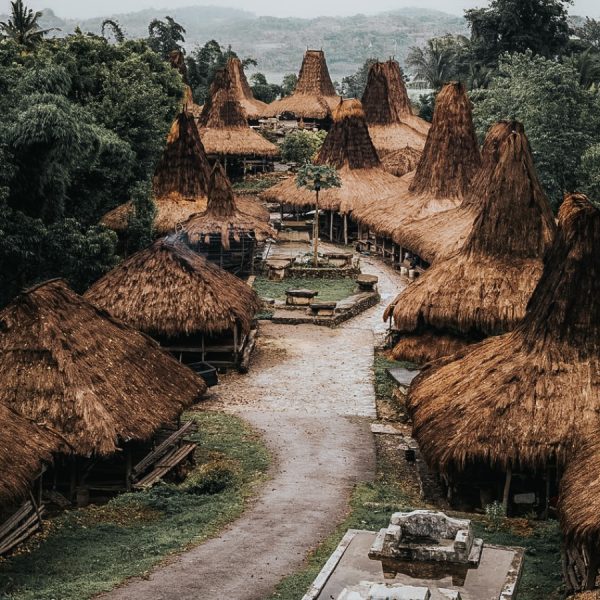
To step into a Sumbanese village like Ratenggaro or Prai Ijing is to step into a landscape shaped by the Bronze Age. The first thing that strips away your breath is the architecture. Homes feature steep, soaring thatched roofs made of dry Alang-alang grass, rising up to thirty meters into the sky. According to local Marapu belief—the island's ancestral religion—these high peaked roofs are the dwelling places of spirits, allowing the family elders to communicate directly with the heavens.
Walking between these towering structures, the earth beneath your feet feels heavy with history. In the center of the village plazas sit massive, hand-carved stone megalithic tombs where generations of clan royalty are buried.
The social identity of Sumba is intensely tied to this spiritual framework. The local people possess a proud, quiet dignity and a deeply hospitality that is rare in highly commercialized destinations. They look at you with wide, genuine smiles, their lips often stained red from chewing sirih pinang (betel nut)—a traditional social ritual that signifies peace, respect, and mutual trust. When you enter a village, the village chief will welcome you not as an intrusive bystander, but as a guest of the clan, often presenting a beautifully hand-woven piece of Ikat cloth as a sign of protection.
The Sacred Art of Time: Indigo, Blood, and the Ikat Weavers
To truly understand Sumba, you must understand Tenun Ikat—a textile art form that is less about fabric and more about a soul-map of the culture. In the quiet coastal village of Lamboya, women sit on the split-bamboo floors beneath their stilted homes, weaving threads using ancient back-strap looms.
The process is slow, taking anywhere from six months to three years for a single piece. The threads are dyed using natural ingredients pulled directly from the earth: deep blues from fermented indigo leaves, rich rust-reds from the bark of the mengkudu tree, and warm yellow from local turmeric roots. The smell around the dye pots is earthy and sharp, like fermenting forest floor and wet stone.
The patterns themselves tell the epic history of the island—intricate geometric motifs of ancestral horses, sacred skull trees, and protective sea monsters. Touching the heavy, raw cotton fabric, you feel the physical weight of time. This cloth is woven with prayers, used to wrap newborn infants, exchanged as royal dowries during marriages, and ultimately used to shroud the bodies of elders as they transition into the spirit world.
Hidden Turquoise Lagoons and the Untamed Horses of the Shore
Beyond the stone villages, Sumba’s geography offers a sensory contrast that feels completely wild. Journey toward the western edge of the island to find Weekuri Lagoon, a natural saltwater tidal pool separated from the roaring ocean by a jagged wall of perforated coral stone.
Plunging into the crystal-clear, hyper-saline water, your body floats weightlessly. The water is a brilliant, glowing jade-green, fed by subterranean springs that keep the temperature cool and refreshing against the tropical sun.
For an experience completely unmatched by any other destination on Earth, walk down to the coast at sunrise to witness the wild Sumbanese horses. These compact, muscular animals—descended from Mongolian stock and prized for centuries by local warriors—are brought down to the surf to run. Watching a herd of horses charge through the white ocean foam against a pink morning sky, their hooves pounding into the wet sand, is an experience of pure, untamed freedom that leaves you entirely speechless.
The Fire of the Earth: Sumba’s Soulful Gastronomy
Sumbanese cuisine rejects modern culinary trends, focusing instead on robust, natural flavors and smoking techniques designed to preserve ingredients in a hot, unforgiving climate.
The definitive meal of the island is Ro'o Luwa, a rich, comforting stew made from finely pounded cassava leaves cooked with fresh coconut milk, lemongrass, and locally gathered ginger. Cooked in a black iron pot over an open wood fire in the center of the home, the dish absorbs the deep smoke of the hearth.
When served to you alongside a bowl of unpolished red upland rice and Ayam Kampung Bakar (smoky, charcoal-grilled free-range chicken marinated in lime juice and wild chili), the sensory journey is unforgettable. The cassava greens are silky and earthy, holding a vibrant herbaceous freshness that balances the rich, creamy weight of the coconut milk.
For an authentic finish, sample Kolo, sweet glutinous rice mixed with coconut water and grated ginger, packed tightly into green bamboo stalks and roasted slowly over hot embers until the outer rind is charred black. The resulting rice is remarkably fragrant, infused with the sweet, grassy essence of the toasted bamboo.
An Explorer's Tactical Blueprint for the Forgotten Island
Navigating Sumba requires abandoning rigid Western expectations of convenience and embracing a travel style that respects the infrastructure of a wild, developing frontier.
Optimal Timing and Seasonality
The perfect window to explore Sumba spans from May to October, during the dry winter monsoon. The days are filled with warm sunshine, averaging around 29°C, and the evening breeze off the ocean is crisp and cooling. This is also the season of the Pasola festivals (in February and March), where hundreds of decorated horsemen engage in a ritual spear-throwing battle to bless the earth before the harvest.
Movement and Logistics
The primary gateway involves flying into Bali’s Ngurah Rai International Airport (DPS), followed by a short, one-hour domestic flight to either Tambolaka Airport (TMC) in Southwest Sumba or Waingapu Airport (WGP) in East Sumba. Bypassing public transport is essential; the island’s mountainous interior and unpaved village roads require renting a robust, high-clearance four-wheel-drive vehicle accompanied by a local Sumbanese driver who knows the tribal languages and village protocols.
Financial Coordinates and Accommodations
Boutique Eco-Luxury Lodges: A premium stay inside an eco-conscious luxury villa overlooking the ocean, constructed from sustainable local timber and bamboo, ranges from $250 to $600 per night.
Traditional Clan Dinners: A multi-course regional tasting menu featuring fresh ocean catch, native red rice, and artisanal organic side dishes averages $30 to $50 per guest.
Private Tribal Guides: Engaging a knowledgeable, bilingual local guide for a full-day expedition into remote stone villages and hidden lagoons costs roughly $60 to $100 per day.
Critical Cultural Codes and Marapu Protocol
Sumba is a place where spiritual laws govern daily life. Following these traditional guidelines ensures your journey remains respectful and deeply transformative.
Respecting the Ancestral Territory
The Request for Entrance: Never walk into a traditional Sumbanese village unannounced. Always stop at the village entrance and wait for a guide or an elder to formally invite you in. It is customary to bring a small offering of Sirih Pinang (betel nut components) or a modest cash contribution to the village fund as a sign of goodwill.
The Etiquette of Tombs: The megalithic stone tombs in the center of the villages are highly sacred monuments housing the souls of ancestors. Never sit on, lean against, or place your belongings on top of a tomb stone. Always ask for permission before taking photographs of any burial structure.
The Law of the Textiles: When purchasing Ikat directly from a weaver, do not aggressively haggle over the price. These textiles represent months of physical labor and spiritual devotion. Paying a fair price directly respects the artist and ensures the survival of this ancient craft.
A One-Day Immersive Itinerary: From Sacred Peak to Golden Coast
For the explorer seeking the perfect, balanced distillation of Sumba’s spiritual traditions and natural beauty within twenty-four hours, this blueprint coordinates every transition.
06:00 AM – The Ridge Awakening: Wake up as the morning mist clears over the high-roofed houses of Prai Ijing. Watch the smoke from breakfast fires rise up into the morning light.
08:00 AM – The Warrior’s Breakfast: Fuel your day with a breakfast of fresh tropical mangoes, red rice porridge infused with coconut cream, and a cup of rich, dark Sumba Robusta coffee.
10:00 AM – The Journey to the Jade Pool: Drive your 4x4 through the wild savanna towards West Sumba, reaching the edge of Weekuri Lagoon for a weightless mid-morning swim in its clear waters.
01:00 PM – The Village Plaza Feast: Sit beneath the shade of a thatched canopy in Ratenggaro village, enjoying a rustic lunch of smoky grilled chicken, bamboo-cooked rice, and local greens.
03:30 PM – The Rhythm of the Looms: Spend your afternoon sitting with the master weavers of Lamboya, watching the indigo-stained hands dye and loop threads into intricate tribal patterns.
05:30 PM – The Shoreline Hoofbeats: Walk down to the soft sands of the southern coast to watch the island's horses run through the heavy ocean waves against a golden sunset.
07:30 PM – The Open Fire Gathering: Settle into a beachside pavilion for dinner. Enjoy slow-simmered Ro'o Luwa and fresh grilled fish caught by local outrigger boats that very afternoon.
10:30 PM – The Celestial Canopy: Step out onto the empty sand. Look up at an unpolluted sky to witness the silver dust of the Milky Way spanning from horizon to horizon over a dark, roaring sea.
The Three-Day Master Plan: Moving with the Ancestral Current
This immersive three-day progression encourages you to fully discard your digital rhythm, allowing the raw beauty of Sumba to shift your consciousness.
Day 1: The Tall Roofs of the West
Arrive at Tambolaka Airport and check into your luxury eco-lodge overlooking the sea. Spend your morning exploring the magnificent village of Ratenggaro, marveling at the soaring thirty-meter thatched roofs against the blue ocean backdrop. For lunch, sample fresh fish baked in banana leaves at a coastal kitchen.
In the afternoon, wander through the stone tombs of Prai Ijing, learning the basic tenets of Marapu spiritual belief from a village elder. Spend your evening around a beachside bonfire, savoring a dinner of charcoal-grilled chicken and organic red rice as the stars emerge over the savanna.
Day 2: The Indigo Thread and the Salt Pool
Rise early to catch the crisp morning air. Dedicate your morning to a long drive toward Weekuri Lagoon, spending hours swimming in the turquoise saltwater and walking the rugged coral cliffs. For lunch, enjoy a curated picnic of smoked pork, native tubers, and fresh coconut water on a bluff overlooking Mandorak Beach.
In the afternoon, travel to the weaving circles of Lamboya, observing the natural dyeing process and selecting an authentic Ikat cloth directly from its creator. Conclude your evening with a contemporary dinner celebrating local cassava greens and high-quality Indonesian spices at your lodge.
Day 3: The Savannah and the Untamed Sea
Spend your final day embracing the dramatic, shifting topography of the island. Drive across the expansive, golden savanna of East Sumba, watching thousands of wild horses graze against the rolling hills.
Stop for a simple lunch of spicy local noodles at a small market outpost in Waingapu. In the afternoon, explore the quiet mangrove forests of Walakiri Beach, photographing the surreal, dancing trees twisted by the coastal tides. Conclude your journey with an elite open-air dinner, enjoying a glass of fine cold ginger cider as the sun sets over the timeless horizon of Sumba.
The Final Verdict
To travel to Sumba is to understand that the most extraordinary journeys are not those that offer familiar comforts, but those that strip away the noise of modern life to reveal something elemental and true. This is not a polished destination designed for passive relaxation; it is a territory of immense soul and physical beauty that expands your concept of time, changes your perspective, and connects you to a living human heritage that has survived intact for thousands of years. It is a place where you can fall asleep to the sound of the Indian Ocean beneath a roof built for spirits, swim in lagoons of clear jade water, taste food cooked by the heat of ancestral hearths, and look into the eyes of a culture that values honor, land, and lineage above all else.
The towering grass roofs and unyielding shores of Sumba remind us of what travel felt like before the world became fully mapped—an authentic, deeply emotional encounter with the beautiful mystery of a planet that still knows how to hide its most sacred places. Do not spend another year dreaming of destinations that have traded their identity for tourism. The stone tombs, indigo threads, and running horses of this sacred Indonesian frontier are waiting for you, and you need to experience this place for yourself.


0 nhận xét:
Post a Comment