Pages

Thursday, September 30, 2010

Vietnam’s Most Enchanting Ancient Town After Dark: Why Hoi An Captures Hearts Like Nowhere Else

Some places are beautiful.

Some places are memorable.

And then there are places that feel as though they were created specifically for the imagination.

Hoi An belongs to that rare category.

The first thing I noticed wasn't the architecture.

It wasn't the lanterns.

It wasn't even the river.

It was the pace.

Or rather, the absence of pace.

After the noise, traffic, and endless movement of modern cities, arriving in Hoi An feels like stepping into a gentler version of the world.

The streets invite you to slow down.

The locals encourage you to linger.

And before long, you stop checking the time entirely.

That may be one reason why travelers from the United States and Europe are increasingly placing Hoi An near the top of their Vietnam bucket lists.

But it is far from the only reason.

A Town Where History Never Really Left

At first glance, Hoi An looks like a carefully preserved movie set.

Golden merchant houses.

Wooden shutters weathered by centuries of tropical air.

Temples hidden behind flowering courtyards.

Narrow lanes glowing softly beneath colorful lanterns.

Yet everything here is real.

For hundreds of years, Hoi An served as one of Southeast Asia's most important trading ports, connecting merchants from Vietnam, China, Japan, India, and Europe.

The result is a fascinating cultural blend visible everywhere.

A Japanese bridge.

Chinese assembly halls.

Vietnamese ancestral homes.

French colonial influences.

Few destinations in Asia tell such a rich story through their streets alone.

Walking here feels less like sightseeing and more like wandering through living history.

The Magical Hour That Changes Everything

Most visitors enjoy Hoi An during the day.

The experienced travelers stay for sunset.

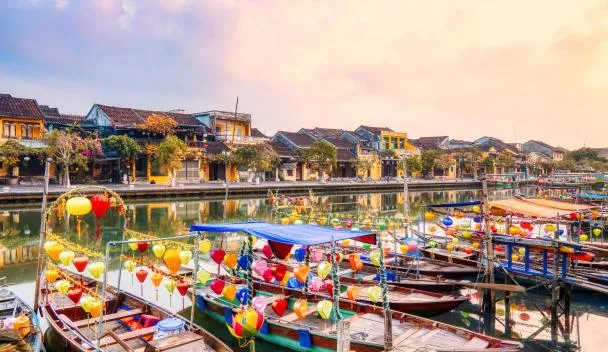
As daylight fades, thousands of lanterns gradually illuminate the town.

Golden reflections dance across the Thu Bon River.

The streets glow amber and crimson.

The air fills with the scent of grilled seafood, fresh herbs, incense, and river breezes.

Musicians play softly in hidden corners.

Small wooden boats drift across the water carrying lanterns and smiling visitors.

For a few hours each evening, Hoi An becomes something almost impossible to describe.

It doesn't feel like a city.

It doesn't feel like a museum.

It feels like a dream that somehow exists in reality.

Many travelers arrive expecting a charming town.

They leave wondering why they have never experienced anything quite like it before.

The Hidden Hoi An Most Tourists Never Discover

The Ancient Town deserves its reputation.

But the real magic often waits beyond it.

Wake up early.

Rent a bicycle.

Leave the lantern-filled streets behind.

Within minutes, the scenery transforms.

Rice fields stretch toward the horizon.

Water buffalo graze peacefully beside narrow country roads.

Farmers wearing traditional hats work fields that have supported local families for generations.

Children wave enthusiastically from village pathways.

There are no crowds.

No ticket booths.

No souvenir shops.

Only everyday life unfolding naturally.

Many visitors describe these quiet rural moments as the most authentic experiences of their trip.

A Food Scene That Deserves Global Recognition

Hoi An is not simply one of Vietnam's most beautiful destinations.

It is one of its most delicious.

Food here reflects centuries of cultural exchange.

One dish in particular has become legendary.

Cao Lau.

Found almost exclusively in Hoi An, this unique noodle dish combines smoky pork, fresh herbs, crisp textures, and flavors unlike anything else in Vietnam.

Then there is White Rose Dumplings.

Delicate rice dumplings shaped like flower petals.

Fresh seafood arrives daily from nearby waters.

Family-owned restaurants serve recipes passed through generations.

Cooking classes attract visitors from around the world who want to bring a small piece of Hoi An home with them.

The remarkable thing is not just the quality of the food.

It is the feeling behind it.

Meals here are rarely rushed.

Food remains a social ritual.

A conversation.

A celebration.

The People Who Make Hoi An Feel Different

Beautiful buildings can be photographed.

Hospitality cannot.

One of Hoi An's greatest strengths is its people.

Local residents often greet visitors with genuine warmth rather than rehearsed tourism smiles.

Shop owners remember returning guests.

Cafe owners recommend hidden spots.

Tailors proudly share stories about their craft.

Fishermen along the river speak openly about traditions that continue today.

There is an authenticity here that travelers immediately recognize.

And increasingly, that authenticity is exactly what international visitors are searching for.

Beyond the Ancient Town

One of Hoi An's greatest advantages is its location.

Within a short distance, travelers can experience entirely different landscapes.

An Bang Beach offers long stretches of sand and relaxed oceanfront cafes.

The Coconut Forest provides boat rides through winding waterways shaded by water palms.

Nearby fishing villages reveal a slower rhythm of coastal life.

Mountain adventures, cultural landmarks, and vibrant cities all sit within easy reach.

Few destinations offer such diversity within such a compact area.

When Should You Visit?

The most comfortable period generally falls between February and May.

The weather tends to be warm, dry, and ideal for walking, cycling, photography, and beach excursions.

Even outside peak seasons, Hoi An retains much of its charm.

Rainy days often make the lantern-lit evenings feel even more atmospheric.

Is Hoi An Expensive?

One reason international travelers continue choosing Vietnam is exceptional value.

Hoi An offers experiences suitable for nearly every budget.

Luxury riverside resorts coexist with charming boutique hotels and affordable guesthouses.

Street food remains remarkably inexpensive.

High-quality dining often costs far less than comparable experiences in Europe or North America.

The value-to-experience ratio is difficult to beat.

Questions Travelers Often Ask

How many days should I stay in Hoi An?

Three to five days allows enough time to enjoy both the famous attractions and the hidden corners many visitors miss.

Is Hoi An touristy?

The Ancient Town attracts visitors, especially in the evening. However, step just a few streets away or explore the surrounding countryside, and a much quieter side quickly emerges.

Can I explore without a guide?

Absolutely.

Walking and cycling remain the best ways to discover the town's character.

Some of the most memorable moments happen entirely by accident.

Why Travelers Keep Returning

There are destinations you check off a list.

Hoi An is not one of them.

People rarely speak about visiting Hoi An once.

Instead, they talk about returning.

Returning for another lantern-lit evening.

Returning for another bowl of Cao Lau.

Returning for another bicycle ride through rice fields at sunrise.

Returning because they discovered something increasingly rare in modern travel.

A place that still feels human.

A place that rewards curiosity.

A place that leaves you feeling calmer than when you arrived.

Long after the photographs have been stored away and the suitcases unpacked, many travelers remember one simple feeling:

For a few days, life felt beautifully uncomplicated.

And that alone may be reason enough to book the journey.

The Emerald Monoliths: Finding Sovereignty in the Silent Waters of Lan Ha Bay

If you have ever stood on the deck of a cruise ship in Ha Long Bay, you have likely felt a strange mix of awe and claustrophobia. The limestone karsts rising out of the water are undeniably spectacular, but the experience is often fractured by the hum of eighty other diesel engines, the flashes of selfie sticks, and the distant smell of exhaust. The modern luxury traveler does not cross oceans to stand in a queue on the water.

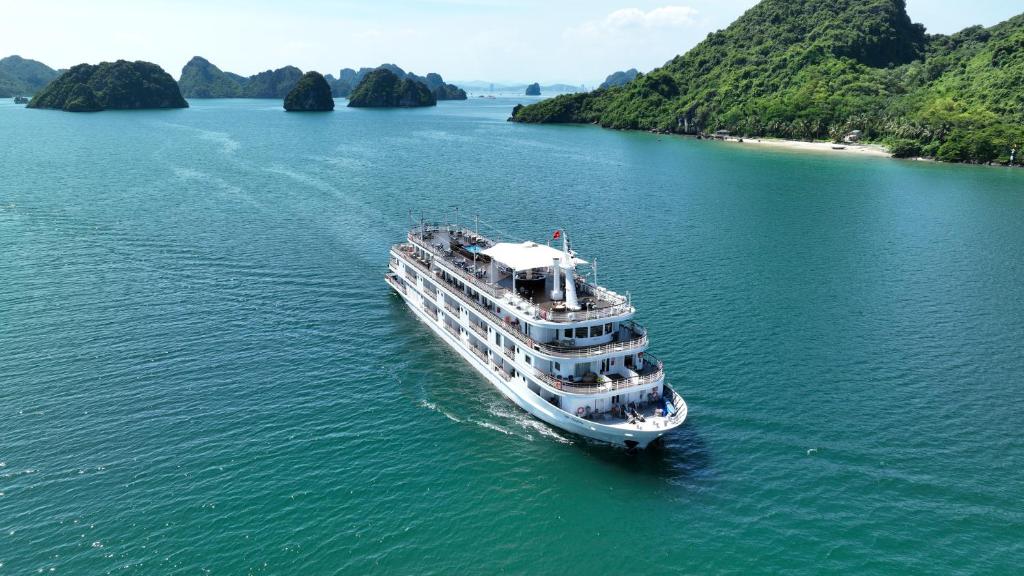
But if you look just slightly south, across an invisible maritime border where the Gulf of Tonkin softens into a brilliant jade green, the engines disappear. The air grows remarkably crisp, carrying only the scent of wet moss, sea salt, and wild frangipani clinging to sheer rock faces. You are entering Lan Ha Bay.

Geologically, it shares the exact same DNA as its famous northern neighbor: a labyrinth of thousands of prehistoric limestone monoliths sculpted by tectonic shifts and millennia of salt tides. Yet, while Ha Long became a global brand, Lan Ha remained a quiet sovereign territory of fishermen and white-headed langurs. Right now, data shows an unprecedented wave of interest from American and European travelers who are deliberately bypassing the commercialized standard routes in search of a slow-travel sanctuary. Lan Ha Bay isn't just an alternative; it is the version of the Gulf of Tonkin you have been dreaming of.

The Floating Civilization: A Dialogue of Rock and Rope

To sail into Lan Ha is to realize that this is a landscape defined by verticality. Islands do not have shores here; they are pillars of ancient stone dropping directly into deep, emerald depths.

The architecture of life here is entirely maritime. For generations, the true custodians of the bay have been the inhabitants of the floating fishing villages, most notably Cai Beo, one of the oldest prehistoric floating settlements in Southeast Asia. Here, wooden homes rest on floating plastic barrels and dense bamboo rafts, woven together by a complex grid of ropes and bridges.

The people of Lan Ha possess a rugged, sun-cured independence, their eyes permanently crinkled from decades of reading the glare of the water. Their character is fiercely self-reliant yet disarmingly soulful. As you paddle a kayak past a floating porch, a fisherman might call out a greeting over the bark of his resident guard dog, his voice bouncing off the limestone walls. They live in constant negotiation with the tides, and to watch a mother effortlessly steer a wooden sampan boat with her feet while cradling a child is to witness a masterclass in human adaptation.

Subterranean Kitchens and the Sweetness of the Deep

Because there is virtually no arable land inside the bay, the culinary culture of Lan Ha is purely oceanic, focusing on textures and freshness that can only be achieved when food goes from the sea to the flame in a matter of minutes.

The Geoduck Culinary Ritual

The ultimate delicacy of the archipelago is Tu Hài (Geoduck). These bizarre-looking, burrowing mollusks are prized for their crisp, sweet, and oceanic meat. In Lan Ha, they are prepared with a minimalist reverence: steamed alive over a bed of crushed lemongrass, then flash-fried with aromatic scallion oil, crispy garlic, and a sprinkle of crushed peanuts. The contrast between the crunchy, hot topping and the tender, sea-sweet meat eaten on an open-air deck as the water laps below is a sensory awakening.

The Fire-Roasted Sea Bass of Cat Ba

Equally unforgettable is the local Sea Bass (Cá Vược), caught from the deep rocky crevices beneath the karsts. The fish is stuffed with wild ginger and lemongrass pulled from the slopes of nearby Cat Ba Island, wrapped tightly in banana leaves, and buried directly in the glowing embers of a charcoal brazier. The skin caramelizes into a smoky, savory crust, while the flesh inside remains incredibly juicy and infused with the herbal oils of the jungle.

The Secret Atlas: Experiences Cut From the Main Map

To truly capture the soul of Lan Ha, you must leave the comfort of the large cruise vessels and allow yourself to be swallowed by the geography.

The Silent Glide Through Dark and Bright Cave

While most tourists visit caves via large bamboo rafts rowed by guides, the true initiate takes a sit-on-top kayak and paddles into the Dark and Bright Cave (Hang Sáng Tối) completely alone at slack tide. The entryway is a low, menacing archway of jagged rock that forces you to duck your head. As you navigate the 100-meter tunnel of absolute darkness, the sound of the ocean mutters against the hull. Suddenly, you burst through into the light—not into the open ocean, but into a completely enclosed, circular lagoon surrounded by 300-foot vertical limestone walls. It is a hidden world within a world, silent except for the calls of wild macaques and the drip of condensation from ancient stalactites. You are standing in Earth's private drawing-room.

The Haunted Canopy of Cat Ba National Park

Lan Ha Bay is inseparable from Cat Ba Island, the massive green anchor of the archipelago. If you slip ashore at dawn, skip the paved lookouts and take the intense, muddy trek through the primary rainforest toward Frog Lake (Ao Ếch). This is the kingdom of the Cat Ba Langur, one of the rarest primates on the planet. Walking beneath the massive shadows of century-old trees, surrounded by the deafening chorus of jungle cicadas and the damp smell of decaying leaves, provides a profound grounding contrast to the fluid world of the bay outside.

The Maritime Ledger: Operational Intelligence for the Independent Traveler

The Meteorological Window

Lan Ha Bay changes masks with the seasons. For the classic Western ideal of warm, sun-drenched waters and crystal-clear visibility, the golden window is from March to May or September to November. During these months, the humidity drops, the sky turns a brilliant azure, and the water reaches an inviting 75°F to 80°F (24°C to 27°C). The summer months (June to August) bring spectacular afternoon thunderstorms and a dramatic, moody atmosphere, while the winter brings a ghostly, dense white mist that turns the bay into a monochrome Chinese ink painting.

The Logistics of Departure

Bypass the chaotic cruise ports of Ha Long City completely. The most seamless and sustainable way for international travelers to access Lan Ha is to take a comfortable 2-hour luxury limousine van from Hanoi to Got Ferry Terminal in Hai Phong. From there, a brief speedboat ride brings you straight onto Cat Ba Island or directly onto your boutique heritage cruise vessel. This route completely avoids the industrial traffic of the northern ports, ensuring your transition into the wilderness is as peaceful as the destination itself.

The Economy of Clean Water

Because Lan Ha Bay has prioritized eco-conscious tourism and strict regulation of vessel numbers, it commands a slight premium over the standard mass-tourism options, yet remains incredibly competitive compared to Western maritime destinations:

  • A private, half-day sea kayak and traditional lunch excursion: $45 to $65.

  • A bowl of fresh Geoduck noodle soup at a floating market: $4.00 to $6.00.

  • A 2-day, 1-night boutique luxury cruise (all-inclusive private cabin): $180 to $350 per person.

  • A secluded eco-lodge bungalow on Cat Ba Island: $70 to $130 per night.

Preservation and Maritime Protocol

The ecosystem of Lan Ha is incredibly fragile. Single-use plastics are strictly prohibited within the national park boundaries, and your bags may be checked at the ferry terminals—embrace this by bringing reusable flasks. When kayaking near the floating villages, always maintain a respectful distance from the aquaculture nets; these are not tourist backdrops, but the private livelihoods of the families who live there.

The Ultimate Insider Secret: If your cruise anchors in a secluded bay for the night, do not go to sleep when the cabin lights dim. Wait until midnight, when the moon sets behind the karsts. Lean over the edge of your kayak or the ship’s low deck and stir the dark water with your hand. The movement will trigger a chemical reaction in the water, waking millions of microscopic dinoflagellates. The pitch-black water will instantly ignite with an electric, neon-blue glow—a swirl of bioluminescent plankton that follows the trail of your fingers like stardust. In that quiet, glowing moment, with the ancient cliffs towering above and the stars reflecting below, you will realize you are floating in a universe that belongs entirely to the wild.