Some places are beautiful.
Some places are memorable.
And then there are places that feel as though they were created specifically for the imagination.
Hoi An belongs to that rare category.
The first thing I noticed wasn't the architecture.
It wasn't the lanterns.
It wasn't even the river.
It was the pace.
Or rather, the absence of pace.
After the noise, traffic, and endless movement of modern cities, arriving in Hoi An feels like stepping into a gentler version of the world.
The streets invite you to slow down.
The locals encourage you to linger.
And before long, you stop checking the time entirely.
That may be one reason why travelers from the United States and Europe are increasingly placing Hoi An near the top of their Vietnam bucket lists.
But it is far from the only reason.
A Town Where History Never Really Left
At first glance, Hoi An looks like a carefully preserved movie set.
Golden merchant houses.
Wooden shutters weathered by centuries of tropical air.
Temples hidden behind flowering courtyards.
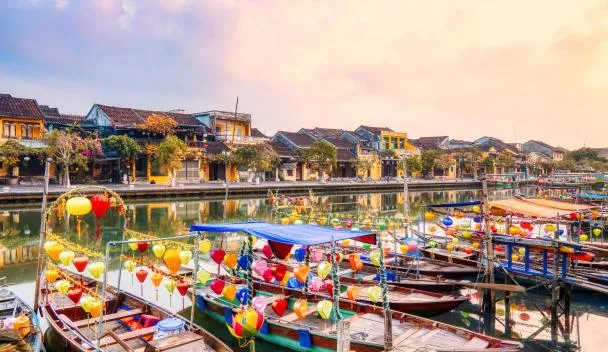
Narrow lanes glowing softly beneath colorful lanterns.
Yet everything here is real.
For hundreds of years, Hoi An served as one of Southeast Asia's most important trading ports, connecting merchants from Vietnam, China, Japan, India, and Europe.
The result is a fascinating cultural blend visible everywhere.
A Japanese bridge.
Chinese assembly halls.
Vietnamese ancestral homes.
French colonial influences.
Few destinations in Asia tell such a rich story through their streets alone.
Walking here feels less like sightseeing and more like wandering through living history.
The Magical Hour That Changes Everything
Most visitors enjoy Hoi An during the day.
The experienced travelers stay for sunset.
As daylight fades, thousands of lanterns gradually illuminate the town.
Golden reflections dance across the Thu Bon River.
The streets glow amber and crimson.
The air fills with the scent of grilled seafood, fresh herbs, incense, and river breezes.
Musicians play softly in hidden corners.
Small wooden boats drift across the water carrying lanterns and smiling visitors.
For a few hours each evening, Hoi An becomes something almost impossible to describe.
It doesn't feel like a city.
It doesn't feel like a museum.
It feels like a dream that somehow exists in reality.
Many travelers arrive expecting a charming town.
They leave wondering why they have never experienced anything quite like it before.
The Hidden Hoi An Most Tourists Never Discover
The Ancient Town deserves its reputation.
But the real magic often waits beyond it.
Wake up early.
Rent a bicycle.
Leave the lantern-filled streets behind.
Within minutes, the scenery transforms.
Rice fields stretch toward the horizon.
Water buffalo graze peacefully beside narrow country roads.
Farmers wearing traditional hats work fields that have supported local families for generations.
Children wave enthusiastically from village pathways.
There are no crowds.
No ticket booths.
No souvenir shops.
Only everyday life unfolding naturally.
Many visitors describe these quiet rural moments as the most authentic experiences of their trip.
A Food Scene That Deserves Global Recognition
Hoi An is not simply one of Vietnam's most beautiful destinations.
It is one of its most delicious.
Food here reflects centuries of cultural exchange.
One dish in particular has become legendary.
Cao Lau.
Found almost exclusively in Hoi An, this unique noodle dish combines smoky pork, fresh herbs, crisp textures, and flavors unlike anything else in Vietnam.
Then there is White Rose Dumplings.
Delicate rice dumplings shaped like flower petals.
Fresh seafood arrives daily from nearby waters.
Family-owned restaurants serve recipes passed through generations.
Cooking classes attract visitors from around the world who want to bring a small piece of Hoi An home with them.
The remarkable thing is not just the quality of the food.
It is the feeling behind it.
Meals here are rarely rushed.
Food remains a social ritual.
A conversation.
A celebration.
The People Who Make Hoi An Feel Different
Beautiful buildings can be photographed.
Hospitality cannot.
One of Hoi An's greatest strengths is its people.
Local residents often greet visitors with genuine warmth rather than rehearsed tourism smiles.
Shop owners remember returning guests.
Cafe owners recommend hidden spots.
Tailors proudly share stories about their craft.
Fishermen along the river speak openly about traditions that continue today.
There is an authenticity here that travelers immediately recognize.
And increasingly, that authenticity is exactly what international visitors are searching for.
Beyond the Ancient Town
One of Hoi An's greatest advantages is its location.
Within a short distance, travelers can experience entirely different landscapes.
An Bang Beach offers long stretches of sand and relaxed oceanfront cafes.
The Coconut Forest provides boat rides through winding waterways shaded by water palms.
Nearby fishing villages reveal a slower rhythm of coastal life.
Mountain adventures, cultural landmarks, and vibrant cities all sit within easy reach.
Few destinations offer such diversity within such a compact area.
When Should You Visit?
The most comfortable period generally falls between February and May.
The weather tends to be warm, dry, and ideal for walking, cycling, photography, and beach excursions.
Even outside peak seasons, Hoi An retains much of its charm.
Rainy days often make the lantern-lit evenings feel even more atmospheric.
Is Hoi An Expensive?
One reason international travelers continue choosing Vietnam is exceptional value.
Hoi An offers experiences suitable for nearly every budget.
Luxury riverside resorts coexist with charming boutique hotels and affordable guesthouses.
Street food remains remarkably inexpensive.
High-quality dining often costs far less than comparable experiences in Europe or North America.
The value-to-experience ratio is difficult to beat.
Questions Travelers Often Ask
How many days should I stay in Hoi An?
Three to five days allows enough time to enjoy both the famous attractions and the hidden corners many visitors miss.
Is Hoi An touristy?
The Ancient Town attracts visitors, especially in the evening. However, step just a few streets away or explore the surrounding countryside, and a much quieter side quickly emerges.
Can I explore without a guide?
Absolutely.
Walking and cycling remain the best ways to discover the town's character.
Some of the most memorable moments happen entirely by accident.
Why Travelers Keep Returning
There are destinations you check off a list.
Hoi An is not one of them.
People rarely speak about visiting Hoi An once.
Instead, they talk about returning.
Returning for another lantern-lit evening.
Returning for another bowl of Cao Lau.
Returning for another bicycle ride through rice fields at sunrise.
Returning because they discovered something increasingly rare in modern travel.
A place that still feels human.
A place that rewards curiosity.
A place that leaves you feeling calmer than when you arrived.
Long after the photographs have been stored away and the suitcases unpacked, many travelers remember one simple feeling:
For a few days, life felt beautifully uncomplicated.
And that alone may be reason enough to book the journey.


0 nhận xét:
Post a Comment