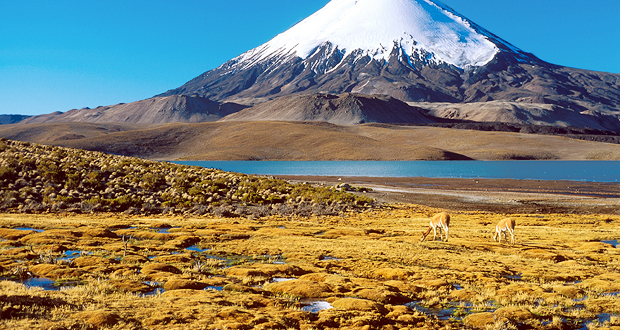
Listen closely to the absolute nothingness at the edge of the world. At 4:45 AM on a vast, high-altitude plateau in southwestern Bolivia, your lungs inhale an air so crisp and thin it feels like breathing fractured diamonds. Before the first dawn light cracks open the eastern sky, a profound, bone-deep freeze holds the landscape completely static. There are no rustling leaves, no bird calls, and no ocean waves. There is only the subtle, metallic crunch of salt crystals shifting under your boots as the sub-zero wind sweeps off the Andean peaks.
This is the Salar de Uyuni, an immense, high-desert wonderland resting at nearly 12,000 feet above sea level. Spanning over 4,000 square miles, it is the largest salt flat on Earth, a primordial geological remnant of prehistoric lakes that dried up millennia ago, leaving behind a white crust of pure lithium, magnesium, and salt several feet thick.
Global travel algorithms indicate a major, structural pivot in Western travel interest toward extreme geographical phenomena and profound isolation. Discerning travelers from North America and Western Europe are moving past conventional mountain tracking and crowded coastal spots. They are searching for locations that offer an absolute sensory reset—places that reshape our basic understanding of horizon and sky. Salar de Uyuni has taken center stage in this high-end exploration movement, attracting those who wish to leave the modern grid behind and stand in a vast, pristine wilderness that looks and feels like the morning of creation.
The Salt Harvesters of Colchani: Sun-Baked Stone and Collective Quiet
To comprehend the real identity of this high-altitude desert, you must slow down your transit and explore the dusty, salt-brick settlement of Colchani, located on the true threshold of the flats. Here, a small community of indigenous Aymara families has lived for generations, working in the blinding glare of the flats to harvest raw mineral salt using basic manual tools.
The Aymara people of the Altiplano possess a quiet, deeply interior dignity. Their faces are beautifully weathered into deep lines by the fierce high-altitude sun and the unrelenting mountain wind. Their hospitality is not dramatic or loud; it is observant, steady, and deeply communal, rooted in the ancient Andean philosophy of Ayni—the sacred law of mutual help and reciprocity.
If you linger by a conical pile of drying salt, an elder worker might stop his wooden shovel for a brief moment. He won't offer a rehearsed historical tour. Instead, he might fix his dark eyes on the white horizon, adjust his thick wool knit cap, and hand you a raw, unrefined pink salt crystal. In his quiet manner, you witness an ancient human adaptation—a lineage of families who have learned to survive and thrive by listening to the subtle movements of the desert, respecting the mountain gods (Apus), and maintaining an unbroken harmony with an environment that would conquer the unprepared explorer.
The Hearth of the Andes: Spiced Llama Steaks, Quinoa Soups, and Singani Fires
The food of the Bolivian Altiplano is defined by pure survival. In an alpine desert where virtually nothing grows except hardy native grains, the local palate relies heavily on intense warmth, naturally preserved tubers, and rich proteins built to sustain bodies moving through high altitudes.
The Melting Savor of Charque and Quinoa Real
The defining meal after a long day on the salt flats is a hot plate of Charque de Llama served alongside Quinoa Real. Lean llama meat is salted and sun-dried on the high ridges until it becomes incredibly rich and concentrated, then shredded and flash-fried until crispy. It is served over a bed of fluffy, nutty native quinoa that grows exclusively in the arid soils of the plateau. The texture is spectacular—crisp, intensely savory, slightly gamey, and perfectly balanced by the earthy richness of large, boiled Andean corn kernels (mote).
The Warming Sip of Sopita de Mani
As the desert temperature plunges rapidly with the setting sun, take a seat inside a small, mud-walled tavern to enjoy a steaming bowl of Sopa de Maní (Peanut Soup). This rich broth is slow-simmered with beef bones, peas, potatoes, and a thick paste of toasted, stone-ground raw peanuts. Scented heavily with wild Andean marigold (huacatay) and topped with a handful of crispy, thin-fried potato sticks, the first spoonful is intensely comforting. The creamy richness coat the throat, providing immediate, deep warmth that perfectly counteracts the freezing mountain night.
The Island of Giants: Crimson Lakes and Fossilized Coral
While the pure white center of the flats draws the initial eye, the true, emotional magic of the Altiplano belongs to those who travel deeper into the rugged, volcanic landscape of the Eduardo Avaroa Reserve.
The Cactus Citadel of Incahuasi Island
Rising directly out of the flat, blinding sea of white salt stands Incahuasi Island, a rugged, hilly outcrop composed of ancient, fossilized coral reefs that once sat beneath the prehistoric lake surface. The island is entirely populated by thousands of giant, slow-growing Trichocereus cacti, some reaching heights of over thirty feet and growing at a rate of just one centimeter a year. Climbing the sharp, volcanic stone paths to the island’s summit at sunrise, with the giant green spires casting long shadows across an endless, uninterrupted plain of white salt, feels like wandering through a forgotten terrestrial reef.
The Surreal Crimson of Laguna Colorada
For an experience of absolute artistic scale, drive south across the desert passes to the breathtaking shores of Laguna Colorada (The Red Lagoon). This shallow, salt-rich lake glows a deep, fiery crimson-red, caused by specific algae sediments reacting to the intense solar radiation. Thousands of rare James’s, Andean, and Chilean flamingos gather in the shallow waters, their bright pink feathers contrasting brilliantly with the deep red water and the white crusts of pure borax along the shoreline. Standing on the windy edge of this crimson lake, surrounded by active volcanic peaks, is an overwhelming reminder of the raw, tectonic power of the Andes.
The Altiplano Compendium: Practical Strategy for the High Desert
The Two Faces of the Flats
Salar de Uyuni completely changes its physical personality based on two distinct seasonal cycles. The absolute premier window for international travelers seeking the legendary "Mirror Effect" is the rainy season, from January to March. During these months, a thin layer of rainwater accumulates on top of the salt crust, creating a massive, perfectly still mirror that reflects the blue sky, white clouds, and stars so flawlessly that the horizon line completely vanishes. Conversely, the dry season from May to October offers an entirely different, geometric marvel: the water dries up completely, revealing an endless expanse of cracked, hexagonal salt tiles that are ideal for creative perspective photography and smooth overland navigation.
The Overland Route
Navigating to this high-altitude sanctuary requires a deliberate approach to avoid travel exhaustion. The most efficient and comfortable route for international voyagers is to fly into El Alto International Airport (LPB) in La Paz, followed by a short connecting flight to Joya Andina Airport (UYU) in the town of Uyuni. To explore the flats safely, bypass standard tour providers and book a private, customized multi-day expedition in an air-conditioned 4x4 vehicle equipped with oxygen tanks, satellite communication, and an experienced local Aymara driver-guide who knows how to navigate the trackless salt safely.
The Value of the Frontier
Because the southwestern corner of Bolivia prioritizes rugged, landscape-forward eco-exploration over mass commercialized resorts, your travel budget supports local infrastructure and conservation:
A traditional three-course Altiplano lunch with fresh quinoa and llama steak for two: $15.00 to $22.00.
An authentic, heavy alpaca wool sweater hand-knit by village artisans in Colchani: $35.00 to $65.00.
A private, full-day custom 4x4 expedition across the flats with a driver: $120.00 to $180.00.
A premium night inside a hotel built entirely of local salt blocks on the edge of the flats: $140 to $260 per night.
Practical Tips and Altitude Protocols
Acclimatization First: The Salar de Uyuni sits at an extreme altitude that can quickly cause altitude sickness (soroche) for unprepared travelers. Spend at least two to three days resting in lower-altitude areas like Sucre or La Paz before heading up to the flats, drink plenty of water, avoid heavy meals or alcohol upon arrival, and sip traditional coca leaf tea to help your body adapt.
Extreme Thermal Gear: The desert temperature shifts dramatically within minutes of sunset, dropping from a comfortable 65°F during the day to a freezing 14°F at night. Pack high-tier technical thermal base layers, a heavy down jacket, windproof outer shells, a fleece hat, and insulated gloves.
Solar Protection: The white salt crust acts as a massive reflector, amplifying the intense high-altitude UV rays from every direction. Bring category 3 or 4 polarized sunglasses to prevent snow blindness, high-factor sunblock, and protective lip balm.
Vehicle Integrity: The mineral salt is highly corrosive to electronics and machinery. Keep your camera lenses protected from salt dust, wipe down your gear after exploration, and ensure your private vehicle provider washes the undercarriage daily to maintain safety standards.
The Ultimate Insider Secret: If you explore the flats during the dry season, coordinate with your guide to drive out to the absolute center of the salt expanse at precisely 11:30 PM. Step out of the vehicle and turn off all lights. Sit down directly on the cold, hexagonal salt tiles and look straight up. At this altitude, completely free from light pollution, the Milky Way doesn't appear as a distant cloud; it arches across the sky as a brilliant, glowing ribbon of billions of stars that feels close enough to touch. Listen to the absolute, echoing silence of the high desert while the starlight illuminates the white floor around you. In that immense, cosmic stillness, you will realize you aren't just looking at a beautiful view; you are standing on the silent, beautiful edge of the universe itself.