There are destinations you visit because they are famous.
And then there are places you visit because something inside you quietly whispers that you need to see them before the rest of the world does.
Ha Giang is one of those places.
The first time I rounded a mountain pass in Vietnam’s far north, I instinctively pulled my motorbike to the side of the road.
Not because I was tired.
Not because I needed directions.
But because the landscape ahead seemed almost impossible.
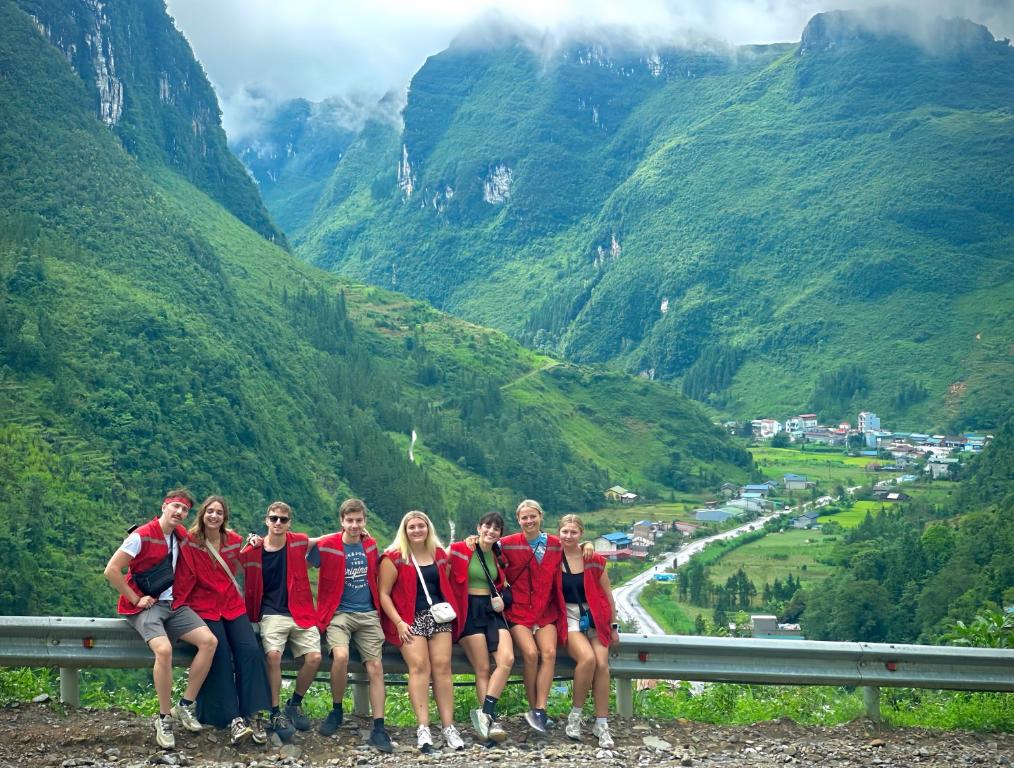
Massive limestone peaks stretched endlessly toward the horizon.
Clouds drifted through deep valleys.
Tiny villages clung to mountainsides where life had continued largely unchanged for generations.
The silence was profound.
The scale was overwhelming.
And for several minutes, I simply stood there staring.
In an era when many destinations feel increasingly crowded and commercialized, Ha Giang offers something rare:
A genuine sense of discovery.
Why International Travelers Are Suddenly Talking About Ha Giang
For years, Ha Giang remained one of Vietnam's best-kept secrets.
Travelers who ventured here often described it as the highlight of their entire Southeast Asia journey.
Word spread.
Photographs appeared online.
Travel documentaries began showcasing its landscapes.
Today, growing numbers of travelers from Europe and North America are adding Ha Giang to their Vietnam itineraries, searching for experiences that feel authentic, adventurous, and unforgettable.
Yet despite its rising popularity, Ha Giang still feels wonderfully untamed.
This is not a destination built around tourism.
It is a destination built around nature, culture, and human resilience.
Visitors simply happen to be welcomed into it.
The Road That Changes People
Ask anyone who has traveled through Ha Giang what they remember most.
The answer is usually simple:
The road.
The legendary Ha Giang Loop has become one of Asia's most celebrated road journeys.
But calling it a road trip barely captures the experience.
Each day reveals landscapes that seem entirely different from the day before.
Towering mountain passes.
Emerald valleys.
Ancient stone plateaus.
Terraced rice fields carved into impossible slopes.
Remote villages hidden among peaks.
The journey feels cinematic.
Every turn offers another reason to stop.
Another photograph.
Another moment of disbelief.
The remarkable thing is not that the scenery is beautiful.
It is that the beauty never seems to end.
Standing Above the Clouds at Ma Pi Leng Pass
If Ha Giang has a crown jewel, it is Ma Pi Leng Pass.
The road winds along towering cliffs overlooking the Nho Que River far below.
The scale feels almost unreal.
Standing here, you begin to understand why so many travelers describe Ha Giang as Vietnam's most spectacular region.
Wind rushes through the mountains.
Clouds cast moving shadows across the valleys.
The river below appears like a jade ribbon threading through stone giants.
Many visitors arrive expecting a scenic viewpoint.
Few expect an experience that leaves them speechless.
Villages Hidden Between the Mountains
The landscapes may attract travelers.
The people make them stay longer.
Scattered throughout Ha Giang are villages inhabited by ethnic communities whose traditions remain deeply connected to the mountains.
Life here follows rhythms shaped by seasons rather than schedules.
Markets become social gatherings.
Family homes welcome visitors with extraordinary hospitality.
Traditional clothing remains part of everyday life.
Languages, customs, and cultural practices continue to thrive.
Travelers often discover that some of their most memorable moments happen far from famous viewpoints.
Sharing tea with a local family.
Watching children play in mountain villages.
Listening to stories passed through generations.
These experiences create connections that photographs alone cannot capture.
The Hidden Beauty Beyond the Famous Loop
Most visitors focus on the main route.
The real explorers venture further.
Small roads branch into valleys rarely mentioned in guidebooks.
Remote hamlets emerge from morning mist.
Farmers work terraced fields using methods refined over centuries.
Ancient stone fences trace mountain landscapes unlike anywhere else in Vietnam.
Here, modern life feels surprisingly distant.
Not absent.
Just quieter.
More intentional.
More connected to nature.
For many travelers, this is precisely the appeal.
A Food Culture Shaped by the Mountains
Mountain life has created a distinctive culinary identity.
Meals reflect the region's climate, geography, and cultural diversity.
Local markets overflow with seasonal produce, herbs, mountain vegetables, and traditional dishes prepared according to family recipes.
Corn wine remains an important part of local hospitality.
Smoked meats, hearty soups, and slow-cooked specialties provide warmth during cooler evenings.
The flavors feel deeply rooted in place.
Nothing seems manufactured for tourists.
Everything feels genuine.
And that authenticity resonates strongly with international visitors.
The Character of the People
One of Ha Giang's greatest treasures cannot be photographed.
It is the warmth of its people.
Visitors frequently describe encounters marked by sincerity, kindness, and curiosity.
A smile from a farmer.
An invitation to share tea.
A local pointing toward an overlooked viewpoint.
A family offering directions despite language barriers.
These moments reveal something important.
Hospitality here is not a business strategy.
It is simply part of daily life.
And travelers feel the difference.
When Is the Best Time to Visit?
Each season offers a completely different experience.
September and October bring golden rice terraces glowing across mountain slopes.
October and November introduce breathtaking buckwheat flower fields.
Spring fills valleys with blossoms and fresh greenery.
Summer reveals vibrant landscapes beneath dramatic skies.
There is no single perfect season.
Only different versions of beauty.
Is Ha Giang Expensive?
Compared with many famous adventure destinations around the world, Ha Giang remains remarkably affordable.
Accommodation ranges from family-run homestays to comfortable boutique lodges.
Local food offers exceptional value.
Transportation costs remain reasonable.
For travelers seeking extraordinary experiences without luxury-level prices, few destinations deliver more.
Questions Travelers Often Ask
Is Ha Giang suitable for beginners?
Yes, although travelers unfamiliar with mountain roads often choose guided tours or experienced local drivers.
How many days should I spend here?
Three to five days is ideal for experiencing the Ha Giang Loop comfortably.
Is it worth traveling so far north?
Without question.
Many travelers who visit multiple regions of Vietnam ultimately rank Ha Giang as their favorite destination.
Can I visit without riding a motorbike?
Absolutely.
Private drivers, tours, and local guides make the region accessible to travelers of all experience levels.
The Feeling That Stays With You
Years from now, you may forget the name of a particular mountain pass.
You may struggle to remember exactly which village you visited on a certain afternoon.
But you will remember the feeling.
The feeling of standing above clouds.
The feeling of watching sunlight sweep across endless peaks.
The feeling of realizing how vast and beautiful the world can still be.
Ha Giang is not polished.
It is not convenient in the way many modern destinations are.
And that is exactly its magic.
Because what travelers discover here is not simply a destination.
They discover adventure.
Wonder.
Perspective.
And perhaps most importantly, they discover a corner of Vietnam that still feels gloriously wild.
The kind of place that reminds you why travel matters in the first place.
And once you've experienced it, ordinary landscapes never quite look the same again.