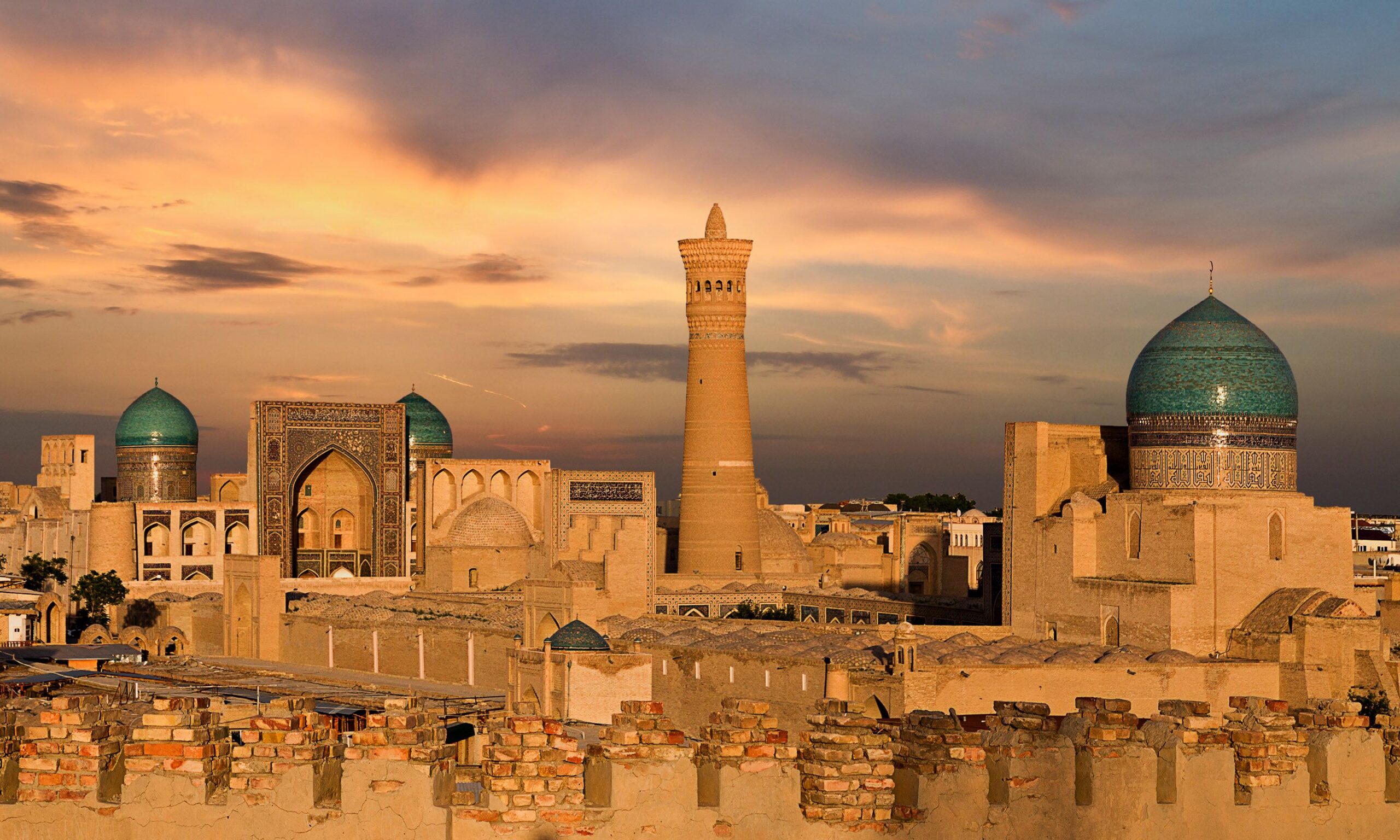
Step onto a flat-roofed terrace in the old city just as the ferocious desert sun begins to relent. Before the first cool breeze slips across the Kyzylkum Desert, a heavy, intoxicating aroma rises from the historic squares below. It is a sensory thumbprint unique to this oasis on the ancient Silk Road—a dense mixture of spit-roasted mutton fat, sweet dried green raisins, charred cumin, and the dry, mineral dust of sun-baked mud bricks that have stood for a millennium.
Look out across the horizon. There are no soaring glass skyscrapers or coastal infinity pools here. Instead, a sea of turquoise domes, sweeping terracotta arches, and ancient minarets punctuates the skyline. This is Bukhara, Uzbekistan.
Global search intent data reveals a massive, unprecedented migration of curiosity toward Central Asia. Sophisticated travelers from the United Kingdom, Europe, and North America are actively turning away from over-touristed European capitals and highly commercialized Asian beach destinations. They are searching for deep, untouched historic preservation, monumental Islamic architecture, and a living cultural landscape that operates on centuries-old traditions. Bukhara has risen to the absolute top of this travel movement, acting as an atmospheric portal to an era when traders, scholars, and poets traveled across continents to exchange ideas and treasures.
The Master of the Indigo Thread: Ikat Weavers and Shared Tea Rituals
To feel the human rhythm of Bukhara, you must wander away from the restored monuments and lose yourself in the labyrinthine Jewish Quarter or the vaulted, cool alleyways of the ancient Trading Domes. Beneath the heavy brick dome of the Toqi Sarrofon, you will find small, family-owned workshops where the intoxicating art of Ikat weaving is fiercely preserved.
The artisans of Bukhara possess an incredibly deep, dignified warmth. Their hospitality is not a transactional hospitality; it is an foundational cultural law known as mehmonnavozlik. If you linger near a hand-operated wooden loom, the master weaver will not try to rush a sale. Instead, he will gently gesture toward a low, tapestried bench (tapchan) and pour you a cup of hot green tea flavored with crushed cardamom seeds and saffron.
The Uzbek people approach the world with an open, bright sincerity. As you watch the master's fingers separate silk threads dyed naturally with pomegranate skins and walnut husks, he will tell you about the patterns. These are not random designs; they are visual poetry, representing protection, fertility, and the flow of the Amu Darya river. To buy a piece of silk here is to take home a physical fragment of a conversation, a shared laugh, and an ancient art form passed down from father to son through twenty generations.
The Smoke of the Copper Cauldron: Spiced Lamb Plóv and Saffron Tea Halva
The gastronomy of Bukhara is heavy, celebratory, and intimately tied to the historic trade routes. It is a culinary language that honors slow fires, cast-iron cooking, and the perfect balance of meat, fat, and native grain.
The Sacred Layering of Bukharan Oshi Sof
While every region in Uzbekistan claims the title for the best Plóv, Bukhara offers a completely unique, ancient version known as Oshi Sof. Unlike standard plóv, which is stirred together, Oshi Sof is cooked in layers inside massive, heavy copper cauldrons. Layers of tender, bone-in pasture lamb, sweet yellow carrots, unpeeled garlic bulbs, and long-grain rice are steamed together over a slow wood fire, occasionally drizzled with boiling sesame oil. The result is a spectacular dish where every grain of rice remains distinct, infused with the smoky essence of the meat and the natural sweetness of the carrots. It is eaten communal style, shared between friends, and pairs perfectly with a side of sharp, salted radish salad.
The Spiced Warmth of the Silk Road Tea House
When the afternoon heat peaks, retreat into the cool stone walls of the 16th-century Silk Road Tea House. Here, traditional spice blenders prepare bowls of black and green teas infused with fresh ginger, cinnamon, and wild mint. Sip the steaming brew alongside a small plate of Halva—a rich, dense confection made from ground sesame seeds, local honey, and crushed walnuts, scented heavily with local saffron. The combination of the spicy, hot tea and the melting sweetness of the halva provides an immediate, grounding comfort that has refreshed weary desert travelers for five hundred years.
The Unbroken Minaret: Blue Tilings and Secret Courtyards
While the sprawling Registan of Samarkand is famous for its massive scale, Bukhara’s architecture is remarkably intimate, allowing you to walk through an entirely intact medieval cityscape.
The Unconquered Tower of Kalyan
Standing in the center of the Poi Kalyan complex is the magnificent Kalyan Minaret, a soaring, 150-foot tower of circular brickwork built in 1127. When Genghis Khan swept through Central Asia, destroying every city in his path, he stood at the base of this minaret, looked up at its intricate, geometric brick patterns, and was so awed by its sheer beauty that he ordered his army to spare it from destruction. Standing at the base of this ancient column at twilight, as the call to prayer echoes off the mud-brick walls and the first desert stars emerge, you are struck by a profound sense of historical survival.
The Sunken Sanctuary of Chor Minor
Hidden deep within a quiet, residential neighborhood of mud-brick homes lies Chor Minor (Four Minarets). Built in 1807 by a wealthy Turkmen merchant, this small, enchanting gatehouse features four turquoise-domed towers squeezed tightly together. Each tower is adorned with completely unique geometric motifs meant to symbolize four of the world’s major religions. It is a hidden, peaceful sanctuary away from the main tourist trail, where local children kick soccer balls against ancient wooden doors and elderly neighbors sit in the shade, whispering stories of the old oasis.
The Caravan Protocol: Strategic Intelligence for the Oasis Explorer
The Oasis Seasons
Bukhara is a desert city, meaning its weather moves between dramatic extremes. The absolute premier windows for international travelers are the shoulder seasons of April to May and September to October. During these months, the desert air is delightfully crisp in the mornings and pleasantly warm in the afternoon, creating perfect conditions for exploring the open-air historic districts on foot. Summer (July and August) brings blistering, intense heat that can push past 105°F, while winter drops into a freezing, biting chill.
The Silk Road Rail
Navigating to this ancient oasis has become exceptionally smooth thanks to modern infrastructure. The most elegant and efficient route is to fly into Tashkent International Airport (TAS), and then board the Afrosiyob high-speed train. This sleek, Spanish-built bullet train glides quietly across the vast desert landscape, connecting Tashkent, Samarkand, and Bukhara in just under under four hours. It is highly recommended to book your first-class train tickets at least two months in advance, as seats fill up rapidly with international travelers.
The Value of the Bazaar
Because Uzbekistan heavily protects its local heritage and limits large international corporate commercialization within historic zones, Bukhara offers an incredibly sustainable, high-value travel experience:
A massive, traditional copper-cauldron plóv lunch for two with tea: $8.00 to $12.00.
A genuine, hand-woven silk Ikat scarf purchased directly from the artisan: $40.00 to $80.00.
A private, full-day walking journey led by an expert local historian: $50.00 to $70.00.
A beautifully converted 15th-century madrasah boutique hotel room: $75 to $150 per night.
Cultural Etiquette and Desert Mindset
Bukhara is a historic cradle of Islamic scholarship and retains a deeply respectful, traditional social fabric. When exploring active mosques or madrasahs, dress modestly; both men and women should ensure their shoulders and knees are fully covered. Always use your right hand when greeting locals, exchanging money, or passing food at the table. The desert air is incredibly dry, so carrying high-quality hydration and skin protection is essential. Pack comfortable, sturdy walking shoes for the uneven brick pathways, a lightweight scarf to protect against occasional desert dust winds, and an open, patient heart ready to accept the boundless hospitality of the local people.
The Ultimate Insider Secret: If you explore the old city, make your way to the ancient pool of Lyabi-Khauz at precisely 6:15 PM. Walk past the crowded cafes to the quiet, shaded northern side of the square where ancient, gnarled mulberry trees—planted in the 1400s—hug the stone steps of the water. Sit silently on the stone as the twilight turns the sky a deep, indigo blue. Watch the warm golden lights illuminate the grand facade of the Nadir Divan-begi Madrasah across the water, while the gentle aroma of shashlik smoke drifts from the nearby courtyards. In that immense, historic stillness, you will realize you are resting in the exact same spot where weary caravan travelers have unbuckled their boots and shared stories for a thousand years.


0 nhận xét:
Post a Comment