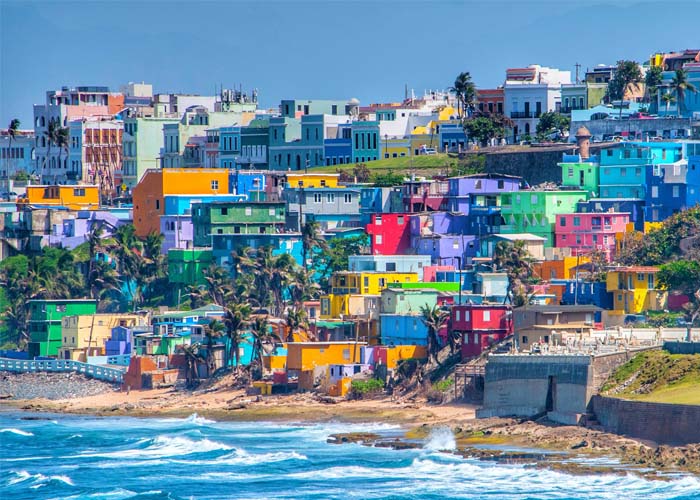
You know that feeling when a song comes on and your body moves before your brain catches up? That’s Puerto Rico at 6:47 p.m. in June. The air is warm like exhaled breath, a cuatro guitar is arguing with a reggaeton bassline from a passing Jeep, and the whole of Old San Juan smells like fried plantains and sea spray. You didn’t plan to dance. But here you are.
And you’re not alone. Puerto Rico is not just trending in 2026 — it’s erupting. Forward bookings are up to historic highs, international flight routes have multiplied, and the island is now pulling travelers from Mexico, Brazil, Spain, Italy, the UK, and the US at record pace. Global travelers are swapping conflict-zone uncertainty for Caribbean certainty, and Puerto Rico is answering with beaches, bomba drums, and the kind of welcome that feels personal.
This isn’t the Puerto Rico your cruise-ship uncle remembers. This is 2026’s version: louder, deeper, and far too alive to be a layover.
Why the World Suddenly Can’t Get Enough
Three things happened at once. First, airlift exploded. Discover Puerto Rico confirmed that international air connectivity and hotel reservations for Summer 2026 are at historic highs. Madrid, Bogotá, London, São Paulo — all added seats. Second, safety. As travelers reroute away from Middle East conflicts, Caribbean destinations with US infrastructure, no passport required for Americans, and strong healthcare are winning. Third, the island bet big on culture, not just beaches. You can now land in San Juan at noon and be in a chinchorro roadside bar by 2 p.m., eating alcapurrias while a local explains why plena music started as a newspaper for the poor.
The result? A destination that gives you the ease of a US territory with the soul of Latin America. No money exchange. No roaming charges for US phones. But also, no manufactured resort version of culture. What you get is raw and real.
The Moments That Ruin You for Other Islands
Bioluminescence That Feels Like Magic, Not Science
You’ve seen glowing water photos. Mosquito Bay in Vieques is different. On moonless nights, every paddle stroke sets the bay on fire. Dinoflagellates explode in blue-white light, and when you trail your hand in the water, you leave galaxies behind you. It’s one of the brightest bioluminescent bays on Earth, and the only one you can legally swim in. Go with a local guide from Esperanza. When he cuts the kayak motor and says, “Just listen,” you’ll hear the coquí frogs start their night chorus. That sound is Puerto Rico’s heartbeat.
Sunrise at Castillo San Felipe del Morro
Forget midday crowds. Set your alarm for 5:30 a.m. and walk the field in front of El Morro. The 16th-century fortress is still asleep, and the Atlantic crashes against the rocks 140 feet below. Kite flyers show up before 7 a.m. because the trade winds are perfect. You’ll share the grass with joggers, old men walking dogs, and the occasional iguana. It’s the only UNESCO site where you can do cartwheels and no one will stop you.
Coffee in the Clouds at Hacienda Buena Vista
Puerto Rico was once the coffee king of Europe. In the mountains of Ponce, you can taste why. At this 19th-century plantation, the coffee still dries on sliding sun platforms and gets roasted in a wood-fired drum. You sip café con leche while the represa water wheel groans. No Starbucks can touch the taste of beans grown in volcanic soil and carried by mule 100 years ago.
Hidden Gems Your Hotel Concierge Won’t Mention
Charco Azul in Vega Baja
“Blue Pool” is a local secret: a swimming hole in a river, fed by waterfalls, hidden 20 minutes off the highway. The water is mineral-cold and electric blue. On weekdays, you might have it to yourself except for a family grilling pinchos on the rocks. Bring water shoes. The walk in is muddy, and that’s why tour buses skip it.
La Placita de Santurce on a Sunday
Tourists know La Placita as San Juan’s bar district. Locals know it as a farmers market at 7 a.m. on Sundays. Farmers from the central mountains sell recao, plantains, and coffee next to DJs packing up from Saturday night. Get a quesito pastry and watch the island wake up. By 11 a.m., it’s gone. By 11 p.m., it’s a salsa street party. Same place, two countries.
Cueva del Indio in Arecibo
Everyone goes to Camuy Caves. Drive 15 minutes east and you’ll find limestone cliffs carved with Taíno petroglyphs, 500+ years old. You climb down a ladder into a cave that opens to the ocean. Waves explode through blowholes. There’s no railing. No gift shop. Just you, ancient art, and the Atlantic trying to reclaim the island.
The Culture That Grabs You by the Hand
Puerto Ricans don’t do “small talk.” They do la brega — the hustle, the struggle, the beautiful art of figuring it out with humor. Stand at a bus stop looking confused and someone will walk you to your destination. Ask for directions and you’ll get a 5-minute story about the person’s cousin who lives there.
Three unwritten rules:
Noise is love. If a family gathering is quiet, something’s wrong. Salsa, dominoes slamming, and ten conversations at once mean you’re welcome.
The island runs on “ahorita”. It means “right now” and “in a bit.” Your food will come ahorita. Relax. Have a Medalla beer.
Pride is not a flag, it’s a verb. After Hurricane Maria, jibaros from the mountains drove food to strangers. In 2026, that same energy fuels the art, food, and music scene. You’re not just visiting. You’re witnessing resilience.
Eat This or Regret Your Whole Life
Mofongo: Mashed fried plantains with garlic, pork cracklings, and broth. Get it relleno with shrimp at a roadside chinchorro in Piñones. Eat it with your hands. The beach is 10 feet away.
Lechón from Guavate: Every weekend, the mountain town of Guavate turns into pork heaven. Whole pigs spin on spits, skin crackling. You point, they chop. Add arroz con gandules and morcilla blood sausage. Come hungry and humble.
Piña Colada at Barrachina: Yes, it’s touristy. It’s also where the drink was invented in 1963. The bartender still blends it with coconut cream, pineapple, and Puerto Rican rum. Sit in the courtyard where it happened.
Mallorca con café: A sweet, powdered-sugar bun sliced and pressed on a grill with butter. Dunk it in coffee at 6 a.m. with bakers ending their shift. This is breakfast.
When to Go, How to Get There, What It’ll Cost
Best time: December to April is dry season — 82°F, low humidity, perfect for beaches. Summer 2026 is the boom, but May and November are shoulder-season gold: lower prices, fewer crowds, still great weather. Hurricane season runs June–November, but the island’s recovery infrastructure is now one of the Caribbean’s strongest.
Getting there: San Juan’s Luis Muñoz Marín Airport has direct flights from 50+ cities in 2026, including new routes from Madrid, Bogotá, and London. No passport for US citizens. From Europe or Latin America, it’s one of the easiest Caribbean entries.
Getting around: Uber works in San Juan. Outside the city, rent a car. Driving is on the right, signs are in Spanish, but distances are short. You can cross the whole island in 3 hours. For Vieques or Culebra, take the ferry from Ceiba or a 8-minute puddle-jumper flight.
Cost: Puerto Rico is not cheap like Southeast Asia, but it’s value-dense for the Caribbean. Mid-range hotels in 2026 run $150–$280/night. A meal at a chinchorro: $8–$12. Fine dining in Condado: $40–$70. Car rental: $45/day. Budget $120–$180/day for a comfortable trip, $250+ if you’re doing private tours and upscale stays.
The Questions You’re Already Googling
“Is Puerto Rico safe in 2026?”
Yes, especially in tourist zones. Like any destination, keep your wits in San Juan at night. The island’s biggest safety advantage is US-standard hospitals, infrastructure, and emergency response — a key reason it’s drawing travelers now.
“Do I need to speak Spanish?”
No, but try. A “buen provecho” before you eat or “gracias, mi amor” to your server will get you smiles and maybe extra tostones. English is widely spoken in San Juan.
“Can I drink the water?”
Yes. Tap water meets US EPA standards. Fill your bottle.
“Why not just go to the Dominican Republic or Jamaica?”
You could. But Puerto Rico gives you El Yunque, the only tropical rainforest in the US National Forest System. It gives you 500 years of Spanish forts next to Afro-Caribbean street art. It gives you a place where you can pay with Apple Pay, then walk 5 minutes and hear a jíbaro play décimas from the 1800s. That collision is unique.
The One Thing You Can Only Do Here
In Old San Juan, at sunset, follow the sound of drums to the Plaza del Quinto Centenario. Every week, pleneros gather for bombazos. This is bomba — Puerto Rico’s call-and-response dance born from enslaved Africans. The drummer watches the dancer’s feet and follows her. Not the other way around. She makes a move, the drum answers. It’s dialogue, flirtation, and history in real time.
You’ll stand on the cobblestones, built with Spanish ballast stone, and realize: the island is talking to you. With drums. With food. With strangers who call you familia after 10 minutes.
That’s the thing about Puerto Rico in 2026. It’s not selling you a vacation. It’s daring you to feel something.
And if you don’t go now — while the flights are cheap, the music is loud, and the bioluminescence is still bright — you’ll spend the next year watching everyone else’s videos, knowing you missed the moment.
Don’t watch. Be there.


0 nhận xét:
Post a Comment