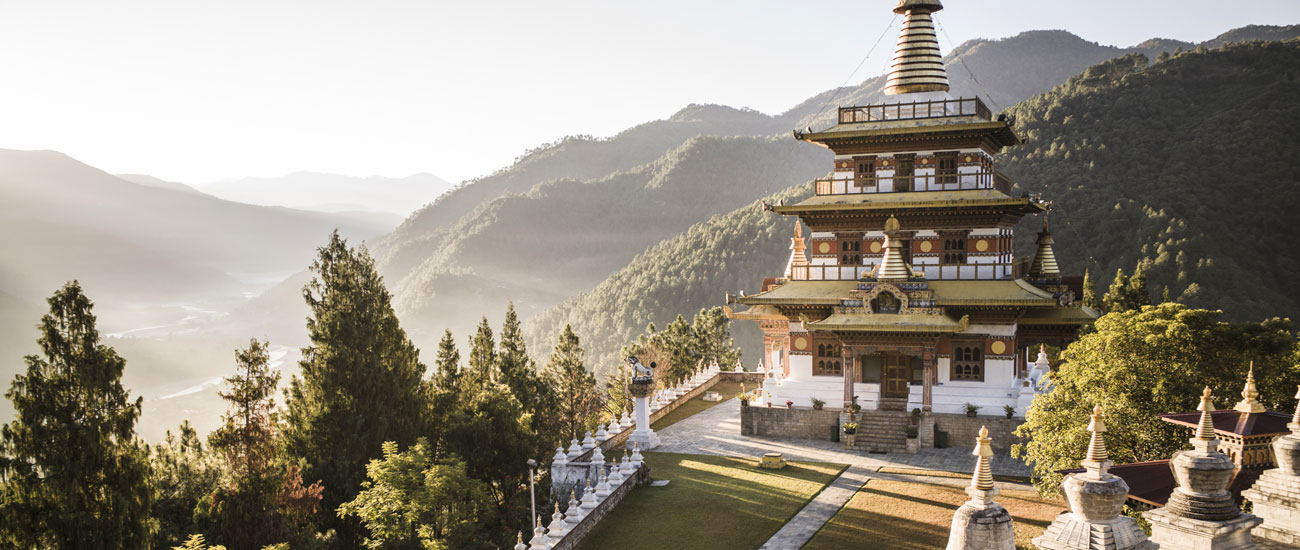
Most people don't arrive in Bhutan by accident.
It isn't the cheapest destination.
It isn't the easiest destination.
And it certainly isn't the kind of place you simply add to an itinerary because it's nearby.
People come to Bhutan because they are searching for something.
Sometimes they know what it is.
Often they don't.
Perhaps that's why so many travelers leave believing they discovered far more than a destination.
They discovered a different way of living.
The airplane descended between some of the tallest mountains on Earth.
Snow-capped Himalayan peaks pierced the clouds.
Deep valleys emerged beneath them.
Ancient forests covered entire mountainsides.
Small villages appeared like tiny brushstrokes against an endless canvas of green.
Even before landing, Bhutan felt different.
Not better.
Not worse.
Simply different.
And in today's increasingly connected world, different has become one of the rarest travel experiences of all.
A Country That Measures Happiness Differently
Most nations measure success through economic growth.
Bhutan became famous for measuring something else.
Happiness.
While the concept of Gross National Happiness has attracted global attention for years, the philosophy extends beyond politics.
Visitors quickly notice it in daily life.
The pace feels slower.
Conversations last longer.
People seem less rushed.
Families gather together.
Monasteries remain active parts of communities.
Nature is respected rather than conquered.
For travelers arriving from busy cities, the contrast can feel startling.
Then refreshing.
Then strangely addictive.
The Hike That Changes Everything
Ask ten people about Bhutan and many will eventually mention the same place.
Tiger's Nest Monastery.
Perched dramatically on a cliff nearly 3,000 feet above the valley floor, the monastery appears almost impossible.
As though someone imagined it first and built it second.
The journey begins before sunrise.
The trail climbs steadily through pine forests scented with mountain air.
Prayer flags flutter between trees.
The higher you ascend, the quieter the world becomes.
Then suddenly, through a break in the forest, you see it.
White walls.
Golden roofs.
Ancient structures clinging impossibly to vertical cliffs.
For a moment, everyone stops walking.
Not because they are tired.
Because the view steals the words from their mouths.
Few travel experiences create such a powerful emotional response.
And photographs never come close to explaining why.
The Sound of Prayer Flags in the Wind
In many destinations, landmarks define the experience.
In Bhutan, atmosphere does.
Prayer flags stretch across mountain ridges.
Rivers rush through remote valleys.
Monks chant inside centuries-old monasteries.
Bells echo softly through mountain air.
The scent of burning incense drifts from temples.
Every sense becomes engaged.
Travelers often describe Bhutan as one of the few places where they genuinely felt present.
Not distracted.
Not multitasking.
Not rushing toward the next attraction.
Simply present.
Hidden Valleys Where Time Moves Differently
While most visitors explore Paro and Thimphu, Bhutan's greatest treasures often lie deeper within its mountains.
The Phobjikha Valley feels almost untouched by modernity.
Traditional farmhouses sit among vast landscapes.
Black-necked cranes migrate here each winter, creating one of Asia's most extraordinary wildlife spectacles.
In Bumthang, ancient monasteries, forested hills, and quiet villages create an atmosphere many travelers compare to stepping back centuries.
The roads may be longer.
The journey slower.
But the reward is profound.
These places don't feel designed for tourists.
They feel real.
And authenticity leaves a deeper impression than perfection ever could.
The People You Remember Long After You Return Home
Beautiful scenery attracts visitors.
People create memories.
Bhutanese hospitality is often understated but deeply genuine.
A shopkeeper who spends twenty minutes explaining local traditions.
A monk who shares a smile without speaking a word.
A family inviting visitors to join a meal.
A guide who proudly explains the history of a sacred site.
These interactions feel natural rather than transactional.
And that authenticity becomes one of Bhutan's greatest strengths.
Many travelers arrive expecting mountains.
They leave remembering people.
Food That Reflects the Landscape
Bhutan's cuisine surprises many first-time visitors.
The country's most famous dish, ema datshi, combines chili peppers and cheese in a way that reflects Bhutan's bold culinary identity.
Meals often feature locally grown vegetables, red rice, mountain herbs, and traditional recipes passed through generations.
The flavors are distinctive.
Comforting.
Deeply connected to place.
Sharing food in Bhutan often feels less like dining and more like participating in local culture.
And that makes every meal more memorable.
Why Travelers Are Suddenly Paying Attention
For years, Bhutan remained relatively unknown outside serious travel circles.
Today, that is changing.
Modern travelers increasingly seek destinations offering more than entertainment.
They want meaning.
Connection.
Perspective.
Bhutan delivers all three.
Rather than overwhelming visitors with attractions, it invites them into experiences.
Rather than encouraging consumption, it encourages reflection.
In a world dominated by speed, Bhutan offers something radical.
Stillness.
When Is the Best Time to Visit?
Spring transforms valleys into landscapes filled with wildflowers and clear mountain views.
Autumn offers crisp air, vibrant festivals, and spectacular Himalayan panoramas.
Winter brings tranquility, fewer visitors, and magical mountain scenery.
Each season reveals a different side of the kingdom.
There is no wrong time.
Only different stories waiting to unfold.
Is Bhutan Expensive?
Compared with many destinations in Asia, Bhutan can require a larger travel budget.
However, many travelers describe the experience not as expensive, but valuable.
The quality of experiences, preservation of culture, environmental protection, and limited tourism model create a destination unlike almost anywhere else on Earth.
Visitors often leave feeling they received something far more meaningful than a traditional vacation.
The Question Travelers Keep Asking Themselves
What exactly makes Bhutan so special?
The mountains are beautiful.
But there are beautiful mountains elsewhere.
The monasteries are extraordinary.
But many countries have remarkable historical sites.
The answer is harder to define.
Bhutan changes how people feel.
Some destinations entertain you.
Some educate you.
A few transform your perspective.
Standing on a mountain trail as clouds drift through Himalayan valleys, listening to prayer flags flutter in the wind while ancient monasteries overlook forests that seem untouched by time, you begin to understand why travelers become emotional when talking about Bhutan.
Because the journey is not simply about seeing a place.
It's about experiencing a different relationship with life itself.
And long after the photographs are stored away and the souvenirs gather dust, one thought continues to return.
Not "I'm glad I visited."
But something much stronger.
"I needed that experience more than I realized."
And perhaps that is the rarest kind of destination in the world.


0 nhận xét:
Post a Comment