Some places announce themselves loudly.
Others whisper.
Naxos is a whisper.
Not because it lacks beauty. Not because it lacks history. Not because it lacks experiences worth crossing oceans for.
It whispers because it has never needed to shout.
While much of the world rushes toward Greece’s most photographed islands, a different story has been unfolding in the heart of the Aegean Sea. International travel searches for Naxos have surged dramatically as travelers seek something increasingly difficult to find in Europe: authenticity without sacrifice, beauty without crowds, and culture that feels lived rather than performed. Recent travel trend reports have identified Naxos among the fastest-growing destinations in global search interest, driven by travelers looking beyond the usual Mediterranean hotspots.
And after spending time here, it becomes obvious why.
Naxos is not trying to impress you.
That is exactly what makes it unforgettable.
The Moment You Realize Naxos Is Different
Most visitors arrive by ferry.
The approach alone feels cinematic.
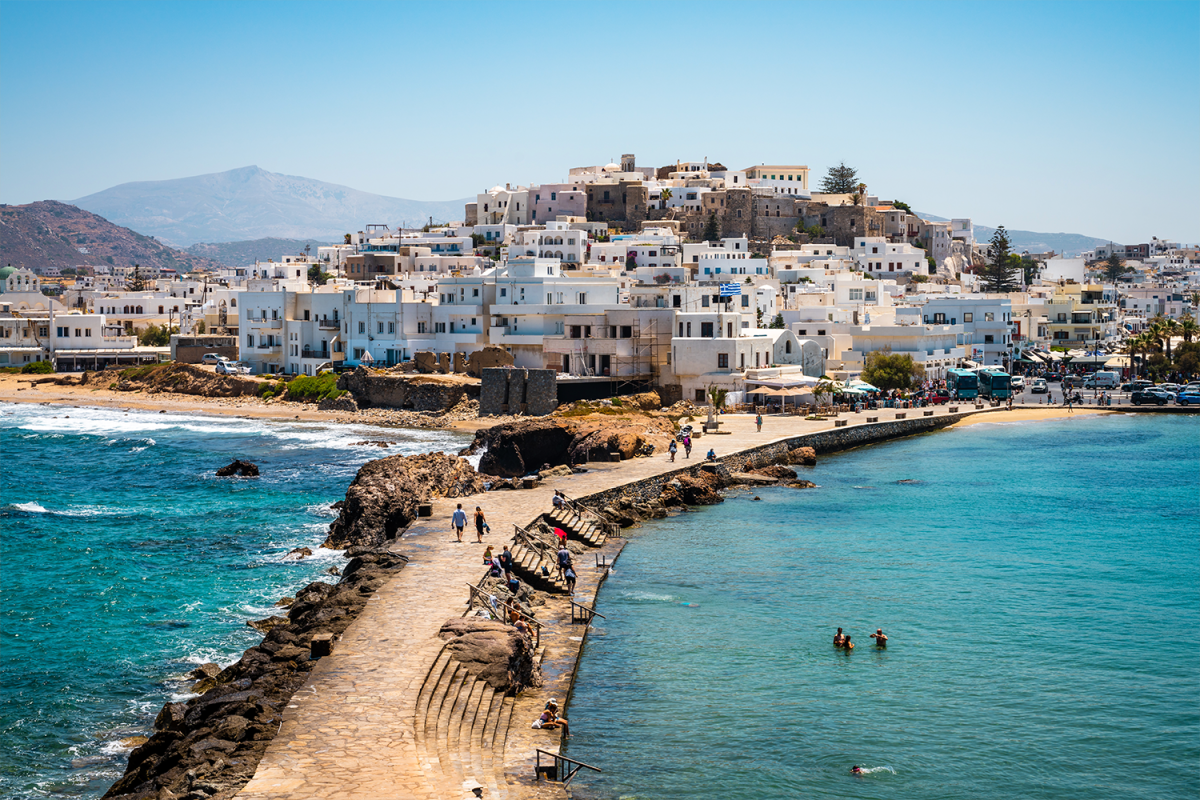
Whitewashed villages cling to distant hillsides. Ancient marble ruins emerge from golden landscapes. Mountains rise unexpectedly behind beaches that seem to belong in the Caribbean rather than the Mediterranean.
Then comes the first surprise.
Naxos feels real.
Fishermen still work the harbor before sunrise.
Grandmothers still sit outside village homes exchanging stories.
Local farmers still produce many of the ingredients that appear on restaurant tables the same evening.
Unlike destinations that feel designed for tourism, Naxos feels designed for life.
Visitors are simply invited to participate.
Why Travelers Are Suddenly Searching for Naxos
Travel habits have changed.
Many travelers are no longer looking for the most famous destination.
They are looking for the most meaningful one.
They want experiences that feel personal.
They want local culture that hasn't been polished into a marketing campaign.
They want to return home with stories instead of just photographs.
Naxos offers precisely that balance.
The island combines spectacular beaches, mountain villages, ancient history, exceptional food, and a slower pace of life without losing comfort or accessibility.
It delivers much of what travelers seek in Greece while avoiding many of the frustrations associated with overtourism.
That combination is becoming increasingly rare.
The Ancient Giant Watching Over the Sea
Every destination has a symbol.
Naxos has the Portara.
Standing alone on a tiny islet connected to the harbor by a stone causeway, this enormous marble gateway is all that remains of an unfinished temple dedicated to Apollo.
At sunrise it glows softly.
At sunset it becomes something extraordinary.
Locals and visitors gather quietly as the sun sinks into the Aegean behind the monument.
There is no grand performance.
No loud music.
No staged spectacle.
Just wind, sea, light, and history.
For many travelers, this becomes the defining memory of their entire trip.
Beaches That Make You Forget Time Exists
The beaches of Naxos are among the finest in Greece.
Yet what makes them remarkable is not simply their beauty.
It is their variety.
Some stretches of coastline seem endless, with soft golden sand disappearing into the horizon.
Others hide inside secluded coves framed by dramatic cliffs.
The water often appears impossibly clear.
Swimming here feels less like entering the sea and more like stepping into liquid glass.
Plaka Beach has become famous for good reason, but part of the magic of Naxos lies in wandering beyond the obvious.
A rented scooter or car quickly opens access to quieter stretches of coastline where entire afternoons can pass without noticing the time.
The rhythm of the island encourages exactly that.
The Villages Most Visitors Nearly Miss
Many travelers spend their entire trip near the coast.
That is a mistake.
The soul of Naxos often lives inland.
The mountain village of Apeiranthos feels frozen in another century.
Marble-paved streets wind between stone houses.
Traditional cafés serve local spirits and homemade sweets.
Conversations unfold slowly.
Nobody seems in a hurry.
Then there is Chalki, a village once at the center of the island's commerce.
Today it offers art galleries, historic architecture, and one of the most pleasant atmospheres anywhere in the Cyclades.
Walking through these villages reveals something guidebooks rarely explain.
The island's identity is shaped as much by its mountains as by its coastline.
A Food Culture That Deserves Global Recognition
Naxos possesses one of Greece's most underrated culinary traditions.
The island's fertile landscape allows local producers to create ingredients that many neighboring islands simply cannot.
Potatoes from Naxos are famous throughout Greece.
Local cheeses are exceptional.
Olive oil production remains deeply rooted in tradition.
Fresh vegetables arrive daily from nearby farms.
Seafood arrives directly from local boats.
This combination creates a food culture built on freshness rather than complexity.
One meal might include grilled octopus caught that morning, local cheese produced in the mountains, tomatoes harvested a few kilometers away, and wine from regional vineyards.
Nothing feels forced.
Everything feels connected to the land.
And somehow, that simplicity creates extraordinary flavor.
The Hidden Gem Beyond the Guidebooks
Ask a local where to go.
Then ask another.
You'll rarely receive the same answer.
That is often a sign of a destination with genuine depth.
One person may send you toward an abandoned Byzantine church hidden among olive groves.
Another might recommend a mountain trail leading to panoramic views few tourists ever see.
Someone else may direct you toward a family-run taverna with no website, no influencer campaigns, and some of the best food on the island.
These discoveries often become the highlights of a trip.
Not because they are famous.
Because they are yours.
The Character of the People
The people of Naxos carry themselves differently from residents of many heavily visited destinations.
There is pride here.
But it is a quiet pride.
Conversations feel genuine.
Hospitality feels natural rather than transactional.
Visitors are often treated less like customers and more like temporary neighbors.
This becomes particularly noticeable in smaller villages.
A brief question can become a twenty-minute conversation.
A restaurant recommendation may turn into an invitation to a local celebration.
These human interactions create the emotional connection that keeps people returning.
Legends, Marble, and Ancient Gods
Few islands can compete with Naxos when it comes to mythology.
According to ancient Greek legends, this was where the god Zeus spent part of his childhood.
The island was also closely connected to Dionysus, the god of wine and celebration.
Its mountains supplied marble used in some of the ancient world's greatest sculptures.
Walk through certain archaeological sites and you begin to understand why myths emerged here.
The landscape possesses a dramatic quality that feels larger than ordinary history.
It feels like a setting designed for stories.
The Best Time to Visit
Late spring transforms Naxos into a paradise of wildflowers, pleasant temperatures, and relatively quiet beaches.
Summer brings vibrant energy and long days filled with sunshine.
Early autumn may offer the best overall balance.
The sea remains warm.
The atmosphere becomes more relaxed.
Restaurants, villages, and beaches feel easier to enjoy.
For travelers seeking a deeper connection with the island, September often provides the ideal experience.
Practical Realities Travelers Should Know
Naxos is surprisingly accessible.
Flights connect through Athens, while ferries link the island to numerous destinations throughout the Cyclades.
Accommodation ranges from luxury beachfront resorts to family-owned guesthouses.
Daily costs generally remain more reasonable than many of Greece's most famous islands.
A rental vehicle significantly improves the experience, especially for travelers interested in mountain villages and lesser-known beaches.
The island is considered safe, welcoming, and easy to navigate.
The most common mistake visitors make is not staying long enough.
Why Naxos Feels Like the Future of Mediterranean Travel
Travel is changing.
People are becoming less interested in checking destinations off a list.
They are becoming more interested in how a place makes them feel.
Naxos understands this instinctively.
It does not rely on spectacle.
It does not depend on hype.
Instead, it offers something increasingly valuable.
Depth.
The kind of destination where mornings begin with the sound of waves.
Where afternoons disappear in mountain villages.
Where dinners stretch late into the night beneath vine-covered terraces.
Where history feels present rather than preserved.
Where beauty appears around every corner but never feels staged.
The world is finally discovering Naxos.
Not because it changed.
Because travelers changed.
And those fortunate enough to arrive before it becomes the next Mediterranean sensation may discover something that modern tourism rarely delivers:
A place that still feels like a secret.
A place that rewards curiosity.
A place that lingers in your memory long after your flight home.
And once you have imagined yourself watching the sunset through the Portara while the Aegean turns gold around you, one thought becomes difficult to ignore:
I need to experience this place for myself.


0 nhận xét:
Post a Comment