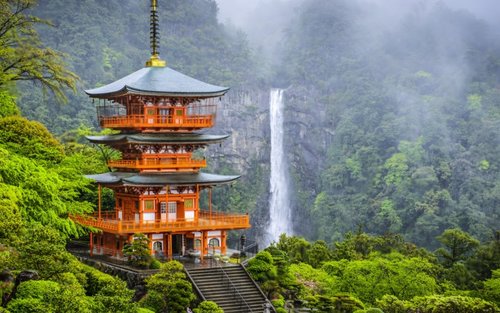
Imagine waking up to a world completely stripped of modern friction. At 5:00 AM on a misty ridge in the Wakayama Prefecture, the air does not carry the ambient static of Tokyo or the neon hum of Osaka. Instead, it hits your lungs with the sharp, medicinal clarity of ancient cedar trees, damp moss, and the faint, sweet residue of burning sandalwood incense. High above the clouds, a large brass bell tolls in the distance—a deep, resonant vibration that passes through the valley floor and settles directly into your chest.
This is Mount Koya (Koyasan), the sacred alpine tableland founded in 816 AD by the monk Kobo Daishi, the father of Shingon Buddhism.
While general tourism to Japan frequently congests the historic temples of Kyoto or the crowded deer parks of Nara, global search indicators show an intense, shifting trend among sophisticated Western travelers. Search data points toward a dramatic surge in "transformative travel" and "spiritual isolation." Travelers are looking for a complete break from digital sensory overload, wanting to slow down and connect with deep, historical traditions. Koyasan has quickly become the ultimate destination for this thoughtful type of explorer, offering a rare opportunity to enter a living mountain monastery that has served as a spiritual refuge for over twelve centuries.
The Monks of the Mountain: Unhurried Wisdom and Shingon Rhythms
To truly understand Koyasan, you have to let go of the fast-paced efficiency of the coastal bullet trains. The community here is made up of over a hundred active temples, home to a dedicated population of monks who treat daily chores—sweeping gravel, polishing wooden corridors, and preparing seasonal ingredients—as a form of active meditation.
The people of Koyasan possess a gentle, remarkably clear-eyed warmth. Their hospitality is quiet and structured, rooted in the concept of omotenashi but stripped of any commercial pretense. When you check into a shukubo (a temple lodging run entirely by Buddhist monks), you are welcomed by a young initiate who doesn't hand you a plastic key card. Instead, they guide you across smooth, creaking cedar floors to a minimalist tatami room smelling cleanly of woven rush grass.
There is an unhurried grace to how they interact with visitors. During the early morning Otsutome (sacred fire rituals), you sit cross-legged on the floor while a monk beats a large Taiko drum and chants ancient Sanskrit mantras, feeding wooden prayer sticks into a rising flame. Afterward, he might pour you a cup of roasted barley tea and speak simply about the concept of mindfulness—not as a modern health trend, but as a commitment to appreciating the exact room, the exact person, and the exact moment you are in.
The Cuisine of Pure Light: Shojin Ryori and the Velvet Texture of Koya-Tofu
The food on Mount Koya is designed to quiet the mind and nourish the body after a long journey up the mountain tracks. It is entirely vegetarian, strictly seasonal, and prepared according to the principles of Shojin Ryori (traditional Buddhist cuisine).
The Simple Elegance of Koya-Tofu
The absolute culinary star of the mountain is Koya-豆腐 (Koya-Tofu). According to local lore, this freeze-dried tofu was discovered entirely by accident centuries ago when a monk left a block of fresh bean curd outside in the freezing winter air. The process gives the tofu a distinct, spongy texture that absorbs liquids incredibly well. When simmered gently in a clear dashi broth made from mountain kelp and sweet mirin, it becomes wonderfully tender and rich, bursting with a savory, warming broth at the very first bite.
Seasonal Trays of the Shukubo
A typical evening meal served in your tatami room is a masterclass in culinary balance. Arranged on elegant, red lacquer trays, you will find a collection of small ceramic bowls containing wild mountain ferns tossed in white sesame paste, crisp lotus root tempura, a warming bowl of local white miso soup, and Goma-豆腐 (Sesame Tofu). Made by laboriously grinding black or white sesame seeds into a smooth paste with arrowroot and pristine mountain spring water, it has a thick, custard-like texture that melts on the tongue, balanced with just a dab of freshly grated wasabi.
The Forest of Souls: A Labyrinth of Moss and Ancient Spires
While the brilliant vermilion pagoda of the Danjo Garan complex serves as the town's architectural center, the emotional heart of Koyasan lies at the far eastern edge of the plateau.
The Endless Sanctuary of Okunoin Cemetery
Step through the stone entrance of Okunoin, the largest cemetery in Japan, where more than 200,000 ancient moss-covered stone stupas rest under a canopy of towering, 800-year-old cedar trees. This is not a place of sadness, but a sacred forest where generations of emperors, samurai, and ordinary citizens have chosen to rest close to Kobo Daishi. The path stretches for over two kilometers, illuminated by hundreds of stone lanterns. Walking this trail in the late afternoon, as the shadows lengthen and the forest floor turns a deep velvet green, feels like stepping out of conventional time into a sprawling, natural monument to human memory.
The Hidden Glow of Torodo (The Lantern Hall)
At the very end of the Okunoin path sits the Torodo. Inside this silent, wooden sanctuary, over 10,000 brass lanterns hang from the rafters, kept perpetually lit by donations from devotees across the globe. Two of the lanterns are said to have been burning continuously for over a thousand years. The air inside is warm and thick with the aroma of incense. Standing under that low ceiling, surrounded by thousands of tiny, flickering yellow flames while monks chant softly in the background, gives you an intense feeling of peace and ancient continuity.
The Pilgrim’s Protocol: Practical Strategy for the High Ascent
The Highland Seasons
Because Koyasan sits nearly 3,000 feet above sea level, its weather is distinct from the lowlands. The absolute best windows for international travelers are May to June (when the fresh green maples burst into life and mountain wild roses bloom) and October to November (when the valley turns a brilliant, fiery orange and deep red). Winter (December to March) brings heavy snowfalls that transform the temples into a quiet, black-and-white wonderland, though you will need to pack serious thermal layers.
The Mountain Railway
Reaching this high plateau is an incredibly scenic journey. From Osaka’s Namba Station, board the Nankai Koya Line express train, which winds south through rural valleys to Gokurakubashi Station at the base of the mountain. From there, step directly onto the Koyasan Cable Car—a historic funicular railway that climbs a steep, near-vertical mountain cliff through thick forest mist in five minutes. At the top station, a dedicated bus network meets travelers to transport them into the temple town.
The Value of Spiritual Lodging
Staying in an active Buddhist monastery is an immersive experience that keeps your travel investment connected directly to temple preservation and local agriculture:
A traditional Shojin Ryori multi-course dinner and breakfast for two: Included in your temple stay.
A full-night shukubo accommodation in a historic temple room: $120.00 to $260.00 per night.
The entry token for the sacred Okunoin night-walk experience: $20.00 to $30.00.
A hand-stamped temple calligraphy book (Goshuinchou) to collect sacred ink seals: $15.00.
Practical Tips and Cultural Etiquette
Temple Footwear: Remember to remove your shoes whenever you step onto temple tatami or wooden floors. Always switch to the provided indoor slippers, and use the specific bathroom slippers when entering restrooms.
Quiet After Dark: Shukubo lodgings maintain a peaceful lifestyle. Curfews are usually fixed around 9:00 PM, and sound travels easily through the traditional paper shoji screens—keep your voice low in the evenings.
Morning Punctuality: Morning prayers and meditation sessions begin precisely at 6:00 AM. It is considered disrespectful to arrive late; aim to be seated five minutes before the session starts.
Packing Light: The historic funicular and local buses have limited storage space. If possible, use a luggage delivery service (Takkyubin) to send your large suitcases from Osaka directly to your next major destination, and carry only a light overnight backpack up the mountain.
The Ultimate Insider Secret: If you stay the night, make your way to the Ichinohashi Bridge at the entrance of Okunoin at exactly 8:30 PM. Walk past the stone markers into the forest for just five minutes without turning on your phone flashlight. Let your eyes adjust to the stone lanterns casting soft patterns onto the ancient trees. Listen to the wind whispering through the high branches, accompanied by the clear croak of forest frogs in the stream below. At this hour, the afternoon day-trippers are long gone, and the mountain belongs completely to the shadows. In that immense, ancient stillness, you will realize you haven't just visited a tourist site—you have found a rare, timeless pocket of the world that forces you to listen to your own breath.


0 nhận xét:
Post a Comment