There are destinations you visit.
And then there are destinations that change the way you see the world.
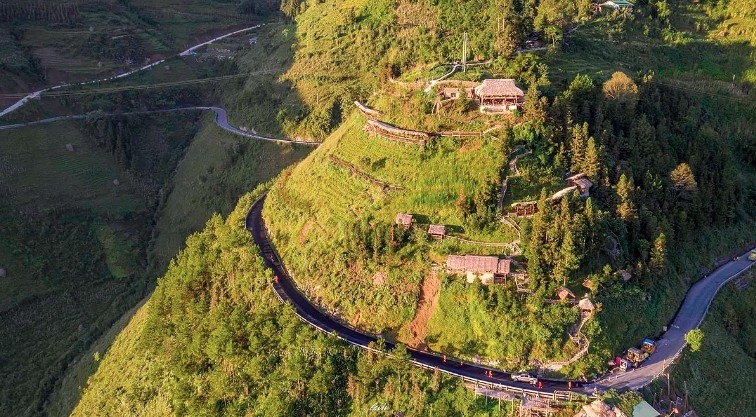
In the far north of Vietnam, where limestone mountains rise like stone waves frozen in time and roads cling dramatically to cliffs above emerald valleys, lies a place that many travelers describe not as a trip, but as a life experience.
Welcome to Ha Giang.
Over the past few years, international interest in northern Vietnam has surged as travelers from the United States and Europe increasingly search for authentic, less-commercialized destinations. Vietnam itself continues to experience strong growth in international tourism demand, driven by travelers seeking culture, adventure, value, and genuine local experiences.
And among all of Vietnam's emerging destinations, few create the same emotional impact as Ha Giang.
The Road That Everyone Talks About
Most travelers arrive in Ha Giang with a plan.
Very few leave unchanged.
The reason is simple.
The famous Ha Giang Loop is not merely a road.
It is a journey through one of the most spectacular mountain landscapes in Asia.
Picture yourself standing on a mountain pass before sunrise.
The air is cool and crisp.
Clouds drift through valleys thousands of feet below.
Terraced fields curve around mountainsides like giant green staircases leading into the sky.
A distant rooster calls from a hidden village.
For a moment, the entire world feels silent.
Then the sun appears.
And suddenly the mountains ignite in gold.
No photograph prepares you for that moment.
Why International Travelers Are Falling in Love with Ha Giang
Travel habits have changed.
Many travelers no longer want crowded beaches, long queues, or destinations built entirely around tourism.
They want stories.
They want authenticity.
They want experiences that feel earned.
Ha Giang delivers all three.
Unlike many famous destinations in Southeast Asia, large portions of Ha Giang still feel untouched. Traditional communities continue daily life much as they have for generations. Farmers work steep mountain fields. Local markets remain genuine community gatherings rather than tourist performances.
The result is rare.
You feel like a visitor rather than a customer.
A Landscape That Feels Almost Impossible
The first thing that surprises visitors is the scale.
Mountains stretch endlessly toward the Chinese border.
Deep canyons slice through ancient limestone plateaus.
Roads twist through landscapes so dramatic that they often look computer-generated.
One of the most unforgettable places is Ma Pi Leng Pass.
The road snakes along cliffs high above the Nho Que River, whose jade-green waters wind through one of Southeast Asia's deepest canyons.
Standing there, you understand why so many travelers rank Ha Giang among the most beautiful places they have ever seen.
Not in Vietnam.
In the world.
The Villages Hidden Among the Peaks
The true soul of Ha Giang lives beyond the viewpoints.
Scattered throughout the mountains are villages belonging to ethnic communities including the Hmong, Dao, Tay, Lo Lo, and many others.
Life here moves differently.
Children walk mountain paths to school.
Women wearing brilliantly embroidered traditional clothing gather at local markets.
Farmers guide water buffalo through terraced fields.
Visitors often discover that the strongest memories are not the landscapes but the people.
A smile from an elderly villager.
An invitation to share tea.
A conversation that somehow works despite neither person speaking the other's language.
Those moments stay with you.
The Sunday Market Experience
If your timing is right, visit one of Ha Giang's traditional markets.
These are not tourist attractions.
They are social events.
People travel from remote mountain villages for hours to buy goods, sell livestock, meet friends, and exchange news.
The atmosphere is extraordinary.
Bright textiles.
The scent of grilled food.
The sound of laughter echoing across mountain towns.
Families dressed in traditional clothing.
Markets here are not merely places of commerce.
They are living expressions of culture.
Hidden Gems Most Visitors Miss
Many travelers complete the Loop and leave.
That means they miss some of Ha Giang's most magical places.
Lung Cu, near Vietnam's northernmost point, offers stunning landscapes and a powerful sense of geographic significance.
The lesser-visited valleys surrounding Du Gia reveal a quieter side of Ha Giang, where waterfalls, rice terraces, and traditional homestays create a slower and more intimate experience.
Then there are countless unnamed viewpoints.
Places with no signs.
No ticket booths.
No crowds.
Just mountains stretching to the horizon.
Sometimes the best moments in Ha Giang happen completely by accident.
Food That Tells a Story
Mountain cuisine reflects the region itself.
Simple.
Honest.
Memorable.
Visitors often discover smoky grilled meats cooked over open fires, handmade corn dishes, mountain herbs gathered from nearby forests, and warming stews perfect for cool evenings.
One local specialty, thắng cố, carries deep cultural significance among Hmong communities.
Meanwhile, bowls of hot noodle soup become unforgettable after a cold morning ride through mountain passes.
Food in Ha Giang is less about luxury and more about connection.
Every meal feels rooted in place.
The Character of the People
Ask travelers what makes Ha Giang special and many mention the same thing.
The warmth.
Despite often living in remote mountain regions, local residents are known for their hospitality, resilience, and strong community bonds.
Life here can be challenging.
The terrain is rugged.
The climate can be harsh.
Yet visitors frequently encounter kindness that feels effortless and genuine.
There is an honesty to mountain life that many travelers find refreshing.
The Best Time to Visit
September and October bring golden rice terraces that transform valleys into shimmering works of art.
October and November offer comfortable temperatures and exceptional visibility.
Spring arrives with blooming flowers that add color to already spectacular landscapes.
Even winter has its charm, with mist drifting through valleys and occasional frost creating dreamlike scenes.
Every season tells a different story.
What Does a Trip Cost?
Compared with many adventure destinations around the world, Ha Giang remains remarkably affordable.
Budget travelers can comfortably explore the region using guesthouses and local eateries.
Mid-range travelers often choose guided Loop tours or comfortable homestays.
Even premium experiences typically cost far less than similar mountain adventures in Europe or North America.
The greatest luxury here is not accommodation.
It is access to a landscape that feels genuinely wild.
Questions Travelers Commonly Ask
Is Ha Giang safe?
Yes, provided travelers choose reputable operators, follow safety guidelines, and respect mountain road conditions. The region's dramatic terrain demands caution and responsible travel.
How many days do you need?
Three to five days is ideal for experiencing the Loop and exploring beyond the main route.
Do you need motorbike experience?
Not necessarily. Many visitors choose experienced local drivers, allowing them to enjoy the scenery safely.
Is Ha Giang crowded?
Compared with Vietnam's major tourist destinations, it remains relatively uncrowded, especially outside peak periods.
The Memory That Follows You Home
Years from now, you may forget the name of a particular guesthouse.
You may struggle to remember exactly which mountain pass was which.
But you will remember the feeling.
The sensation of standing above a sea of clouds.
The sound of wind moving through remote valleys.
The sight of endless mountains fading into blue horizons.
The realization that places like this still exist.
In an age when so much of the world feels mapped, reviewed, photographed, and explained, Ha Giang remains something increasingly rare:
A genuine adventure.
And once you've experienced it, every other road trip feels a little less extraordinary.
Because somewhere in the mountains of northern Vietnam, there is a road that reminds travelers what discovery feels like.


0 nhận xét:
Post a Comment