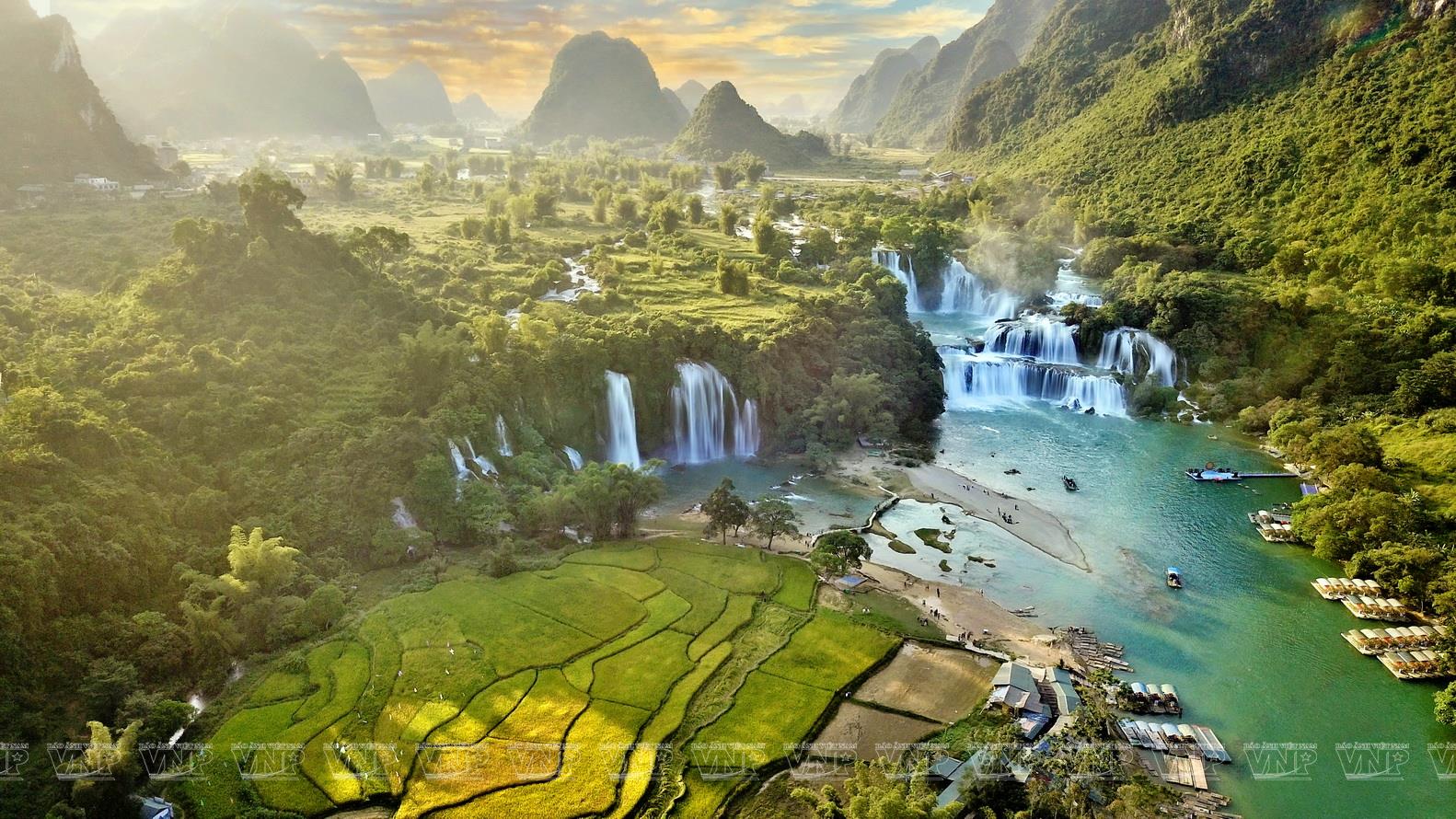
The roar reaches you before you even see it — a deep, powerful rumble that vibrates through your chest as you wind along the narrow road. Then the trees part, and there it is: Ban Gioc Waterfall, cascading dramatically in multiple tiers across the border between Vietnam and China, its white water crashing into turquoise pools below. The mist rises like smoke, catching the sunlight in rainbows, while the surrounding karst mountains stand watch in perfect silence. In that instant, you feel something shift inside — this is no ordinary waterfall. This is a place that commands reverence.
While Vietnam’s coastal gems draw many visitors, Ban Gioc and the Cao Bang region are quietly emerging as a favorite among American and European travelers in 2026 who crave dramatic nature, authentic ethnic encounters, and destinations that still feel undiscovered. Its rising appeal lies in delivering one of Southeast Asia’s most spectacular waterfalls alongside a rich cultural tapestry that few other places can match.
Where the Land Itself Speaks
Ban Gioc isn’t just beautiful — it’s theatrical. The waterfall stretches nearly 300 meters wide, divided into several powerful cascades that create a mesmerizing wall of water and light. Stand on the viewing platforms as the spray cools your skin and the thunder fills your ears. Early morning offers the softest light and fewest visitors, while afternoon brings vivid rainbows dancing in the mist.
Nearby, the journey to reach it is half the reward. The road from Cao Bang town winds through stunning limestone landscapes, rice terraces, and traditional villages, turning the drive itself into a scenic adventure that slows you down and opens your eyes.
Cultures That Still Sing Their Own Songs
The region is home to vibrant Tay, Nung, and Hmong communities whose traditions remain beautifully intact. You’ll meet families living in stilt houses, where the ground floor is often used for weaving or storing rice. Their warmth is immediate and genuine — many are happy to show you how they dye fabric with natural indigo or invite you to join a simple meal in their home.
Local customs revolve around respect for nature and community. You might witness a Tay water puppet performance on a small pond or hear folk songs sung during evening gatherings. There’s a gentle pride here, mixed with curiosity about the outside world, making every interaction feel meaningful rather than transactional.
Flavors Born from Mountain and River
Food in Cao Bang is hearty, aromatic, and full of character. After a day exploring the falls or hiking nearby trails, nothing restores you better than sitting on a wooden floor mat as dishes appear one by one:
- Fresh river fish steamed with herbs and ginger
- Smoky grilled chicken with wild mountain leaves
- Thang Co — a rich, spicy soup traditionally made with horse meat (or alternatives) and fragrant spices
- Sticky rice wrapped in banana leaves, still warm from the fire
The meals are generous, often paired with locally made corn wine that sparks laughter and stories long into the evening. Every bite tastes of the land — earthy, bold, and deeply satisfying.
Secret Spots That Reward the Curious
While Ban Gioc is the star, the wider Cao Bang region offers hidden treasures:
- Nguom Ngao Cave, a massive limestone cavern system where you can walk through chambers filled with stunning formations and the sound of underground streams.
- Peaceful villages around Phia Thap or Trung Khanh, where rice paddies glow golden during harvest and life moves at the pace of water buffalo.
- Quiet sections of the Quay Son River where you can kayak or simply sit and absorb the peaceful karst scenery with almost no one else around.
These places deliver that rare thrill of feeling like you’ve found something truly personal.
When to Visit and How to Get There
The best time is from September to November, when the rice terraces turn brilliant gold and the weather is pleasant for hiking. March to May also offers comfortable temperatures and blooming flowers. Summers are lush but wetter, while winters bring cool, crisp air.
Cao Bang is reachable by a scenic 5–6 hour drive or bus from Hanoi. Once there, hiring a private driver or joining a small guided tour allows you to explore comfortably and safely. Accommodations range from simple, welcoming homestays in ethnic villages to comfortable eco-lodges near the main sights. Prices remain very accessible — hearty local meals often cost under $10, and guided experiences offer excellent value.
A few practical tips: Bring comfortable walking shoes for cave and waterfall exploration, respect local customs when visiting villages (ask before photographing people), and support community-based tourism to help preserve these traditions.
The Waterfall That Stays in Your Memory
Ban Gioc doesn’t just show you a waterfall. It surrounds you with power and beauty — the cool mist on your face, the thunder that echoes in your bones, the taste of river-fresh food after a day of exploration, and the warmth of sharing rice wine with a local family as the stars come out over the karst mountains.
In a country filled with natural wonders, Ban Gioc stands out as something special: raw, majestic, and deeply human. It’s the kind of place that reminds you why we chase far horizons — to stand in awe, connect with kind strangers, and return home changed in small but meaningful ways.
You’ll leave with the sound of falling water still ringing in your ears, a heart fuller from genuine encounters, and an irresistible urge to tell everyone about this hidden corner of Vietnam.
The thunder is calling. The rice terraces are glowing. And that unforgettable moment standing before one of Asia’s most spectacular waterfalls is waiting just for you.
This might be the most powerful natural experience Vietnam has to offer. Are you ready to answer?


0 nhận xét:
Post a Comment