There are still places in the world where mornings begin with nothing but the sound of fishing boats returning to shore.
No beach clubs blasting music.
No endless rows of resorts.
No crowds lining up for the perfect Instagram photo.
Just the scent of salt in the air, volcanic cliffs glowing under the first light of dawn, and an island that somehow feels untouched by the modern tourism machine.
That place is Phú Quý Island, a small island off Vietnam’s south-central coast that is quietly becoming one of the country's fastest-rising travel destinations among international travelers. At a time when many travelers are searching for authenticity rather than overcrowded hotspots, Phú Quý is arriving at exactly the right moment.
And if you visit now, you may experience something that becomes increasingly rare every year:
The feeling of discovering a place before the rest of the world does.
An Island That Feels Like a Secret
The first thing you'll notice is the color.
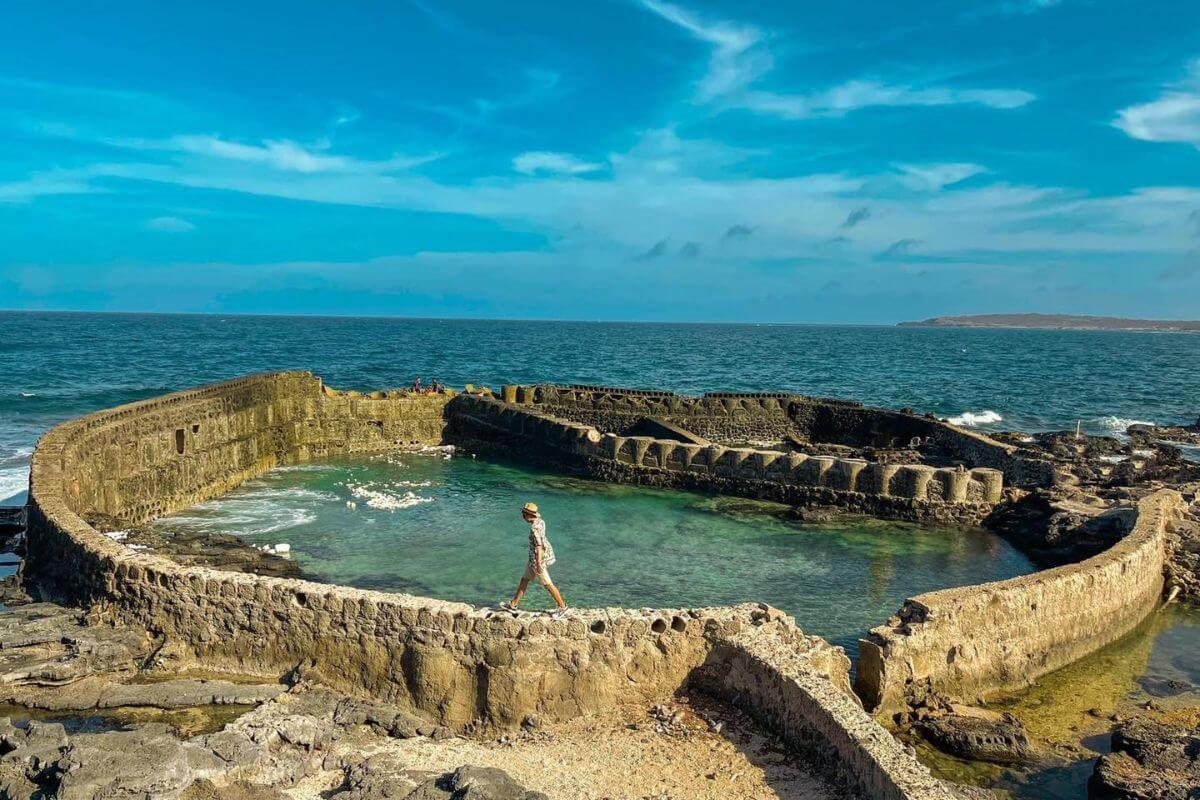
The water surrounding Phú Quý doesn't merely look blue—it shifts between shades of turquoise, emerald, sapphire, and crystal-clear jade depending on the time of day.
As your ferry approaches the island, black volcanic rock formations rise dramatically from the sea. Tiny fishing boats painted in bright reds and blues drift across the horizon. White clouds hang motionless above the ocean.
Unlike many famous islands in Southeast Asia, Phú Quý has never relied on large-scale tourism.
For generations, life here revolved around fishing, sea worship traditions, and a deep connection with the ocean.
That authenticity remains visible everywhere.
Children still ride bicycles through quiet villages.
Fishermen repair their nets beneath coconut trees.
Grandmothers sell freshly grilled seafood beside small harbors.
The pace of life feels slower, gentler, and remarkably human.
Why International Travelers Are Suddenly Paying Attention
Modern travelers are changing.
Many Americans and Europeans no longer want destinations that feel manufactured. They want places with genuine culture, real communities, and landscapes that haven't been overwhelmed by tourism infrastructure.
Phú Quý delivers exactly that.
The appeal is simple:
You can still find empty beaches.
You can still meet local fishermen who know every corner of the coastline.
You can still watch sunsets without hundreds of people surrounding you.
In today's travel landscape, that has become a luxury.
The Sunrise That Changes Everything
Ask anyone who has spent time on the island about their most memorable moment.
Many will tell you about sunrise.
Specifically, sunrise from Núi Cấm.
Before dawn, travelers climb the volcanic hill in near darkness.
The ocean below remains invisible.
The island sleeps.
Then suddenly, the horizon begins to glow.
Orange turns to gold.
Gold turns to fire.
The first sunlight touches fishing boats returning from the night sea.
Clouds become rivers of pink and crimson.
For a few minutes, the entire island seems suspended between dream and reality.
It's one of those travel moments that photographs never fully capture.
You simply have to be there.
Hidden Beaches Most Tourists Never Find
One of Phú Quý's greatest treasures is how much remains undiscovered.
Many visitors spend their time on the island's better-known coastal areas and completely miss its hidden corners.
Rent a motorbike and follow the coastal roads.
Soon you'll discover tiny coves protected by volcanic cliffs.
You'll find stretches of sand where your footprints may be the only ones visible.
You'll encounter natural rock pools filled with crystal-clear seawater.
Some beaches have no facilities whatsoever.
No vendors.
No umbrellas.
No crowds.
Just the ocean.
For many travelers, that simplicity becomes the most unforgettable part of the journey.
The Island's Deep Connection to the Sea
Phú Quý is more than beautiful scenery.
It is a living maritime culture.
The island's identity has been shaped by generations of fishermen who depended on the sea for survival.
One of the most fascinating traditions involves whale worship.
Throughout Vietnam's coastal communities, whales are viewed as sacred protectors of fishermen.
Local legends tell stories of whales guiding boats through storms and rescuing sailors from dangerous waters.
Temples dedicated to these sea guardians remain important spiritual centers today.
Visitors who take time to understand these traditions gain access to a side of Vietnam that many international tourists never encounter.
Seafood That Never Sees a Freezer
If you're passionate about food, Phú Quý can be astonishing.
Every morning, fishing boats return loaded with fresh catches from surrounding waters.
Sea urchins.
Lobster.
Squid.
Kingfish.
Grouper.
Crab.
Many restaurants buy directly from fishermen the same day.
As a result, seafood here tastes remarkably different from what most visitors experience elsewhere.
One local specialty is grilled sea urchin topped with scallion oil.
The flavor is rich, sweet, and intensely oceanic.
Another favorite is freshly steamed lobster enjoyed with nothing more than salt, pepper, and lime.
The freshness does all the work.
A generous seafood dinner often costs significantly less than comparable meals in major international beach destinations.
Meeting the People of Phú Quý
The island's greatest attraction may not be its beaches.
It may be its people.
Visitors frequently describe locals as warm, curious, and refreshingly genuine.
Because mass tourism has not yet transformed daily life, interactions feel natural rather than transactional.
Don't be surprised if locals strike up conversations simply because they're interested in where you've come from.
Many families continue traditional lifestyles centered around fishing and community relationships.
Hospitality here often feels personal.
The island still operates according to human rhythms rather than tourist schedules.
Practical Information for Travelers
The most pleasant time to visit is generally between December and June when seas are calmer and weather conditions are ideal for outdoor exploration.
Most travelers reach the island via ferry from the mainland city of Phan Thiết.
Accommodation remains relatively affordable, ranging from simple guesthouses to comfortable boutique stays.
Budget travelers can enjoy the island comfortably for around $30–50 per day, while travelers seeking more comfort typically spend between $60–120 daily, including accommodation, meals, transportation, and activities.
A motorbike rental is highly recommended because it allows complete freedom to explore hidden beaches, fishing villages, and scenic viewpoints.
Questions Travelers Often Ask
Is Phú Quý crowded?
Not compared to Vietnam's major tourist destinations. That's one of its biggest advantages.
Can international travelers visit independently?
Absolutely. Independent travel is often the best way to experience the island.
How many days should I stay?
Three to five days allows enough time to experience both the natural beauty and local culture without rushing.
Is English widely spoken?
Less than in major tourism centers, but friendliness and hospitality usually bridge the gap.
The Experience You'll Remember Years Later
Long after you've forgotten hotel names and flight numbers, you'll remember moments.
You'll remember riding a motorbike along an empty coastal road while waves exploded against black volcanic rocks.
You'll remember fishermen laughing on the harbor at sunrise.
You'll remember eating seafood so fresh it seemed to carry the taste of the ocean itself.
You'll remember standing alone on a cliff while endless blue stretched to the horizon.
Most importantly, you'll remember discovering a place that still feels real.
In an era when many destinations are becoming increasingly crowded, curated, and commercialized, Phú Quý offers something unexpectedly rare:
The chance to experience a beautiful island before everyone else discovers it.
And that's exactly why so many travelers who visit leave with the same thought:
"I can't believe more people don't know about this place yet."


0 nhận xét:
Post a Comment