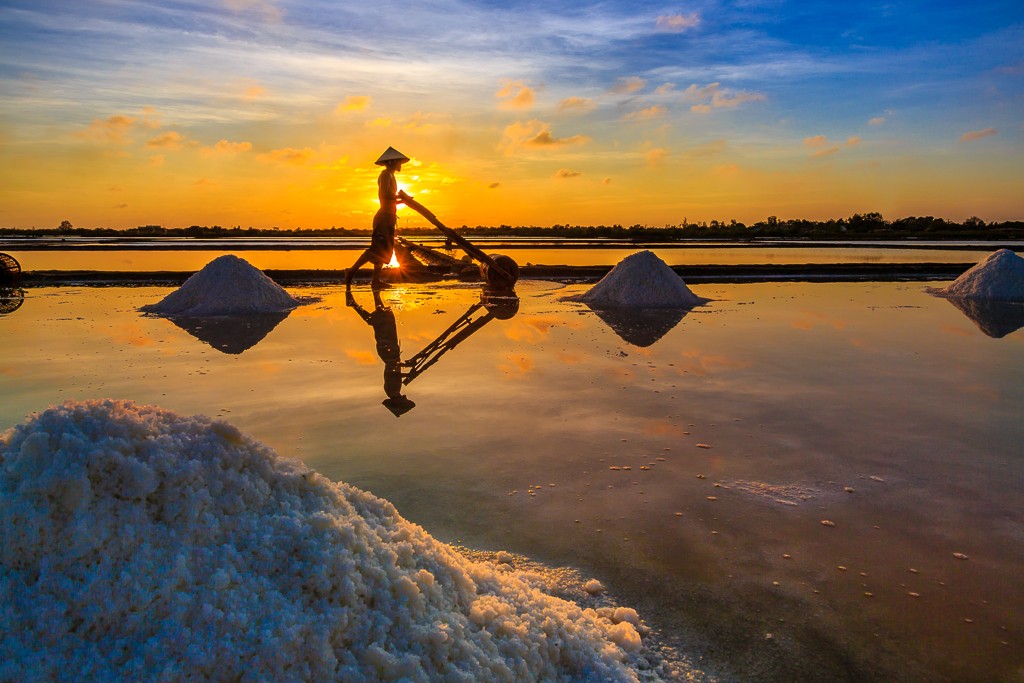
There is a precise moment in the late afternoon when the dry, relentless wind of the southern coast changes its tone. If you are standing among the skeletal, sun-bleached cactus patches of the Phan Rang coast, the air no longer simply burns; it begins to carry a dense, mineral richness. It is a sensory collision unique to this pocket of the country—the sharp sting of pure ocean salt crusting on your skin, the hot, dry radiation of red desert earth, and the sweet, resinous smoke of neem wood fires burning slowly in hidden clay hearths.
While global travelers habitually flock to the neon-lit beach clubs of Nha Trang or the commercialized sand dunes of Mũi Né, an entirely different rhythm is drawing the attention of seasoned Western voyagers. High-intent travel queries from Europe and North America reveal a distinct shift toward destinations that preserve a sense of raw geological isolation and unbroken antiquity. They are looking for Ninh Thuận Province—Vietnam’s hidden, sun-baked cradle of Cham culture and dramatic maritime wilderness.
Ninh Thuận is a magnificent elemental paradox. It is the driest province in Vietnam, a landscape of jagged granite massifs, secret oceanic trenches, and ancient vineyards that looks more like a Mediterranean coastline dropped into Southeast Asia. It is a place that does not wait for tourists with rehearsed smiles. It is a raw, fiercely independent frontier that challenges you to slow down, look beneath the heat, and discover a living civilization that has survived on this coast for over a thousand years.
The Clay Keepers of Bàu Trúc: Earth, Water, and the Circular Dance
To touch the living pulse of this land, you must abandon the coastal highway and seek out the quiet, dust-kissed village of Bàu Trúc. Here, the indigenous Cham people maintain what is recognized as one of the oldest active pottery traditions in Southeast Asia.
Cham pottery completely rejects the modern potter’s wheel. Instead, the women of Bàu Trúc use a technique that feels almost like a slow, meditative ritual. They place a lump of dark, iron-rich river clay on a fixed wooden pedestal. Then, instead of spinning the clay, the artisan spins herself. Moving backward in a continuous, hypnotic circle around the pedestal, she shapes the vessel using only her bare hands and a wet piece of cloth.
The Cham people possess a serene, deeply grounded dignity. Their faces carry the striking, oceanic features of an ancient seafaring empire. Their hospitality is quiet, observational, and profoundly genuine.
If you sit beneath the shade of a village neem tree, a master potter might invite you to watch her prepare the clay. Her movements are fluid, her skin weathered to a deep copper by the intense sun. When the pots are ready, they are not hidden away in modern kilns. They are piled in the open air, covered with straw and woodcuts from the dry brush, and set ablaze. The fire leaves unpredictable, smoky patterns on the red clay—stains of black and dark brown that ensure no two pieces are ever identical. To hold a warm, freshly fired jar from Bàu Trúc is to hold the literal soil of Ninh Thuận, shaped by a lineage that refuses to fade.
The Fire of the Sunken Coast: Sour Vineyards, Cracked Shells, and Stone-Pounded Chilies
The food of Ninh Thuận is defined by extreme adaptation. In a land of little rain, the local palate leans heavily on the sharp acidity of wild fruits, the intense mineral fats of the ocean, and the fiery heat of desert peppers.
The Purple Silk of Single-Origin Red Wine
It is a surreal sight: endless rows of green vines heavy with deep purple grapes growing directly out of the dry, sandy soil of Phan Rang. Brought here decades ago, the local Red Cardinal grape has adapted to the intense heat. Drinking a glass of local, un-aged estate wine at a family-run vineyard like Ba Mọi is an experience of pure terroir. It is not the velvety, oak-heavy wine of the West; it is light, unapologetically tart, crisp, and carries a distinct mineral finish that tastes exactly like the sun-baked soil that nourished it.
The Crushed Fire of Bánh Căn Phan Rang
As twilight settles over the capital, look for the small street vendors operating massive, multi-holed terracotta braziers. This is the stage for Bánh Căn. Small ladles of fermented rice batter are poured into tiny clay saucers over blazing charcoal. Each cake is topped with a whole, translucent sea squid or a fresh local shrimp caught just hours earlier. The magic is in the dipping sauce—a deep bowl of sweet, warm fish broth pounded together with crushed peanuts, sour green mango slivers, and wild, fiery bird's eye chilies. You drop the hot, crispy-edged cake entirely into the sauce, allowing it to absorb the moisture before eating it in one bite. It is an explosion of textures—crunchy, unctuous, intensely spicy, and brilliantly clean.
The Hidden Canvas: Fractured Cliffs and the Empty Dunes of Mũi Dinh
While the dramatic, crescent-shaped bay of Vĩnh Hy draws luxury eco-resort enthusiasts to the north, the true, untamed spirit of Ninh Thuận belongs to the rugged, southern coastal desert.
The Ghostly Sanctuary of Po Klong Garai
Rising out of a lonely, cactus-lined hill outside Phan Rang stand the red-brick towers of Po Klong Garai, built at the turn of the 14th century. Unlike historical sites that function purely as museums, these Cham towers remain active spiritual hearts. The bricks are fitted together using a mysterious, organic resin that leaves virtually no visible mortar lines. Walking up the stone steps as the hot dry wind whistles through the narrow brick arches, you will often find small offerings of fresh flowers and burning incense placed at the feet of the stone Shiva lingam inside the central sanctuary. The silence here is heavy, ancient, and deeply spiritual.
The Lonely Majesty of Mũi Dinh
For an experience of absolute, frontier isolation, travel south along the coastal road to Mũi Dinh. Here, giant granite boulders shaped like sleeping prehistoric beasts tumble directly into a turquoise, wave-battered sea. To reach the isolated lighthouse built by the French in 1904, you must trek across a vast, empty expanse of moving sand dunes known as the Tiểu Sa Mạc (The Mini Desert). There are no paved paths here, only the tracks of wild goats and the occasional wooden cart pulled by local cattle. Standing at the base of the stone lighthouse as the sun drops behind the mountains, with the endless blue of the East Sea crashing against the rocks below, you feel as though you have reached the absolute edge of the continent.
The Desert Manifesto: Strategic Intelligence for the Discerning Explorer
The Sun and the Monsoon
Ninh Thuận operates on a unique weather cycle that sets it apart from the rest of Vietnam. The absolute premier window for international travelers seeking optimal trekking conditions and vibrant landscapes is from January to April. During these months, the intense summer heat has not yet peaked, the skies are an brilliant, uninterrupted blue, and the coastal breezes are remarkably refreshing. If you wish to witness the spectacular cultural energy of the Cham people, plan your journey around October, when the grand Kate Festival takes place at the ancient towers, filling the hills with traditional music, colorful silk robes, and sacred dances.
The Logistics of the High Coast
Reaching this isolated province requires a deliberate approach. The most seamless method for international travelers is to fly into Cam Ranh International Airport (CXR), located just north of the provincial border. From the airport, bypass the standard regional buses and book a private, air-conditioned vehicle transfer to take you south along the spectacular, cliff-hugging coastal road. The 1.5-hour drive offers breathtaking panoramic views of the sea, dropping you directly into your coastal eco-lodge or city base without transit fatigue.
The Real Cost of the Frontier
Because Ninh Thuận remains deeply anchored in its traditional fishing and agricultural roots rather than mass international tourism, it offers an exceptional balance of genuine, immersive value:
A traditional seafood Bánh Căn feast for two with local drinks: $6.00 to $9.00.
An authentic, hand-shaped clay vase purchased directly from a Bàu Trúc artisan: $15.00 to $35.00.
A private, full-day guided 4x4 expedition through the sand dunes of Mũi Dinh: $40.00 to $60.00.
A private villa overlooking the water at a premium coastal eco-resort: $90 to $180 per night.
Cultural Integrity and Environmental Boundaries
This is a land defined by deep spiritual practices and fragile ecosystems. When exploring the ancient towers of Po Klong Garai, always dress respectfully, ensuring your shoulders and knees are covered, and never step directly over the stone thresholds of the inner sanctuaries. When visiting traditional Cham villages, always request permission before taking portraits of the elders or weavers. The coastal wilderness of the Núi Chúa National Park is a highly protected biosphere, home to rare sea turtle nesting grounds; practice strict plastic mindfulness and leave no trace behind. Bring high-factor sunscreen, a wide-brimmed hat, and plenty of water for any outdoor trek—the desert sun here is powerful and demands absolute respect.
The Ultimate Insider Secret: If you explore the coast near the cliffs of Hang Rái, make your way to the ancient, fossilized coral reef platform at precisely 5:15 AM. Stand on the dark, jagged stone alone as the first light of dawn breaks over the horizon. Below you, the massive waves of the ocean pool into the natural depressions of the ancient reef, creating a series of glowing, miniature salt mirrors that reflect the pink morning sky. Watch the local salt farmers silently enter the distant white salt fields behind you, their wooden rakes catching the first rays of gold light. In that immense, salt-crusted morning air, you will realize you aren't just looking at a beautiful view; you are witnessing a timeless landscape that has remained unchanged through empires, storms, and centuries.


0 nhận xét:
Post a Comment