Pages

Showing posts with label Vietnam 2014. Show all posts

Thursday, April 17, 2014

Vietnam Tourism: Ho Chi Minh City and around


Ho Chi Minh City – or Thanh Pho Ho Chi Minh, to give it its full Vietnamese title – is Vietnam’s centre of commerce and the country’s biggest city, though not its administrative capital – an honour that rests with Hanoi. As a result of the sweeping economic changes wrought by doi moi in 1986, this effervescent city, perched on the banks of the Saigon River and still known as Saigon to its eight million or so inhabitants, has changed its image from that of a war-torn city to one of a thriving metropolis, challenging Singapore, Bangkok and the other traditional Southeast Asian powerhouses. All the accoutrements of economic success – fine restaurants, flash hotels, glitzy bars and clubs, and shops selling imported luxury goods – are here, adding a glossy veneer to the city’s hotchpotch landscape of French stones of empire, venerable pagodas and austere, Soviet-style housing blocks.
View images Here

Sadly, however, Ho Chi Minh City (HCMC) is still full of people for whom economic progress has not yet translated into food, housing and jobs. Street children roam the tourist enclaves hawking books, postcards, lottery tickets and cigarette lighters; limbless mendicants haul themselves about on crude trolleys; and watchful pickpockets prowl crowded streets on the lookout for unguarded wallets. Though the number of beggars is gradually declining, tourists must quickly come to accept them as a hassle that goes with the territory. In addition, the arrival, en masse, of wealthy Westerners has lured many women into prostitution, for which the go-go bars of Dong Khoi became famous during the American War.

If Hanoi is a city of romance and mellow charms, then Ho Chi Minh City is its antithesis, a fury of sights and sounds, and the crucible in which Vietnam’s rallying fortunes are boiling. Few corners of the city afford respite from the cacophony of construction work casting up new office blocks and hotels with logic-defying speed. An increasing number of cars and minibuses jostle with an organic mass of state-of-the-art Honda SUVs, choking the tree-lined streets and boulevards. Amid this melee, the local people go about their daily life: smartly dressed schoolkids wander past streetside baguette-sellers; women shoppers ride motorbikes clad in gangster-style bandanas to protect their skin from the sun and dust; while teenagers in designer jeans chirrup into mobile phones. Much of the fun of being in Ho Chi Minh City derives from the simple pleasure of absorbing its flurry of activity – something best done from the seat of a cyclo or a roadside café. To blink is to miss some new and singular sight, be it a motorbike stacked high with piglets bound for the market, or a boy on a bicycle rapping out a staccato tattoo on pieces of bamboo to advertise noodles for sale.
HCMC is divided into 24 districts, though tourists rarely travel beyond districts One, Three and Five. In addition, an increasing number of expats reside in Phu My Hung, aka South Saigon, in district Seven – a squeaky-clean suburb that wouldn’t look out of place in Singapore, making quite a contrast to the rest of this seething metropolis. The city proper hugs the west bank of the Saigon River, and its central area, District One, nestles in the hinge formed by the confluence of the river with the Ben Nghe Channel; traditionally the French Quarter of the city, this area is still widely known as Saigon. Dong Khoi is its delicate backbone, and around the T-shape it forms with Le Duan Boulevard are located several of the city’s museums and colonial remnants. However, many of the city’s other sights are scattered further afield, so visitors have to effect a dot-to-dot of the sights that appeal most. These invariably include one or more of the museums that pander to the West’s fixation with the American War, the pick of the bunch being the War Remnants Museum and Ho Chi Minh City Museum.
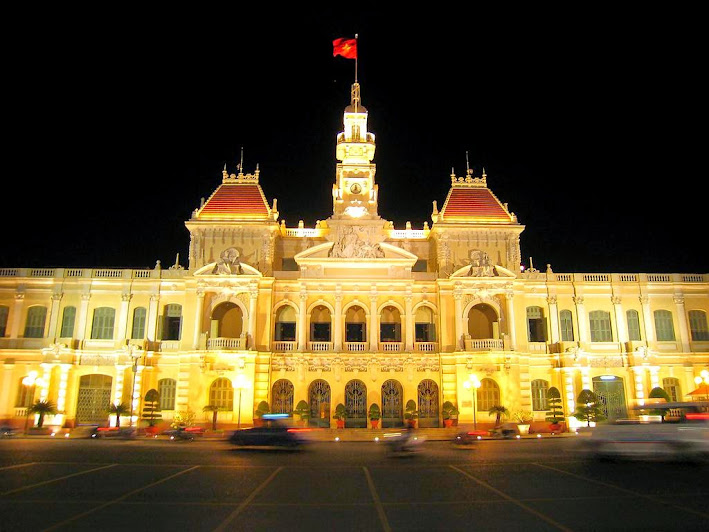
For some visitors, the war is their primary frame of reference and such historical hot spots as the Reunification Palace rank highly on their itineraries. Yet the city pre-dates American involvement by several centuries, and not all of its sights revolve around planes, tanks and rusting ordnance. Ostentatious reminders of French rule abound, among them such memorable buildings as Notre Dame Cathedral and the grandiose Hotel de Ville – but even these look spanking-new when compared to gloriously musty edifices like Quan Am Pagoda and the Jade Emperor Pagoda, just a couple of the many captivating places of worship across the city. And if the chaos becomes too much, you can escape to the relative calm of the Botanical Gardens – also home to the city’s History Museum.
It’s one of Ho Chi Minh City’s many charms that once you’ve exhausted, or been exhausted by, all it has to offer, paddy fields, beaches and wide-open countryside are not far away. The most popular trip out of the city is to the Cu Chi tunnels, where villagers dug themselves out of the range of American shelling. The tunnels are often twinned with a tour around the fanciful Great Temple of the indigenous Cao Dai religion at Tay Ninh. A brief taster of the Mekong Delta at My Tho or a dip in the South China Sea at Ho Coc are also eminently possible in a long day’s excursion.
The best time to visit tropical Ho Chi Minh City is in the dry season, which runs from December through to April. During the wet season, May to November, there are frequent tropical storms, though these won’t disrupt your travels too much. Average temperatures, year-round, hover between 26°C and 29°C; March, April and May are the hottest months.

Brief history

Knowledge of Ho Chi Minh City’s early history is sketchy at best. Between the first and sixth centuries, the territory on which it lies fell under the nominal rule of the Funan Empire to the west. Funan was subsequently absorbed by the Kambuja peoples of the pre-Angkor Chen La Empire, but it is unlikely that these imperial machinations had much bearing upon the sleepy fishing backwater that would later develop into Ho Chi Minh City.
Khmer fishermen eked out a living here, building their huts on the stable ground just north of the delta wetlands, which made it ideal for human settlement. Originally named Prei Nokor, it flourished as an entrepô for Cambodian boats pushing down the Mekong River, and by the seventeenth century it boasted a garrison and a mercantile community that embraced Malay, Indian and Chinese traders.
Such a dynamic settlement was bound to draw attention from the north. By the eighteenth century, the Viets had subdued the kingdom of Champa, and this area was swallowed up by Hué’s Nguyen Dynasty. With new ownership came a new name, Saigon, thought to be derived from the Vietnamese word for the kapok tree. Upon the outbreak of the Tay Son Rebellion, in 1772, Nguyen Anh bricked the whole settlement into a walled fortress, the eight-sided Gia Dinh Citadel. The army that put down the Tay Son brothers included an assisting French military force, who grappled for several decades to undermine Vietnamese control in the region and develop a trading post in Asia. Finally, in 1861, they seized Saigon, using Emperor Tu Duc’s persecution of French missionaries as a pretext. The 1862 Treaty of Saigon declared the city the capital of French Cochinchina.
Colonial-era Saigon
Ho Chi Minh City owes much of its form and character to the French colonists: channels were filled in, marshlands drained and steam tramways set to work along its regimental grid of tamarind-shaded boulevards, which by the 1930s sported names like Boulevard de la Somme and Rue Rousseau. Flashy examples of European architecture were erected, cafés and boutiques sprang up to cater for its new, Vermouth-sipping, baguette-munching citizens and the city was imbued with such an all-round Gallic air that Somerset Maugham, visiting in the 1930s, found it reminiscent of “a little provincial town in the south of France, a blithe and smiling little place”. The French colons (colonials) bankrolled improvements to Saigon with the vast profits they were able to cream from exporting Vietnam’s rubber and rice out of the city’s rapidly expanding seaport.
On a human level, however, French rule was invariably harsh; dissent crystallized in the form of strikes through the 1920s and 1930s, but the nationalist movement hadn’t gathered any real head of steam before World War II’s tendrils spread to Southeast Asia. At its close, the Potsdam Conference of 1945 set the British Army the task of disarming Japanese troops in southern Vietnam. Arriving in Saigon two months later, they promptly returned power to the French and so began thirty years of war. Saigon saw little action during the anti-French war, which was fought mostly in the countryside and resulted in the French capitulation at Dien Bien Phu in 1954.
Saigon in the American War
Designated the capital of the Republic of South Vietnam by President Diem in 1955, Saigon was soon both the nerve centre of the American war effort, and its R&R capital, with a slough of sleazy bars along Dong Khoi (known then as Tu Do) catering to GIs on leave from duty. Despite the Communist bomb attacks and demonstrations by students and monks that periodically disturbed the peace, these were good times for Saigon, whose entrepreneurs prospered on the back of the tens of thousands of Americans posted here. The gravy train ran out of steam with the withdrawal of American troops in 1973, and two years later the Ho Chi Minh Campaign rolled into the city and through the gates of the presidential palace and the Communists were in control. Within a year, Saigon had been renamed Ho Chi Minh City.
Post-reunification Saigon
The war years extracted a heavy toll: American carpet-bombing of the Vietnamese countryside forced millions of refugees into the relative safety of the city, and ill-advised, post-reunification policies triggered a social and economic stagnation whose ramifications still echo like ripples on a lake. Persecution of southerners with links to the Americans saw many thousands sent to re-education camps. Millions more fled the country by boat.
Only in 1986, when the economic liberalization, doi moi, was established, and a market economy reintroduced, did the fortunes of the city show signs of taking an upturn. Today, more than two decades later, the city’s resurgence is well advanced and its inhabitants are eyeing the future with unprecedented optimism.

Indochina Tours, Indochina Travel, Ho Chi Minh Travel, Ho Chi Minh Tuorist, Travel & Tourism, Vietnam 2014, vietnam beach holidays, Vietnam Holidays, Vietnam Tourism, Ho Chi Minh City 

Vietnam Tourism: The Mekong Delta Guide


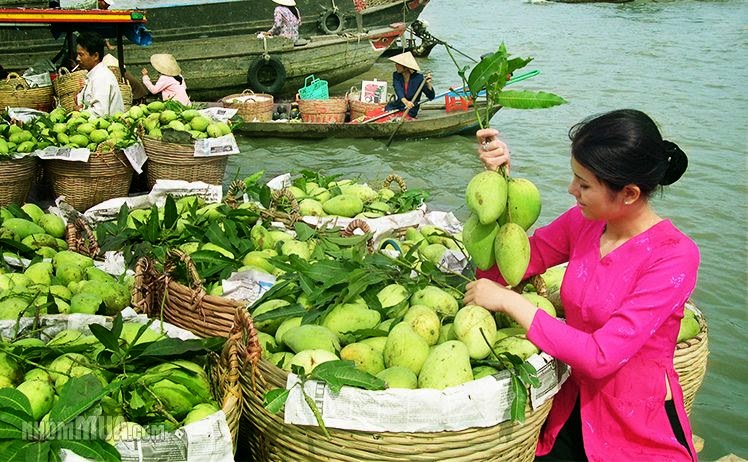
Touring the orchards, paddy fields and swamplands of the Mekong Delta, you could be forgiven for thinking you’ve stepped into the pages of a geography textbook. A comma-shaped flatland stretching from Ho Chi Minh’s city limits southwest to the Gulf of Thailand, the delta is Vietnam’s rice bowl, an agricultural miracle that pumps out more than a third of the country’s annual food crop from just ten percent of its total land mass. Rice may be the delta’s staple crop, but coconut palms, fruit orchards and sugar-cane groves also thrive in its nutrient-rich soil, and the sight of conical-hatted farmers tending their land is one of Vietnam’s most enduring images. To the Vietnamese, the region is known as Cuu Long, “Nine Dragons”, a reference to the nine tributaries of the Mekong River, which dovetail across plains fashioned by millennia of flood-borne alluvial sediment.

View images Here

Surprisingly, agriculture gripped the delta only relatively recently. Under Cambodian sway until the close of the seventeenth century, the region was sparsely inhabited by the Khmer krom, or “downstream Khmer”, whose settlements were framed by swathes of marshland. The eighteenth century saw the Viet Nguyen lords steadily broaden their sphere of influence to encompass the delta, though by the 1860s France had taken over the reins of government. Sensing the huge profits to be gleaned from such fertile land, French colons spurred Vietnamese peasants to tame and till tracts of the boggy delta; the peasants, realizing their colonial governors would pay well for rice harvests, were quick to comply. Ironically, the same landscape that had served the French so well also provided valuable cover for the Viet Minh resistance fighters who sought to overthrow them; later it did the same for the Viet Cong, who had well-hidden cells here – inciting the Americans to strafe the area with bombs and defoliants.


A visit to the Mekong Delta is so memorable because of the region’s diversity. Everyday scenes include children riding on the backs of water buffalo or cycling to school through country lanes clad in white ao dai; rice workers stooping in a sea of emerald; market vendors grinning behind stacks of fruit; bright yellow incense sticks drying at the roadside; flocks of storks circling over a sanctuary at dusk; Khmer monks walking mindfully in the shadow of pastel pagodas; locals scampering over monkey bridges or rowing boats on the delta’s maze of channels.

There are over a dozen towns in the delta with facilities for tourists, though some are rarely visited as they are not on the way to anywhere. My Tho is well geared up for boat trips, and near enough to Ho Chi Minh City to be seen on a day-trip: it affords an appetizing glimpse of the delta’s northernmost tributary, the Tien Giang. From My Tho, laidback Ben Tre and the bounteous fruit orchards besieging it are only a hop and a skip away. Cao Lanh is strictly for bird enthusiasts, but Sa Dec, with its timeless river scenes and riotously colourful flower nurseries, has a more universal appeal, while just down the road, Vinh Long is another jumping-off point for boat trips.
Many visitors spend a day or two in Can Tho, the delta’s biggest settlement, to take advantage of its decent hotels and restaurants and to recharge batteries before venturing out to the floating markets nearby. From Can Tho, there’s something to be said for dropping down to the foot of the delta, where the swampland that surrounds Ca Mau can be explored by boat, and Mui Ca Mau signals journey’s end in Vietnam. Pulling up, en route, at the Khmer stronghold of Soc Trang is especially rewarding if your trip coincides with the colourful Oc Om Bok festival (Nov or Dec), during which the local Khmer community takes to the river to stage spectacular longboat races. Northwest of Can Tho meanwhile, and a stone’s throw from the Cambodian border, is the ebullient town of Chau Doc, south of which Sam Mountain provides a welcome undulation in the surrounding plains. The opening of the border here has brought a steady stream of travellers going on to Phnom Penh by boat, and several of them rest up a few days here before leaving the country.

Ha Tien, a remote border town surrounded by Khmer villages, is the best place to hop on a boat to Phu Quoc. The town has also become popular for its international border crossing, which allows beach bums to slide along the coast from Phu Quoc Island to Sihanoukville in Cambodia or vice versa.

Given its seasonal flooding, the best time to visit the delta is, predictably enough, in the dry season, which runs from December to May.
Mekong Travel, Mekong Tuorist, Indochina Tours, Indochina Travel, Travel & Tourism, Vietnam 2014, vietnam beach holidays, Vietnam Holidays, Vietnam Tourism, 

Friday, March 28, 2014

Vietnam Tourism : Hoi An


Hoi An City in the central province of Quang Nam is building a VND2 billion tourism promotion plan between now and 2010.
The plan will focus on three strategic spearheads, including the World Cultural Heritage of Hoi An Ancient City, the Cham Islands World Biosphere Reserve and sea-based tourism.
According to the Quang Nam provincial Department of Culture, Sports and Tourism, traditional tours such as “One day being a resident in the Ancient City” and “One day being a resident in the Cham Islands World Biosphere Reserve” together with two new products - “Night Market” and the “Tourism and Environment Festival” - will be promoted in the programme.
Information on Hoi An will be posted on tourism websites, in aviation publications, tourist guide books and books on Hoi An.
About 30km from the central city of Danang, the small city of Hoi An not only contains diversified architecture of different cultures but also preserves a huge treasure of intangible cultural values. The Hoi An Ancient City, which was recognised by the UN Educational, Scientific and Cultural Organisation (UNESCO) as a world cultural heritage site in 1999, has become an attractive destination for tourists.
In the first nine months of this year, Hoi An City welcomed 812,000 tourists, including 396,000 foreign arrivals. Especially, after the Cham Islands was recognised as a world biosphere reserve, the number of visitors to the town increased by over 80 percent compared to the same period last year.
Hoi An was also selected as one of the top ten destinations in Asia based on an online vote conducted by the tourism magazine Smart Travel Asia.

Wikipedia
Hội An , also Faifoo, is a city of Vietnam, on the coast of the East Sea in the South Central Coast region of Vietnam. It is located in Quảng Nam Province and is home to approximately 120,000 inhabitants. It is recognized as a World Heritage Site by UNESCO. Hội An Ancient Town is an exceptionally well-preserved example of a South-East Asian trading port dating from the 15th to the 19th century. Its buildings and its street plan reflect the influences, both indigenous and foreign, that have combined to produce this unique heritage site.[1][2]
The city possessed the largest harbour in Southeast Asia in the 1st century and was known as Lâm Ấp Phố (Champa City). Between the seventh and 10th centuries, the Cham (people of Champa) controlled the strategic spice trade and with this came tremendous wealth. The former harbour town of the Cham at the estuary of the Thu Bồn River was an important Vietnamese trading centre in the 16th and 17th centuries, whereChinese from various provinces as well as Japanese, Dutch and Indians settled. During this period of the China trade, the town was called Hai Pho(Seaside Town) in Vietnamese. Originally, Hai Pho was a divided town with the Japanese settlement across the "Japanese Bridge" (16th-17th century). The bridge (Chùa cầu) is a unique covered structure built by the Japanese, the only known covered bridge with a Buddhist temple attached to one side.

Images HOI AN :
See more images : Here


Hoi An has some excellent places to eat and drink — on the riverfront, scattered throughout town, across the water on An Hoi islet and lining both Cua Dai and An Bang beaches.

Hoi An flourished thanks to its port, attracting traders from China, Japan and the Mediterranean. Out of this mixture of cultures, a unique style of Vietnamese cooking developed, drawing upon a wide range of flavours, influences and cooking techniques. Hoi An is home to a number of specialty dishes, many of which can be traced to foreign origins. The most famous is cau lau, a combination of thick wheat noodles, roasted pork, bean sprouts and herbs in a thick gravy. Local lore says that the dish must be made from the water of a specific well — others argue that it is simply the distinctive noodles that make it unique. A dryer version of the dish, mi quang, is also widely available. Chinese influenced rice-flower dumplings called banh beo and banh vac (white rose) are also common. Much less publicised is com ga, a tasty stir-fry of rice, chicken, garlic and vegetables.

It can often seem that these dishes are all the restaurants in Hoi An can serve. Many are geared toward customers simply passing through town, and many have little concern for quality, making it hard to find exceptional versions of any of the dishes, but new, quality, places are springing up all the time. 

If you're after the real deal, try hunting down more local options. Cau lau is available at street stalls around town; try the stalls in the central market food hall where Tran Phu meets Nguyen Duy Hieu or one of the local one-dish restaurants that line the northern end of Phan Chau Trinh Street. A good tip is to look out for vendors with a black and gold sign which are awarded to families with the best examples of these dishes, which generally means they have been producing that one dish for generations.

That said, the long-running Cafe Des Amis continues to dish out excellent and huge meals — the five-course meal will leave you bursting at the seams. The menu is set — you can choose from vegetarian, meat or fish and head chef Mr Kim will dish out whatever he happens to feel like cooking that day. Mr Kim is quite a character, chatting up his guests in French and English, and if you eat lunch he'll invite you back for an excellent dinner and guarantee a different menu — as if you'd actually need to eat again so soon. Get there early if you want one of the two riverside tables on the upstairs balcony. It's a popular place, and a guidebook sweetie, but still fun and friendly. At 150,000 VND per customer, it's not a cheap night but worth it.

The drink stalls along the riverfront on Bach Dang are another old favourite among the gaggle of cafes that line the street – sip on a cold beer or nuoc mia (sugarcane juice) while watching the locals pile their bikes onto unimaginably small boats back to their homes on the surrounding islands. Mobile street food vendors selling delicious cheap snacks like bahn bao (pork stuffed steamed buns), fermented sausage in banana leaf (delicious), and sugar-dusted dried ginger parade past, giving you the opportunity to sample some cheap local dishes.

For a more upmarket local taste experience, check out Lantern Town. An airy place stretching from streetfront to riverfront in length, it has three different areas for eating — two indoors and one outdoor courtyard area. With pale yellow walls decorated with contemporary local artwork and hand-painted silk lanterns, the courtyard is the perfect place for a cocktail or a meal in the sultry evening air. Their take on mi quang and the pizza in a clay pot are particularly good; they also offer barbecued fish, seafood and meat at any time of day. It's a good spot to retreat to if you can't take the peddlers any longer.

Morning Glory, from Ms Vy of Cargo Club, Mermaid and more recently Market Kitchen fame, comes highly recommended, both for its restaurant and cookery courses. The restaurant is simply decorated and airy, with an open kitchen in the centre of the dining area. A non-smoking dining room is available upstairs but in the summer months it can get uncomfortably hot due to restrictions on installing air-con in the traditional buildings in town. Food is inspired from various places around Vietnam -- their cinnamon beef curry is one of the most raved about on the menu and definitely worth trying here. It's frequently full so book or arrive early.

The Cargo Club is probably the best place in town for a really delicious leisurely breakfast, an afternoon cake and coffee, or a late-night dessert. Downstairs seating is more tailored to snacking and drinking while upstairs, with views over the river from terrace tables, has more of an evening meal set up. Sample their passionfruit pavlova once and you might find yourself returning for every day of your visit. The ice cream is also top-notch and set breakfasts are good value -- enough to set you up for hours of shopping.

3 Dragons is located in a stunning two-storey, ancient colonial family house, in one of the most appealing riverside locations in town. Offering a comprehensive cocktail menu, cheery service and a well honed Vietnamese/Western menu, the proprietors Simon (sports-mad Aussie) and Chung (ever-patient Vietnamese) run a well balanced bar/restaurant with widescreen TVs (for sports) and beautiful riverside dining (for patience). The Vietnamese menu is exceptional, along with the Sunday roasts and Western breakfasts; the pizza we tried was a bit disappointing but the burgers more than make up for it (and they serve late). Being on the outskirts of town, the 3 Dragons operate on a more flexible license which means they are happy to open up for even the most inappropriately timed sporting event so you can watch it live. They also hold a pub quiz every Wednesday night at 20:00 which is popular with both tourists and expats alike, drawing in a decent crowd and some half-decent prizes.

Re-Treats Cafe on Tran Hung Dao is a popular backpacker spot, mostly because of its proximity to the backpacker quarters and the fact that most of the adventure tour guides use it as a meeting spot for their groups while in town. It's a great place to hangout during the day and early evening and serves cheap drinks. The food here is not exactly great, but seems to attract an unusually large population of cockroaches. Still, there are plenty of cheap dining options nearby including a great bun thit heo (five-spice pork noodle in a satay sauce) stall directly opposite on Tran Cao Van. 

For pizza and pasta, head to Good Morning Vietnam on Nguyen Thai Hoc. The food is great, though we heard reports of slow service. It can get busy in high season so call ahead or be prepared for a wait. A very good beachside alternative is Luna D'Atunno on An Bang beach, which serves delicious wood-oven pizza and house-made pasta dishes on comfortable, shaded beachside loungers.

There is really only one place in town to eat Indian food -- Ganesh -- and luckily it's excellent. It offers up standard curries, masalas, thalis and whatnot, but the quality is high and some people find themselves eating here every night. Like all good curry houses, Ganesh also offers take-away and a delivery service, a good option after a long day touring or if you've got a bit too comfortable at the beach. If you see another restaurant in town with "Indian Food" on the menu, avoid it and wait until you come here. 

Mango Rooms is another place spanning Bach Dang and Nguyen Thai Hoc Streets. It's done up in colourful, Caribbean-style decor with Turkish-style cushion seating and a Latin-influenced fusion menu. It's a bit pricey but a great place to hang out — go for a pitcher of sangria with some friends. Its more recent sister restaurant, Mango Mango, is over the bridge on An Hoi islet and offers a similar menu in a very smart riverside set-up. The latest addition to owner Duc's empire, Mai Fish on Nguyen Thi Minh Khai just over the Japanese Bridge also comes highly recommended, offering a cheaper, more local 'home food' menu -- it's a great place to sample a selection of Hoi An classics without the gristly bits.

Green Mango on Nguyen Thai Hoc in the centre of town is a much celebrated, classy dining option with two successful sister restaurants in Hanoi and on Cat Ba island. The sumptuously renovated wooden traders house provides a stunning backdrop for romantic dinners or early evening cocktails — it's one of the most beautiful restaurants in town — menu prices are on the high side, but the food (at least the Western dishes – weirdly the Vietnamese dishes we've had here have been disappointing) and atmosphere are well worth the splurge. 

Over on An Hoi there's a whole swathe of cheap Vietnamese restaurants offering menus incorporating a few Western dishes; stick to Vietnamese food and they are generally consistently good. If you can grab a riverside or balcony table you get some of the best views across to the old town, but be warned street sellers endlessly pound this route; if it bothers you having your meal interrupted by bangle-selling kids, go upstairs (and consider donating to an organisation that helps them).

Taking up one of the best plots on An Hoi opposite the night market is Alfresco's, a good stop if you fancy a bit of Tex Mex – they are famous for their ribs, pizzas and high standards in food hygiene. Friendly staff and sundown happy hour cocktail pitchers make it a good place to relax after hitting the market. The company originated in Hanoi (they have branches in both there and in Saigon). The Vietnamese menu is packed full of northern dishes and the breakfast pho, although a bit pricy compared with the street alternative, is one of the best we've found in Hoi An. It's worth checking out their website as they regularly have special offers like buy one, get one free on delivery pizzas and set menus.

If you're really going to sink a wad on a posh meal, check out the riverside Anantara Resort along riverside Phan Boi Chau. Every Tuesday, Thursday and Saturday night at 18:00 they kick off with a traditional dance and torch lighting over cocktails at the Heritage Bar – follow it up with some world-class seafood at Lantern's Restaurant. Mains are around US$20 a head.

If you're staying up on Hai Ba Trung or Ba Trieu, don't ignore the restaurants up that way. They might not have the views or the decor of the places in the old town, but there's tasty food available at good prices. Try Gidino's for chicken fried rice and spring rolls; head upstairs for balcony seating and a decent pool table.

If you are after a little beachside dining, Cua Dai is awash with local fresh seafood restaurants. They tend to shut up shop fairly early, so pitch up around sunset or you may well be disappointed. An Bang beach has a great mix of local and Western dining options that stay open late. For incredible seafood, head to Mien Ka (to the left of the bike park), which serves up beautiful lemongrass and chilli grilled scallops, clams and some great barbecue squid. Next door's Soul Kitchen is perfect for families with a French bistro-style menu -- the fish carpaccio is a winner. Le Banyan is great for delicious cocktails, tapas and seafood. To the right Le Plage has a small but well thought out French-Viet (are you noticing a theme here) menu and offers a quieter more relaxed beach cafe environment.

Bale Well serves banh xeo (Hoi An crispy pancake with pork skewers and spring rolls) and should be on your list of places to eat if you are looking for a memorable experience that's also a hit with local diners. Located down an alley off Tran Phu Street, they serve up an all-you-can-eat feast with full instructions (down to chewing) on how to manage your food. The female staff will joke about stealing your husband – it's an entertaining experience worth its weight in gold that you just don't find at the usual tourist restaurants in town. Around 100,000 VND will see you bursting at the seams in both pants and pleasure. 

Nightlife
For a lively bar atmosphere try Before and Now on Le Loi, which gets busy after 21:00 and stays open late. There's a pool table, big screens, reasonably priced drinks and, although more of a drinking hole, it has an above average mainly Italian menu.

The Dive Bar, part of Cham Island Dive Centre, is another good spot to socialise, and popular with tourists and expats alike. For sporting events, the 3 Dragons on Phan Boi Chau is the place to head if you don't want to miss a match. Massive screens, great food and a 24-hour mentality (along with refined riverside dining) are set in a beautiful colonial house.

Over on Tran Cao Van (nearer to the backpacker hotels) another newcomer, Mo's Tavern, is a good option for when the bars in town shut up shop. They offer cheap drinks along with stacks of entertainment options, including giant Jenga, board and drinking games plus the usual pool table.

Over on An Hoi (far left of the bridge) is another popular backpacker scene with cheap local buckets, and a shifting series of bar names, don't leave drinks unattended and leave your valuables at home.

Why Not Bar is apparently run by the same team who used to own the now defunct King Kong and it's just as lively, crowded and seedy as its predecessor. 

If you prefer sipping your late night cocktails with your toes in the sand, An Bang beach is where it's at. For late-night revelry and a great bar scene, Banyan pulls in the crowds, hosting regular weekend themed parties, live music and Djs – they're popular with tourists and expats alike. There's a pool table and petanque course for the athletic and giant bean bags right on the beach for those less so.

For a quieter and more relaxed beach ambience, head to Soul Kitchen. Here you'll find a romantic environment where you can watch the sunset from a private beach cabana -- it's a far more family-orientated venue than its neighbour Banyan. Unusually for a beach bar, Soul comes into its own during the wetter winter months, when they batten down the hatches in the bar/dining area, creating a cosy escape from the elements. 

3Dragons: 51 Phan Boi Chau, Hoi An. T: (01275) 050 400. 
http://www.3dragonshoian.com

Alfresco's: 43 Nguyen Phuc Chu, An Hoi Islet, Hoi An. T: (0510) 3914 742
http://www.alfrescosgroup.com

Lanterns Restaurant, Anantara: 1 Pham Hong Thai Street, Hoi An. T: (0510) 391 4515
 http://www.anantara.com

Bale Well: Track 45-51 Tran Hung Dao, Hoi An. T: (0510) 386 4443.

Before and Now Bar Restaurant: 51 Le Loi, Hoi An. T: (0510) 910 599. 
http://www.beforennow.com

Blue Dragon Restaurant: 46 Bach Dang Street, Hoi An. T: (0510) 391 0742.
 http://www.bdcf.org

Cafe Des Amis: 52 Bach Dang, Hoi An. T: (0510) 386 1616.

The Cargo Club: 107-109 Nguyen Thai Hoc, Hoi An. T: (0510) 391 1227, (0510) 391 1844
 http://www.restaurant-hoian.com

Cham Island Dive Bar: 88 Nguyen Thai Hoc, Hoi An. T: (0510) 391 0782.
 http://www.chamislanddiving.com

Mo's Tavern: 130 Tran Cao Van, Hoi An. T: (0128) 465 7092.

Ganesh: 24 Tran Hung Dao, Hoi An. T: (0510) 386 4538.
 http://www.ganeshindianrestaurant.com

Gidino's: 113 Ba Trieu Street, Hoi An. T: (0510) 391 1167.

Good Morning Vietnam:102 Nguyen Thai Hoc, Hoi An. T: (0510) 391 0227.

Green Mango: 54 Nguyen Thai Hoc Street, Hoi An. T: (0510) 392 9918. 
http://www.greenmango.vn

Faifoo Restaurant: 104 Tran Phu, Hoi An. T: (0510) 386 1548.

Lantern Town: 49 Nguyen Thai Hoc Street, Hoi An. T: (0123) 991 2212.
 http://www.lanterntown.com

Le Banyan: Far left An Bang beach, Hoi An. T: (0935) 100 337. 
http://www.lebanyanbar.com

La Plage: Far right An Bang beach, Hoi An. T: (0510) 392 8224.
 http://www.laplagehoian.com

Luna D'autunno: Left side An Bang beach, Hoi An. T: (0165) 9470 374.

Mai Fish: 45 Nguyen Thi Minh Khai, Hoi An. T: (0510) 392 5545.

Mango Rooms: 111 Nguyen Thai Hoc, Hoi An. T: (0510) 391 0839.
 http://www.mangorooms.com

Mango Mango: 45 Nguyen Phuc Chu, Hoi An. T: (0510) 391 1863.
 http://www.mangomango.com
Hoi An Travel, Hoi An Tourist, Indochina Tours, Indochina Travel, Travel; Tourism, Vietnam 2014, vietnam beach holidays, Vietnam Holidays, Vietnam Tourism,

CitySights NY


Share with your friends via : 

Saturday, March 8, 2014

Vietnam Tourist : Vũng Tầu

History
Vũng Tàu Hydrofoil Fast Ferry Station, an architectural landmark of the city
The Front Beach in Vũng Tàu with the hydrofoil in the lower right corner
A 32m-high statue of Jesus extending his 18.3m-long arms on the top of 170m-high Nho Mount


During 14th and 15th centuries, the cape that would become Vũng Tàu was a swamp which European trading ships visited regularly. The ships' activities inspired the name Vũng Tàu, which means "anchorage". French colonizers called it "Cap Saint Jacques" ("Cap Xanh Giắc", in Vietnamese). The cliff of Vũng Tàu is now called Mũi Nghinh Phong (literally meaning "Cape of breeze welcome").

Vũng Tàu was originally referred to as Tam Thắng ("Three Boats") in memory of the first three villages in this area: Thắng Nhất, Thắng Nhị, Thắng Tam, within the province of Biên Hòa under the Nguyễn Dynasty. Under the reign of king Gia Long (1761–1820), when Malay pirates built a base here and subsequently became a danger to traders in Gia Định city, the king sent his army to crack down on the pirates. The pirates were ousted and the troops were given the land as a reward. 10 February 1859 marked the first use of cannons by Nguyễn's army, when they fired at French battleships from the fortress of Phước Thắng, located 100m from Vũng Tàu's Front Beach. This marked an important period in Vietnam's war against French invaders in South Vietnam (then called Cochinchina). In 1876, according to a decree by the French colonialists, Vũng Tàu was merged in Bà Rịa county per Saigon's administration. During the 1880s there talks about moving Saigon's port facilities to Vũng Tàu, but this came to nothing due to Saigon's better infrastructure.
See more : Here
Video: 
On 1 May 1895, the governor of Cochinchina established by decree that Cap Saint Jacques would thereafter be an autonomous town. In 1898, Cap Saint Jacques was merged with Bà Rịa county once again, but re-divided in 1899. In 1901, the population of Vũng Tàu was 5,690, of which 2,000 persons were immigrants from North Vietnam. Most of the town's population made their living in the fishing industry. On 4 April 1905, Cap Saint Jacques was made an administrative district of Bà Rịa province. In 1929, Cap Saint Jacques became a province, and in 1934 became a city (commune). The French governor of Indochina, Paul Doumer (who later became President of France), built a mansion in Vũng Tàu that is still a prominent landmark.

During the Vietnam War, the 1st Australian Logistics Support Group was headquartered in Vũng Tàu – as were various United States military units at different times. Vũng Tàu also became popular for R&R, amongst in-country US personnel.

After the war, Vũng Tàu was a common launching place for the "Vietnamese boat people" fleeing the communists. On 30 May 1979, Vũng Tàu town was made the capital of Vũng Tàu-Côn Đảo Special Administrative Zone. On 12 August 1991, Bà Rịa–Vũng Tàu Province was officially founded and Vũng Tàu town officially became Vũng Tàu City.


Economy and tourism

Shipping and oil exploration

The city is located in the south of Vietnam, situated at the tip of a small peninsula. It has traditionally been a significant port, particularly during Vietnam's period of French rule. Today, the city's importance as a shipping port has diminished, but it still plays a significant role in Vietnam's offshore oil industry. Vũng Tàu is the only petroleum base of Vietnam where crude oil and natural gas exploitation activities dominate the city's economy and contribute principal income to Vietnam's budget and export volume.

Beaches

Vũng Tàu has extensive beaches, including Back Beach (Bãi Sau) and Front Beach (Bãi Trước).
Front Beach (Bãi Trước)
Back Beach (Bãi Sau)


Resorts and theme parks

A big resort project has just been licensed by the Vietnamese government, the Saigon Atlantis. Upon completion, this entertainment project worth US$300 million in capital investment will include resorts, shopping, sailing. The investor of this project is proposing to raise the investment capital to USD $4 billion. Two other noteworthy entertainment projects awaiting licensing are Vũng Tàu Aquarium, which will cost USD 250 million, and Bàu Trũng, a Disneyland-like entertainment park which will cost US$250 million. The project includes Landmark Tower, an 88-story skyscraper proposed to be built and completed by 2010 in Vũng Tàu by a USA-based company, Good Choice Import – Export Investment Inc, once built will likely be the highest building in Vietnam. The project is under consideration for approval by the local provincial government.

Holidays and festivals

In Vũng Tàu, one of the most widely celebrated holidays is Lễ hội Cá Ông (Whale Holiday). Festivals in the region include the Kite Festival and World Food Festival Culture Australian tourists come to Vũng Tàu in August to mark the anniversary of the Battle of Long Tan.

Religion

As in most provinces and cities in Vietnam, Buddhism is the predominant religion. Mahayana Buddhism, the dominant form of the religion in Vietnam, was brought to Ba Ria-Vũng Tàu by the Vietnamese settlers from the north at the beginning of the 17th century during the expansion of the Nguyễn lords. When they came bringing their original religion they built many Buddhist pagodas, temples and statues in the city. The Thích Ca Phật Đài and Niết Bàn Tịnh Xá temple, both Buddhist sites, draw pilgrims from around the country.

Before the area was settled by ethnic Vietnamese, the Khmer people practiced Theravada Buddhism. The area has some 14 Catholic wards with active services. A notable monument in the city is the Christ of Vũng Tàu, a large statue built by Vietnam's Catholic minority. It was completed in 1974, with the height of 32 metres and two outstretched arms spanning 18.4 metres. It is among the tallest statues of Christ in Asia.

There has been a Russian village in Vũng Tàu ever since the Soviet era; these Russians generally worked for the Russian-Vietnamese joint venture VietSovpetro.

Vung Tau is Ho Chi Minh City's closest beach resort, and can be reached by a picturesque hydrofoil ride down the Sài Gòn River or by a rather circuitous highway route. The water is not terribly clean, but the town with its fishing fleet and outdoor restaurants is colorful and relaxing. Thousands flock there on Sunday afternoons to jump into the surf with most of their clothes on. Bai Truoc (Front Beach) is most popular.

Those suffering from burn out during an extended stay in Ho Chi Minh City will enjoy Vung Tau during the week, when it is relaxed. Be sure to visit the White Villa, the restored Governor’s residence. A hike at sunset to the giant statue of Jesus atop Nui Noh will reward you with a fabulous view.

If you can organize enough people for a hired car or even a mini-bus, head instead for Thuy Dong, a private beach a few kilometers north of Vung Tau. The water is clean, and the owners provide chairs, tables and umbrellas. Pack a picnic for the two hour drive from HCMC, but save room for cold beer and piles of steamed crabs you can order beachside.
Vung Tau, Vũng Tầu,Vungtau Travel, Vungtau Tourist, Indochina Tours, Indochina Travel, Travel; Tourism, Vietnam 2014, vietnam beach holidays, Vietnam Holidays, Vietnam Tourism,

CitySights NY

Vietnam Tourist : Phu Quoc Island

Phú Quốc, is the largest island in Vietnam. Phú Quốc and nearby islands, along with distant Thổ Chu Islands, is part of Kiên Giang Province as Phú Quốc District, the district has a total area of 574 square kilometres (222 sq mi) and a permanent population of approximately 85,000. The district of Phú Quốc includes the island proper and 21 smaller islets. The district seat, Dương Đông, is located on the west coast, and is also the largest town on the island. The economy is centered around fishing, agriculture and a fast-growing tourism sector.

Images :

See more : Here


Video:

Location & Geography

After only 50 minute flying from Ho Chi Minh City, you will set foot on the tropical paradise of Vietnam and the world: Phu Quoc Island. Located in the Guld of Thailand, this natural, artless, and untouched wonder covers a total area of about 580 km2. PhuQuoc Island is indubitably the central point of Southeast Asia, as it is relatively close to many big cities such as Bangkok, Singapore, Kuala Lumpur, Ho Chi Minh City, etc. and even Hong Kong! A part of Kien Giang Province, the district of PhuQuoc includes the island itself and 105wonderful islets of all sizes. The island is 46 km away from Ha Tien, the closest mainland town of the province.

Natural landscape and reserves

The island has a roughly triangular shape with a north-south length of 50km and a west-east width of 25 km. A great part of the terrain is filled with beautiful sandy beaches, but there is a mountainous region with 99 peaks, among which the Peak of Chua Mountain is the tallest one at 603 meters. Due to Phu Quoc’s location in the Gulf of Thailand, itsclimate is monsoonal sub-equatorial with a temperate weather all year round, making trips to PhuQuoc possible any time in the year. However, it has been proved that the best time to travel to this island is around November to September in the dry season, when the sky is blue and clear and the rains are away. The average annual rainfall is 2879 mm and the average annual temperature is 27oC.
With a population of only about 85’000 people, Phu Quoc has 6 major towns and villages known as An Thoi Town, Cua Can Village, Duong Dong Town, GanhDau Village, Ham Ninh Village, and RachVem Village. Each of these towns/villages has its very own traditions and distinctions that will surely benefit your time in PhuQuoc.
Nowadays, Phu Quoc is most famous for two things: the cuisines and a natural wonderful coastline. The most famous food of Phu Quoc is fish sauce, which has become quite popular all over Vietnam and the world. Besides, another thing worth trying there is the spicy yet interesting black pepper. However, the factor that will definitely intrigue you to visit Phu Quoc is its untouched coastline featuring several heavenly beaches. They have yet to be explored to their full ability, but this fact might be actually positive as it gives the shores a romantic beauty that you can find in nowhere else in the world.

How to get there:
AIr Mekong and Vietnam Airlines have daily flights from Ho Chi Minh City to Phu Quoc and back. Flight hour is between 50 and 60 minutes - one way ticket costs from $60.
Phú Quốc, Phu Quoc,phuquoc Travel, phuquoc Tourist, Indochina Tours, Indochina Travel, Travel; Tourism, Vietnam 2014, vietnam beach holidays, Vietnam Holidays, Vietnam Tourism,

CitySights NY

Friday, March 7, 2014

Viet Nam Tourist : Sơn La

Sơn La :  is a city in the Northwest region of Vietnam. It is the capital of Sơn La Province.
In the era of the Sip Song Chau Tai Son La was a fort of the Black Tai.

Images
See more : Here
Articles 1
Do you want to know more About Vietnam? Through this article, you may have more information about it. Son La  Province (Tỉnh Sơn La) belongs to North-West Vietnam, shares border with Yen Bai, Lao Cai, Lai Chau provinces on the north, Dien Bien Province on the west, Phu Tho and Hoa Binh provinces on the east and Laos on the south.
son-la-province
The province has many mountains, rives and mineral sources. Abundant water supply is suitable to hydroelectricity. Moc Chau Plateau is an ideal place to breed milk cow, plant tea and fruit. Annual average temperature is about 21oC. The weather is cold, dry in winter and hot in summer.
son-la-province
Tourism:

Son La owns following interesting sites. Son La Former Prison and Museum preserves revolutionary remains and exhibits precious objects introducing the historical and cultural traditions of the 12 ethnic groups living in Son La. Stretching out 150m long, Tham Tet Toong Cave is a wonder of nature. Along the walls of the cave, there are numerous stalactites and stalagmites. Ban Hin (Hin ethnic minority hamlet) is marked by the traditions and culture of the Thai. There, tourists enjoy drinking ruou can and watching xoe dance by Thai women. Then visitor like to go to Yen Chau Site to try special bananas, longans and mangoes.
son-la-province
In 2nd lunar month, when ban flowers begins to blossom, coloring the mountains in white, Thai ethnic group held Hoa Ban Festival. Boys and girls go flower picking to celebrate the spring and entertain themselves by singing, playing tinh and khen flute, dancing xoe.
son-la-province
Have you ever tried eating stinking bug? The name of this bug is make people getting sick due to it has a terrible stink. However, it is a popular food there. Whenever you visit one relative resident living there, they will invite this food to you. You may think how terrible it is. However, do not worry too much, they know how to release the stink smell of it and make a delicious food for you.
son-la-province
 
 Articles 2
You are seeking a destination where you can not only enjoy vast green plateau, touching clouds on grandiose mountains and wallowing in melodious streams on river; but can also explore the most exciting part of Vietnamese culture reflected by ethnic minorities? Son La is the place you are trying hard to figure out, let’s pack-up and see what interesting features are waiting for us in this highland.

Location and history
Son La is located in Northwestern Vietnam with its topography fully describe geographical traits of this area of Vietnam with many mountains, hills, rivers and mineral sources, surrounded by primitive forests. Son La border quite many provinces such as Lao Cai and Yen Bai to the North; Phu Tho and Hoa Binh to the East; Dien Bien to the West; and Thanh Hoa and Laos to the South.
This province was first appeared on Vietnamese map during King Le Thanh Tong Dynasty in 1479 as a part of Hung Hoa Province. The province has gone through a lot of changes in its area before officially named Son La on 23/8/1964.
Son La used to be a part of Viet Bac Interzone, consisting of the 6 Northwestern provinces that was headquarters of Vietnam Communist Party and Viet Minh Government during resistance war against French colonist in 1945.
Son La Cultural Tourism
Right in the central of Son La City, tourists would have chance to visit the most renowned relic of this province, which is Son La Former Prison and Museum. The site is preserving historic objects – evidences of a difficult but heroic time during the war; and also exhibiting the historical and cultural tradition of 12 ethnic groups living here.
Son La Prison
Son La Former prison a famous  attraction of the province
Son La City also possesses the “Que Lam Ngu Che” Epitaph erected since 1440 written by King Le Thai Tong. Nearby the epitaph is a temple built for worship of the respected king and the natural wonder “Tham Bao Ke” Cave. Attending tours to Son La, visitors may have unforgettable experiences by visiting cultural ethnic minorities’ communes. Ones are given opportunities to rest in special inns there, which are stilts houses exclusively available in ethnic minorities’ villages. The locals there are very hospitable who are pleased to treat you their specialties like “Ruou Can” (wine with straws); “Mang Lay” (special bamboo sprout); “Com Lam” or roasted fishes.

Son La Landscape
Son La Highland is most famous for its imposing Moc Chau Plateau, which is an ideal place for milk-cow breading, tea and fruits planting. Not only that, Moc Chau Plateau won’t disappoint travelers with its wide range of natural wonders like “Hang Doi” (Bat Cave); “Thac Dai Yen” (Brassiere Waterfall) and immense forests of pine hidden behind soft mist. It would be a big mistake if ones come to Son La but miss to visit this wonderland.
Moc Chau
Another indispensible destination is the gigantic hydroelectric dam of Son La, the biggest hydroelectric dam of Indochina.
Furthermore, Son La is a venue of ecoregions for ones who want fresh air, peacefulness and to mix with the nature. Going on a boat downstream of the smooth Da River, passing Ta Khoa, to Van Yen wharf and reach Muong La to experience charming landscapes on the river’s sides. Letting the water current to guide you to Hang Chu Village where Hong Ngai Commune is located to taste “Hong Ngai” wine and witness the primitive beauty of orchids inside deep forests; to touch floating clouds on hill tops or dipping in cool fresh streams.

Son La Specialties
Hoa Ban (White Bauhinia) is the symbol of this Northwestern Province as this white of flower appears in numbers of poems admiring its beauty. Besides, Son La is also one of the sources of Hoa Dao (Prunus Persica), which is a symbol of Tet in the North of Vietnam.
Hoa Ban
Spring should be the best time to fully explore natural beauty and special culture of Son La when forests of both the flowers bloom beautifully. Spring is also the season of festival when Tet Holiday definitely the most enthusiastic occasion of the year takes place; as well as lavish carnivals of ethnic groups in Son La like Xoe Dancing, “Khèn” Flute performance or “Còn” Throwing competition.
Son La’s culinary is not very diverse, however, it still occupies some popular dishes and drinks like buffalo meat, Thit Gac Bep, Com Lam and Ruou Can.

How to get there?
Son La is 320km to the Northwest of Hanoi, along National Highway No. 6, through Dien Bien so tourist may visit this historic city on the way as well. Coaches are available to you in stations in Hanoi with a fare of about 100,000 VND. For romantic travelers, going on boats from Hoa Binh Lake to Son La is a good suggestion.
Sơn La ,Sonla. Sonla Travel, sonla Tourist, Indochina Tours, Indochina Travel, Travel; Tourism, Vietnam 2014, vietnam beach holidays, Vietnam Holidays, Vietnam Tourism,

CitySights NY