Pages

Showing posts with label Quang Ninh. Show all posts

Wednesday, April 8, 2015

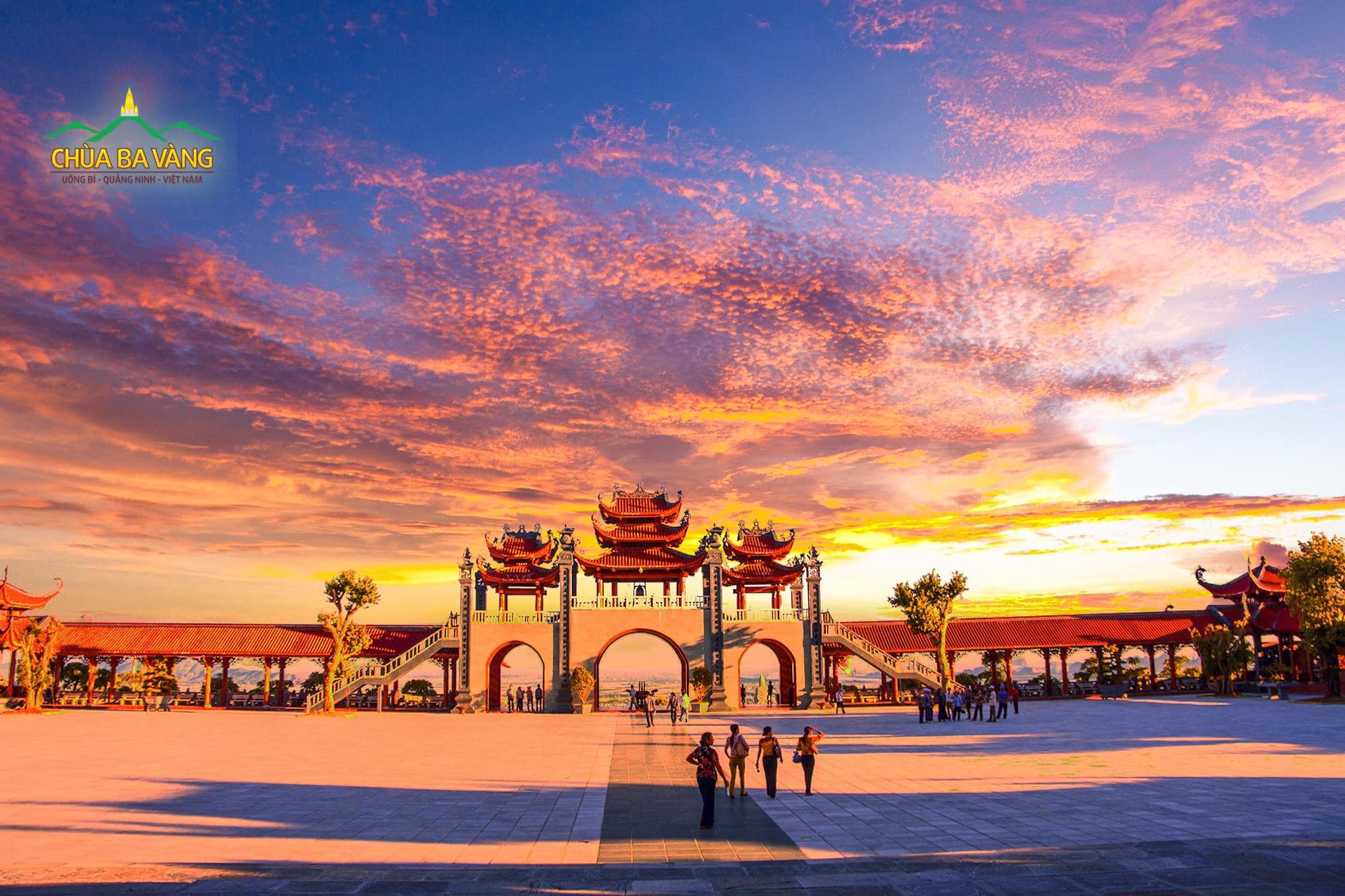
Ba Vang Pagoda, an attractive tourist destination

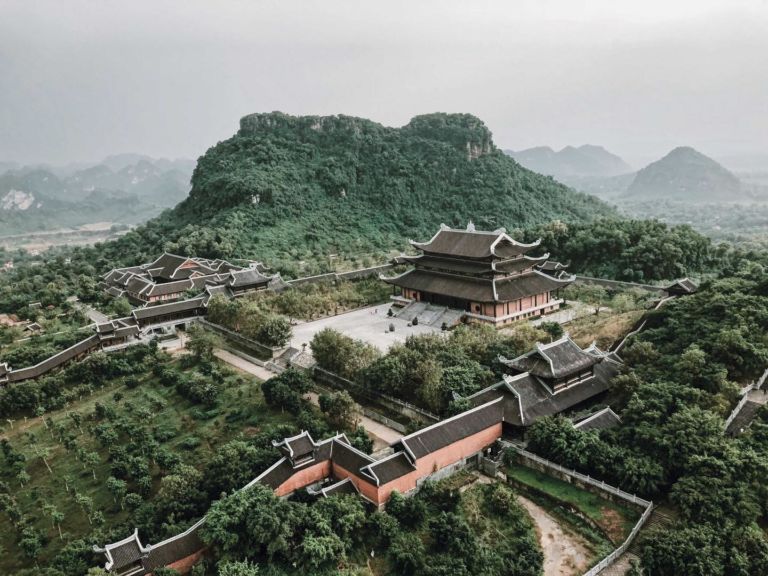
The newly built pagoda of Ba Vang (also known as Bao Quang Pagoda), inaugurated on March 9, has been recorded as having the largest sanctum and will probably become a new attractive tourist destination in the near future.

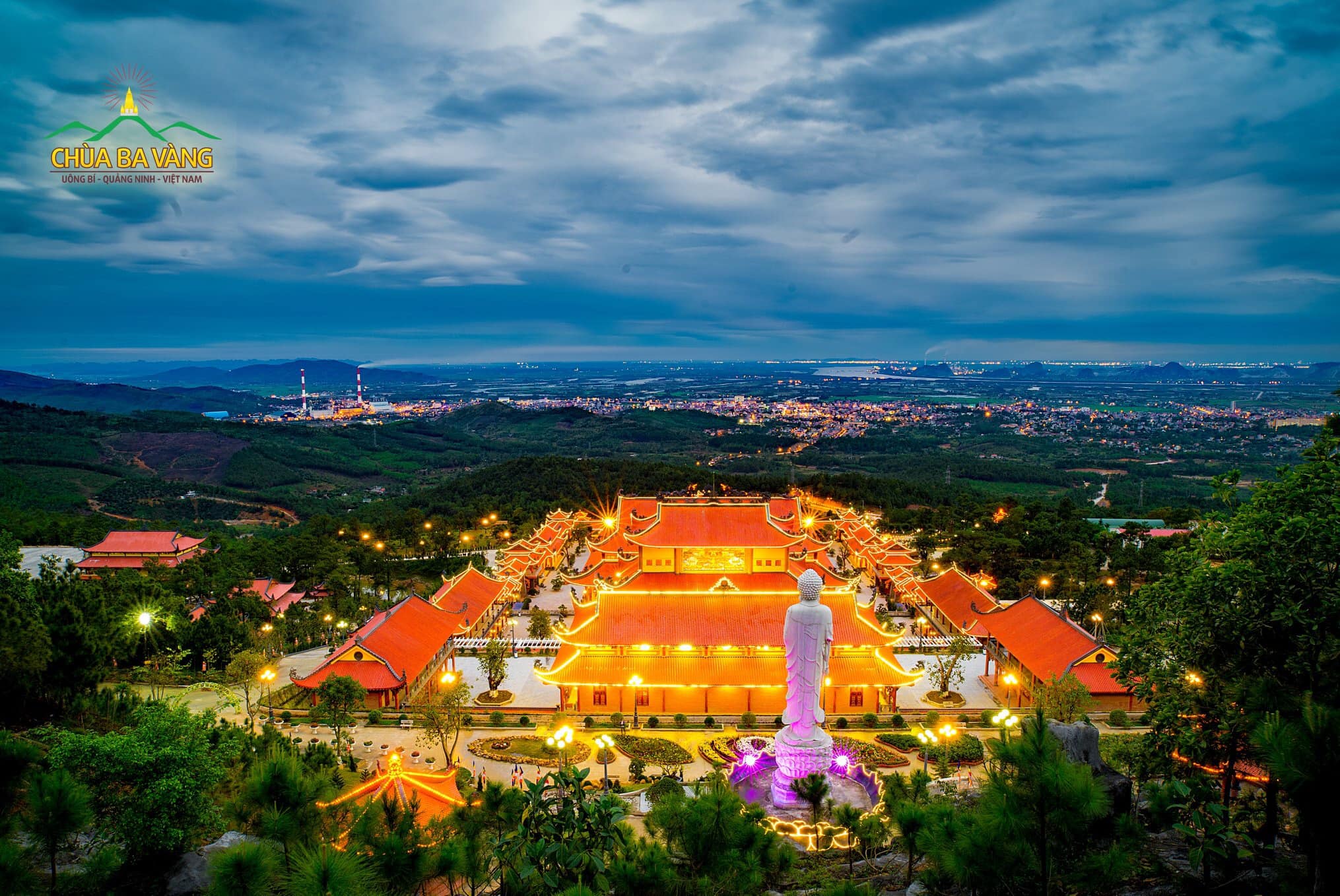
The pagoda located on the 340m tall Thanh Dang Mountain, Uong Bi City, Quang Ninh Province, includes a large forecourt, a sanctum, a Holy Mother’s temple, a Mountain Spirit temple, and an old longstanding well.
The site was originally built in the 13th century and has been renovated several times. The first restoration was conducted in 1705 by Truc Lam Zen Master Mahasamon Tue Bich Pho Giac who was born in 1658 in the reign of King Le Hien Tong.
Based on the archaeological excavation results at the base of the pagoda, such as 30x15cm pinkish trough-shaped terracotta tiles and 40x40cm terracotta flooring bricks, the pagoda was built in the Tran Dynasty. These bricks and tiles were decorated with four petaled flowers, a popular pattern in the Tran Dynasty.
Wars and turbulent political events over time have ruined this historical pagoda. The most notable artifacts remain in the pagoda today include a 0.52m high, 0.38m wide, 0.12m thick stone stele; two stone turtles, and a 1.2m high, 0.22m thick stone incense tower. As time goes by, the Chinese words engraved on the stele and tower were worn away and very hard to read. However, through the presentation, experts suggested that the stele was engraved with the name of a chief monk, while the tower was engraved with these words: Thanh Dang Mountain, Bao Quang Pagoda, Heavenly Pillar.
In 2007, local authorities requested Venerable Thich Truc Thai Minh from the Truc Lam Yen Tu Monastery to manage the Ba Vang Pagoda. He managed to raise the funds from tourist donations and Buddhists throughout the country to restore the pagoda and has received more than VND400 billion. The pagoda was built on an area of 21.818ha, including a 3,500cu.m large three-compartment sanctum that has been considered the largest in Vietnam. Other constructions including preaching chamber, contemplation room, library, and steeple were designed and built harmoniously, preserving the traditional traits of northern pagodas. All statues in the pagoda such as Tam The (three Buddhas representing the past, present and future), Quan Am Bo Tat (Bodhisattvas), La Han (Arhats) are now built up to 2m or more in height.

Find more information on BOOKING.COM

Considering the pagoda’s historical value, Quang Ninh People’s Committee has ranked it among province’s historical heritage sites.
The Ba Vang Pagoda is likely to become a well known spiritual tourism destination attracting lots of domestic and foreign tourist and Buddhist pilgrims. According to the organizers of the ribbon cutting ceremony, during the two days of March 8 and 9, the pagoda welcomed nearly 100,000 Buddhist pilgrims and tourists. “In the near future, we will boost volunteer programs to help the disadvantaged across the country associated with Buddhist events,” said Thich Truc Thai Minh.


Find more information on BOOKING.COM

Search Information by Google

Tuesday, April 7, 2015

Cai Bau Pagoda – famous tourist attraction in Quang Ninh

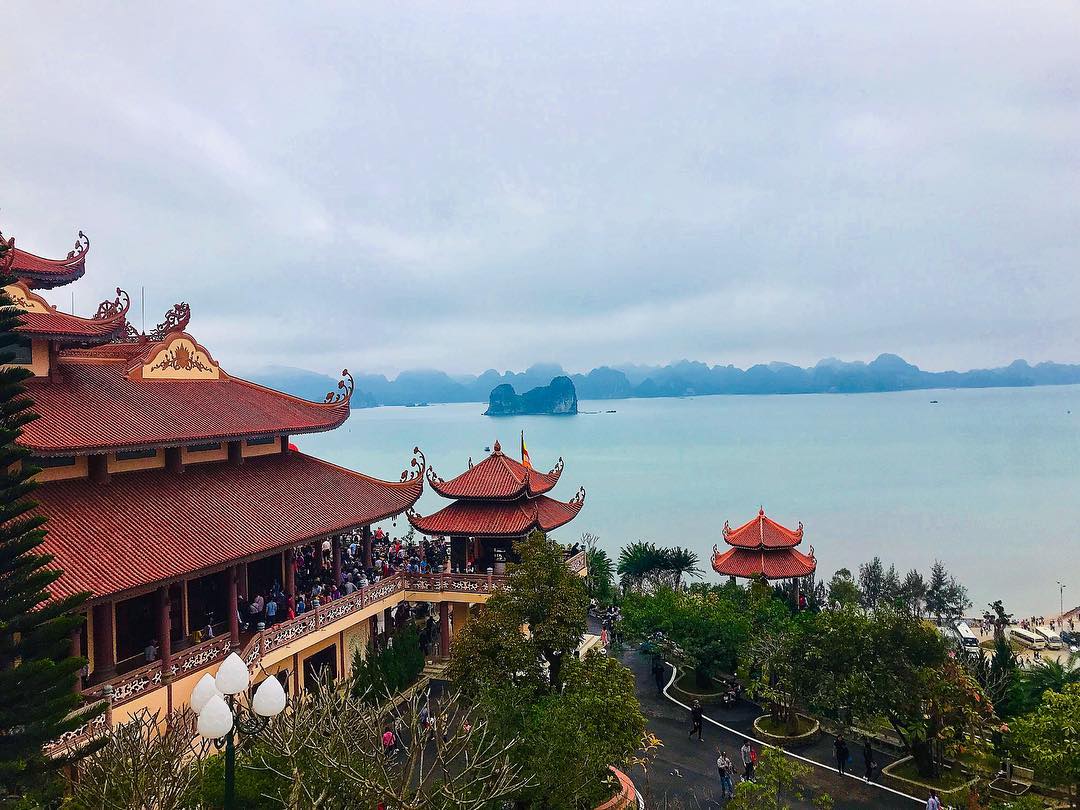
In early spring, beside travelling, tousits also want to go to temples or pagodas to pray for good healthy and luck in the New Year. Hence, Cai Bau Pagoda in Quang Ninh is a destination not to be missed. 


Although Cai Bau pagoda was built in 2009, it attracts tourists by unique construction. It stands back to back with the mountain and toward beach that create unique architecture to attract tourists. Truc Lam Giac Tam monastery or (Cai Bau pagoda) located on Van Don attracts visitors from everywhere to enjoy on spring occasion.

Located near Bai Dai resort, the space in Cai Bau pagoda is not only peace, but also extremely sacred and pure. Blending with the bell voice, chanting and the gong sound is wave echo that make people fell calm and stillness.


In particular, visitors come to worship, sightsee can enjoy vegetarian dinner and free parking. The pagoda located about 10 km from Van Don, so visitors can go there by bus or private vehicles.


Quang Ninh welcomes 3 million tourists in Q1

The northern province of Quang Ninh welcomed nearly three million tourists in the first quarter of 2015, reported the provincial Department of Culture, Sports and Tourism.  
 The figure represents a two percent annual increase and amounts to 40 percent of the year’s target.
Of the tourists, 791,600 were international arrivals, a slight one percent over that of the same period last year.
The industry earned 1.63 trillion VND (74.9 million USD) in the first three months, up 15 percent compared to last year.
Quang Ninh is now preparing for a new tourism season with a wide range of attractive activities, such as the 2015 Ha Long Carnival Festival and the Japanese cherry festival. The province is also doing its utmost to improve its service quality, diversify products, ensure visitor safety and keep prices stable.

Monday, May 13, 2013

Bai Chay Beach

Bai Chay (Buring Plain), a large artificial beach close to Ha Long bay, is over 500 meters long ang 100 meters wide. Hoang Gia Tourism company’s investment has made the site popular. An asphalt road winds between the beach of  white sand and casuarina trees. Nearby are restaurants, traditional music theatre and water puppet theatres. Hoang Gia park on Ha Long road between Bai Chay tourist wharf Ha Long night market provides water-skiing and jet-skiing.

Bai Chay is associated with many legends.One describes a fleet led by Truong Van Ho with food for the Yuan-Mogolian invaders. Vietnamese defenders led by Tran Khanh Du set the entire invading fleet afire. Winds from the northeast carried sparks to the western side of Cua Luc river mouth, setting its forests aflame. Hence, the name “Bai Chay”.

Another story says the western side of  Cua Luc once had a wharf for seafaring vessels. Local shipyards used casuarina leaves to burn acorn-barnacles off the boats’hulls. People in Hon Gai and another neighbouring villages saw these fires and called the area “ Bai Chay”.
- Beach in Vietnam -
 

Wednesday, May 8, 2013

Ha Loang Bay (Ha Long By) - Vietnam

Seen from above, Ha long Bay resembles a light blue handkerchief dotted with emeralds. The bay cover only 1,553 squares kilometers yet has 1,969 islands. The artistic hand of creation made islands that look like people, animals and familiar objects. Trong Mai (Cock and Hen) resembles a pair of chickens bobbing in the water; Rua (Turtle) is a giant tortoise with half-closed eyes. Ong su (The Monk) looks like an old monk, his face turn out to sea as he clasps his hands in prayer to Buddha and Đinh Huong (Incense Urn) is like a giant incense burner atop the altar of the sea.

Halong bay Vietnam travel
 
Ha Long bay is the deep blue during all seasons. In spring, the islands seem to bob on the water. As summer approaches, they appear to  awaken in unison and rise from the blue depths. Fig trees and orchids in cracks along the rocky faces bloom with snowy flower. Boats take tourists anytime of year along meandering channels through the forest of  islands. Sometimes, a rock face seems to block the route. However, once the boats come nearer, the wall appears to crack open as if to let boats pass. One scene disappears as yet another panorama opens. The winding route feels endless.

Ha Long bay has  a rich collection of grottoes and caves concentrated mostly in the UNESCO- protected area. Thien Cung (Heavenly Palace Grotto) feels modern and refined while Đau Go ( Timber Hiding Cave) is ample and grandiose and Sung Sot (Amazing Cave) seem deeply secretive. Many sites – such as Đong Tien (Fairy Grotto) Lake and Trinh Nu and Trong (Virgin and Male) Grottoes  – are linked to legends and popular tales. Each cave is a grandiose yet refined architectural creation of nature.

At sun set, the mountain shadows stretch out across the bay and the water turns grey-blue before suddenly changing to crimson with the sun’s last rays. For an instant, the landscape becomes one color and then sunlight disappears. After the moon climbs into the sky, the sea seems coated with silver, with the lights of  Ha Long city reflect off the water.
- Beaches in Vietnam -
- Bays in Vietnam -

Beaches in Vietnam - Tra Co beach

Vietnam's 3,000 - kilometers coastline stretches from Tra Co Beach in the northern province of Quang Ninh to Ca Mau Cape in Vietnam's southern-most province of Ca Mau and includes islands, bays, and beaches that range from the secluded and romantic to the popular and sporty. The favorite beaches are: Tra Co, Ha Long, Bai Chay, Do Son, Canh Duong, Lang Co, Non Nuoc, Đai Lanh, Nha Trang, Mui Ne, Hon Rom, and Vung Tau.

This post will introduce you the beach of Tra Co. These other beaches, the islands; bays will be introduced in the later posts in the series "Beaches in Vietnam", "Islands in Vietnam", and "Bays in Vietnam"
 
Beach of Tra Co Vietnam
Tra Co Beach
Tra Co, a small peninsula in Quang Ninh province, is just eight kilometers from Chinese border. Its seventeen kilometers of beaches stretch from Got cape to Hon Ngoc (Pearl cape), with with sand dunes measuring up to four meters in height and forest of sea pines and mangroves. Residents of the small villages dotting the peninsula earn their incomes from fishing. Tra Co accommodates tens of thousands of visitors who flock there for relaxation and recuperation. The area also boasts tourist sights, including Linh Khanh pagoda and one of the oldest Christian churches in Viet Nam.

Linh Khanh pagoda, also known as the Tra Co or the Nam Tho pagoda, was erected in 1775 during the reign of King Le Hien Tong to worship Goddess Lieu Hanh. This site of  5000 square metres in a peacefull setting beneath ancient tress has sixty-three statues that include Buddha, Quan Am Thi Kinh and Di Lac as bronze bells which were added in 1843.


The Tra Co communal house (Dinh Tra Co) is delicated to the six gods who established the village. Built in 1550, it has two wings, each with seven rooms. Each of the rooms has wooden floors and celling. Forty-eight wooden pillars, each over five meters tall, support roof timbers with intricate carvings. Both wings have carvings of for mythical figures: dragon, unicorns, turtles and phoenixes.
Tra Co Communal House
Dinh Tra Co
The mother Goddess temple, also known as Tra Co temple, was buuilt in 1550. The temple is dedicated to a Queen Mother whose statue was washed ashore from the open sea according to local legend. The temple is a scared site for Vietnamese, who flock there on the twenty-third day of the third lunar month for the annual festival honoring the mother Goddess. The temple was originally only a small hut in the forest. Today, it stands next to a huge, 700 – year – old banyan tree.

Tra Co also boasts a shrine delicated to Nguyen Huu Cau, a leader of an eighteen-century peasants’ insurrection, as well as a Christian church dating from 1880. The church, which was renovated in 1995, features  murals and a bell that is over eighty years old.

Tra Co’s average annual temperature of 22.7°C, its seculed location away from the bustle of ports and its unspoiled natural beauty make it a promising site for development. The area is 195 kilometres from Ha Long town and 206 kilometres by water from Hai Phong city. It’s very interesting when enjoy anything at here, it’s a beautiful memory when discover here.
- Beaches in Vietnam -