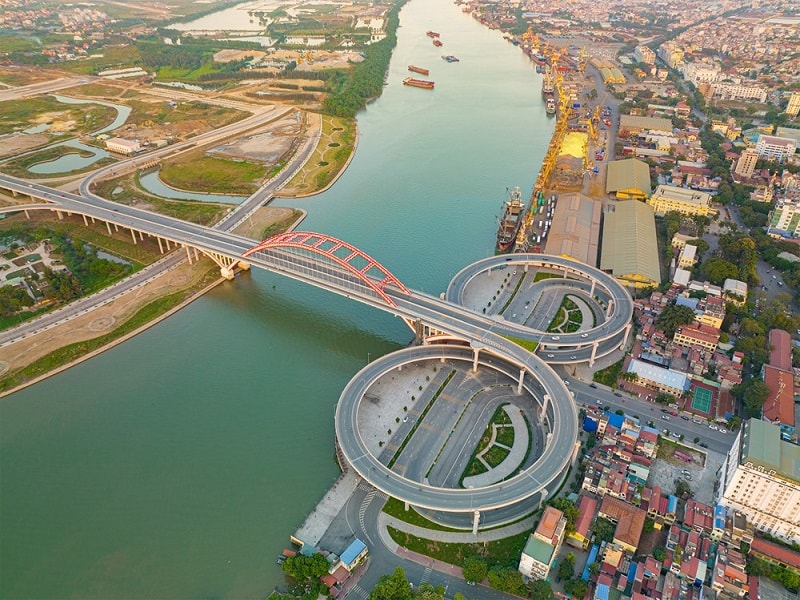
If you stand on the rusted upper deck of an old iron ferry crossing the Cửa Cấm River just as the morning industrial haze parts, your senses are hit by an entirely unexpected contrast. The air doesn't carry the pristine, fragile chill of the mountain frontiers or the heavy, humid stillness of the southern delta. It is a powerful, energetic atmosphere—a distinct blend of brackish sea wind, wet river mud, the sweet caramelized aroma of woodfired crab broth, and the faint, nostalgic scent of dry French brickwork and rusted shipping iron.
Look down at the river surface where the ochre-tinted currents collide with the incoming tide of the Gulf of Tonkin. This is the maritime gateway that has swallowed and shaped centuries of trade, war, and migration. While mainstream international travelers traditionally use this northern hub as a mere transit corridor to reach the packed cruise routes of Ha Long Bay or the commercialized beaches of Cat Ba Island, a sophisticated counter-trend is showing up in global travel queries. Discriminating adventurers from Western Europe and North America are purposely bypassing the predictable resort packages. They are searching for destinations that possess an unedited architectural grit, a rich culinary heritage, and an authentic, working-class maritime identity. This specific cultural hunger is currently driving a massive spike in high-intent searches for Hải Phòng City.
Known historically as the Flamboyant City due to the brilliant red blossoms that drape its colonial avenues every summer, Hải Phòng is a magnificent coastal anomaly. It is a place where monumental French architecture remains integrated into the chaotic daily lives of local dockworkers, where ancient fishing legends exist alongside a booming industrial renaissance, and where the street food culture is guarded like a religion. It is a city that does not perform for tourists; it invites true explorers to witness an unbroken, fiercely proud coastal lifestyle.
The Iron Masters of the Dockyards: Grit, Fire, and Maritime Dignity
To truly feel the pulse of Hải Phòng, you must leave the manicured center of the municipal theater square and wander into the maze of historic shipping alleys along the Tam Bạc Canal. Here, the city’s identity as an unapologetic, heavy-industrial port city reveals itself in every sensory layer.
The people who inhabit these riverways possess a character completely distinct from the reserved cadence of Hanoi or the high-speed commercialism of Saigon. Người Hải Phòng (the people of Hải Phòng) are known across Vietnam for their direct, open-book sincerity, their booming voices that can cut through the mechanical roar of a shipyard, and a fierce, deeply ingrained sense of local loyalty. Their hospitality is entirely devoid of rehearsed tourist pleasantries; it is practical, raw, and exceptionally generous.
You will witness this human landscape in the old metalworkers and marine welders who sit outside the low-roofed mechanic shops near the port. Their skin is deeply tanned by years of salt glare, their fingers permanently stained with iron oil. If you pause to watch their work, they won't look at you with suspicion. Instead, they might wipe a plastic stool clean with a rough rag, pour you a cup of intensely bitter, hot green tea, and point toward the massive crane structures lining the horizon, launching into a proud, boisterous story of how their ancestors built the first domestic iron vessels that navigated the northern waters. They treat the river not as an aesthetic backdrop, but as a living provider that demands calloused hands and absolute respect.
The Altar of the Steaming Broth: Fire, Crabs, and the Chemistry of Red Noodles
The culinary identity of Hải Phòng is a national legend, shaped completely by its proximity to the abundant fisheries of the Gulf of Tonkin and a historical working-class need for dense, high-energy sustenance. This is a street food culture defined by high heat, intense marine extractions, and textures that refuse to compromise.
The Earthy Architecture of Bánh Đa Cua
The absolute, undisputed soul of the city is found inside a steaming porcelain bowl of Bánh Đa Cua (Red Rice Noodle Soup with Crab). The foundation of this dish is its unique noodle: a wide, flat, chewy rice strand that achieves its distinct burnt-sienna color from the addition of local sugarcane juice during the milling process. The broth is a thick, highly concentrated alchemy derived from slow-simmering kilograms of fresh field crabs, ocean shrimp shells, and pork bones over natural charcoal fires. It is served hot, topped with a rich layer of golden crab roe fat, tender pork wrapped in fragrant betel leaves (Chả Lá Lốt), crispy fried shallots, and a handful of wild water spinach. The flavor profile is an absolute revelation—peppery, intensely briny, earthy, and carrying a deep umami punch that tastes exactly like the coastal marshes look.
The Fiery Alchemy of Bánh Mì Cay
Equally addictive is the city’s iconic Bánh Mì Cay (Spicy Mini Baguettes). No larger than a couple of fingers, these slender, ultra-crispy bread sticks are smeared internally with a rich, velvety, slow-rendered pork liver pâté and toasted over hot coals until the bread cracks like glass. The magic lies in the dipping sauce: Chí Chương, a traditional Hải Phòng chili sauce fermented with fresh red peppers, sea salt, and garlic until it develops a sharp, sour, vinegary heat that cuts through the rich liver fat instantly. Sitting on a low blue plastic stool on a crowded sidewalk, eating five of these fiery sticks in rapid succession while the city traffic hums around you, is a rite of passage that redefines the concept of comfort food.
The Secret Grid: Architectural Ghosts and Hidden Estuaries
While the standard travel blogs direct visitors exclusively to the sandy coves of Cat Ba, the true emotional core of Hải Phòng belongs to those who explore the forgotten structures and hidden waterways that the modern developments have overlooked.
The Colonial Ruins of the Old Port District
For an unforgettable encounter with architectural nostalgia, walk through the crumbling lanes of Cầu Đất and Điện Biên Phủ Street at dusk. This sector contains one of the most intact, un-restored collections of late 19th-century French colonial architecture in Southeast Asia. Unlike the highly polished, museum-like villas of Hanoi, the structures here are beautifully weathered, covered in wild green moss, with yellow ochre plaster peeling away to reveal the red French bricks beneath. Many of these grand old buildings still function as active, working-class residential blocks, with families cooking dinners on portable gas stoves on wrought-iron balconies and bicycles parked inside grand stone archways. Walking these lanes as the yellow streetlights flicker on feels like wandering through a living historical archive.
The Sacred Silence of the Từ Lương Estuary
Located on the rural fringe where the river systems dissolve into the sea, seek out the hidden sanctuary of the Từ Lương Estuary. This is a vast, quiet plain of brackish water wetlands completely lined with ancient, towering mangrove forests and wild nipa palms. Rent a small wooden sampan from a local fisherman to glide through the narrow water channels. The environment here is completely separated from the industrial energy of the city center. The only sound is the rhythmic whistle of the coastal wind through the palm fronds and the sudden plop of mudskippers darting across the grey riverbanks. It is a peaceful, primitive landscape that reveals what this entire coast looked like before the first ships arrived.
The Maritime Manifesto: Operational Intelligence for the Urban Explorer
The Weather Window
Hải Phòng experiences a distinct four-season sub-tropical climate that dictates the behavior of the coast. The absolute premier window for international travelers seeking clear skies, low humidity, and comfortable temperatures for urban exploration is from October to December. During these autumn months, the northern monsoons bring a crisp, cool air that makes walking the historic avenues exceptionally pleasant. If you want to see the city in its most dramatic visual state, visit in May and June, when the endless rows of flamboyant trees burst into a brilliant canopy of fiery red blossoms, though you must prepare for high summer humidity and sudden afternoon thunderstorms.
The High-Speed Approach
Reaching this northern maritime hub is remarkably efficient, making it an ideal entry point for independent travelers. Hải Phòng is home to Cat Bi International Airport (HPH), which accepts direct flights from major regional Asian hubs. Alternatively, if you are arriving from Hanoi, bypass the unpredictable local buses and book a seat on the modern, high-speed highway limousine vans, which transport you from the capital to the heart of the port city in a seamless 95 minutes. For a highly romantic, slow-travel alternative, take the historic colonial train line from Hanoi’s Long Bien Station, which drops you directly at the stunning, century-old Hải Phòng Railway Station.
The Economics of the Port
Because Hải Phòng remains an authentic working city rather than a commercialized tourist enclave, it offers an incredible baseline of practical value for conscious explorers:
A monumental bowl of red rice noodle soup with fresh crab for two: $5.00 to $7.00.
A dozen iconic spicy mini baguettes bought from a traditional street stall: $3.00 to $4.50.
A private, half-day guided sampan exploration through the outer mangrove estuaries: $30.00 to $45.00.
A night at a beautifully restored, colonial-era boutique hotel in the city center: $60 to $120 per night.
Cultural Custom and Urban Ethics
Hải Phòng is a proud, fast-moving industrial environment; it requires an active mindfulness from its visitors. When walking through the hectic port districts or the historic market stalls of Chợ Sắt, always maintain awareness of local traffic and heavy transport vehicles—this is a living economy, not a theme park. When photographing the local dockworkers or the elderly residents living inside the colonial villas, a polite nod and a friendly phrase like "Xin chào" (Hello) will instantly break down any barrier, frequently resulting in a booming invitation to join them for a fresh beer or a cup of hot tea. Dress modestly when visiting local temples or active municipal buildings, and always wear high-traction footwear when exploring the historical riverfronts, as the wet river stones can become slick from the changing coastal tides.
The Ultimate Insider Secret: If you stay near the harbor, make your way to the old Tam Bạc Suspension Bridge at precisely 4:45 AM. Stand on the weathered metal walkway alone as the first spear of dawn light breaks over the shipping channels. Below you, the morning mist hangs thick over the water, turning the massive iron hulls of the anchored cargo ships into silent, ghostly silhouettes. Watch the first fleet of small wooden fishing boats slowly glide back into the canal from the open sea, their small diesel engines throwing a low, rhythmic thrum into the quiet morning air while the smell of hot woodsmoke and fresh crab paste begins to rise from the floating kitchens below. In that raw, powerful morning air, you will realize you aren't just visiting a city; you are witnessing the fierce, beautiful soul of the northern coast breathing in its truest, most unpainted form.


0 nhận xét:
Post a Comment