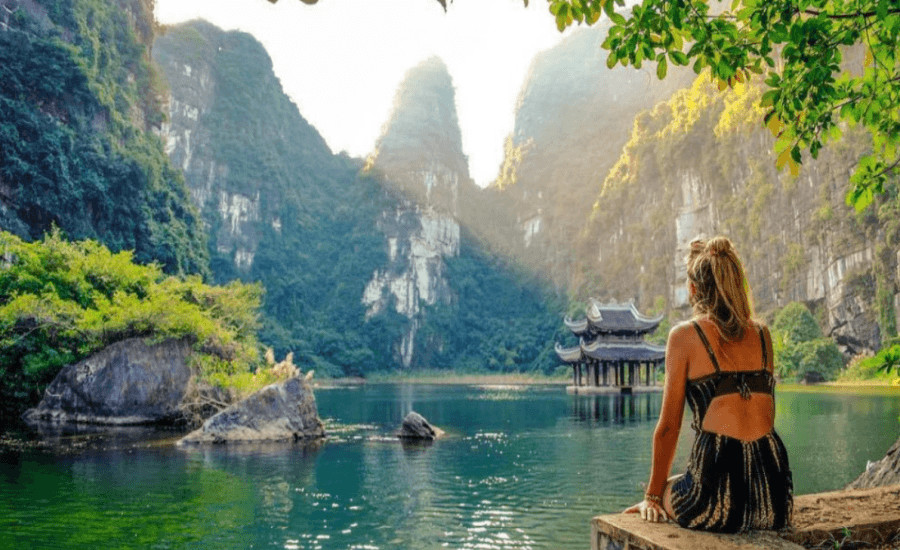
There is a moment in Ninh Binh that no photograph can fully capture.
It happens when the sound of the outside world disappears.
Your small wooden boat drifts silently between towering limestone mountains. The river is smooth as glass. Water birds skim across emerald reflections. The oarswoman rows with her feet—a centuries-old technique unique to this region—while mist hangs over rice fields glowing in the morning light.
For a few minutes, you stop reaching for your camera.
You simply stare.
And that is exactly why travelers from the United States, the United Kingdom, Germany, France, the Netherlands, and across Europe are increasingly searching for Ninh Binh.
While many first-time visitors to Vietnam focus on Hanoi, Ho Chi Minh City, or Ha Long Bay, a growing number of international travelers are discovering what many now call Vietnam's most magical landscape: Ninh Binh.
Yet somehow, it still feels like a secret.
A Landscape That Looks Like a Fantasy Film
If someone described Ninh Binh without showing you a picture, you might assume they were exaggerating.
Giant limestone karsts rise dramatically from rice paddies.
Ancient temples hide among jungle-covered cliffs.
Rivers disappear into mysterious caves before emerging into valleys untouched by roads.
The region is often compared to Ha Long Bay, but there is one enormous difference:
Here, you're not looking at the landscape from a cruise ship.
You're inside it.
The heart of the experience is the breathtaking Trang An Scenic Landscape Complex, where boats glide through cave systems carved by nature over millions of years.
Unlike many famous destinations that become victims of their own popularity, Trang An still retains a sense of tranquility. The silence feels almost sacred.
As sunlight filters through cave openings and illuminates hidden valleys, it becomes easy to understand why filmmakers selected this area as a location for major Hollywood productions.
Why International Travelers Are Suddenly Obsessed with Ninh Binh
Part of the appeal is timing.
Modern travelers increasingly seek experiences that feel authentic rather than manufactured.
Ninh Binh delivers exactly that.
The region combines dramatic landscapes, deep history, living traditions, local food culture, and genuine human interactions without the overwhelming commercialization found in many global tourism hotspots.
International visitors are also discovering that Ninh Binh offers something increasingly rare:
Space.
Space to breathe.
Space to wander.
Space to feel connected to a place rather than merely checking it off a list.
The Ancient Capital Most Travelers Never Knew Existed
Long before Hanoi became Vietnam's political center, Ninh Binh held the nation's crown.
The ancient capital of Hoa Lu served as the seat of power during the 10th and 11th centuries.
Walking through the historic grounds today feels remarkably intimate.
Instead of massive crowds, you'll find quiet courtyards, ancient gates, incense drifting through temple halls, and elderly locals tending shrines that connect modern Vietnam to its earliest dynasties.
Many travelers arrive expecting scenery.
Few expect to encounter one of the most significant chapters of Vietnamese history.
The Hidden Gem That Changes Everything
Ask locals where they go when they want peace, and many will mention places beyond the famous postcard views.
One of the most rewarding hidden escapes is the area around Van Long Nature Reserve.
Unlike the more famous boat routes, Van Long feels wonderfully untouched.
The water is so still that local people often call it “the bay without waves.”
If you're lucky, you might spot rare langurs climbing the cliffs.
At sunset, the entire reserve transforms into a giant mirror reflecting golden skies and jagged mountains.
It's one of those places where travelers often arrive for an hour and stay until darkness falls.
What the People Are Like
One of Ninh Binh's greatest strengths isn't visible in photographs.
It's the people.
Residents here are often described as gentle, humble, patient, and quietly proud of their homeland.
Unlike destinations where tourism dominates every interaction, conversations here still feel natural.
A restaurant owner may pull up a chair and explain a family recipe.
A farmer might wave as you cycle through the countryside.
A boat rower may share stories passed down through generations.
The hospitality feels genuine because it is.
The Flavors You Will Remember Long After the Trip Ends
Ninh Binh's cuisine rarely receives the same international attention as Hanoi or Hue.
That's a mistake.
One of the region's most famous specialties is goat meat, raised on limestone mountains and prepared in countless ways.
Locals often pair it with fresh herbs and a distinctive dipping sauce that perfectly balances salt, spice, and citrus.
Another unforgettable dish is crispy scorched rice, known locally as com chay.
Crunchy, savory, and surprisingly addictive, it's the snack many visitors end up carrying home in their luggage.
For adventurous eaters, local family-run restaurants often provide experiences far richer than luxury dining rooms.
The food tastes connected to the land because it is.
The Most Beautiful Time to Visit
Every season tells a different story.
Spring brings fresh greenery, temple festivals, and comfortable temperatures.
Late May and early June transform the Tam Coc rice fields into a sea of brilliant gold, creating some of Vietnam's most iconic scenery.
Autumn offers clear skies and cooler weather ideal for cycling and exploration.
Winter mornings bring atmospheric mist that makes the mountains appear almost mythical.
If photography is your passion, the rice harvest season is difficult to beat.
The entire landscape seems to glow.
How Much Does It Cost?
One reason international travelers love Ninh Binh is value.
A comfortable boutique hotel often costs significantly less than comparable accommodations in many Western destinations.
A local meal may cost between $3 and $10.
Boat excursions remain affordable.
Bicycle rentals are inexpensive.
Even travelers seeking luxury can enjoy premium experiences without the premium price tag found elsewhere in Asia.
For many visitors, Ninh Binh becomes proof that extraordinary travel experiences do not require extraordinary budgets.
Questions Travelers Frequently Ask
Is Ninh Binh worth visiting if I've already been to Ha Long Bay?
Absolutely. Many travelers end up preferring it because the experience feels more immersive and personal.
How many days should I stay?
Two to four days is ideal, though many visitors regret not staying longer.
Can I explore independently?
Yes. Renting a bicycle is one of the best ways to experience the countryside.
Is it suitable for families?
Very much so. The region is peaceful, safe, and filled with nature-based activities.
The Experience That Makes Ninh Binh Different
Vietnam has beautiful beaches.
Vietnam has exciting cities.
Vietnam has mountain adventures.
But Ninh Binh offers something harder to define.
It creates stillness.
In an age of constant notifications, crowded itineraries, and endless distractions, Ninh Binh gives travelers permission to slow down.
To float through a cave in silence.
To watch the sun set behind limestone peaks.
To hear temple bells echo across rice fields.
To remember what travel felt like before everything became content.
And perhaps that is why so many visitors leave with the same thought.
Not that they visited another destination.
But that, for a few unforgettable days, they stepped into another world.
Because once you've watched dawn break over the karst mountains of Ninh Binh, ordinary landscapes never quite feel the same again.
And you'll understand why so many travelers leave with a single conclusion:
“I need to experience this place again.”


0 nhận xét:
Post a Comment