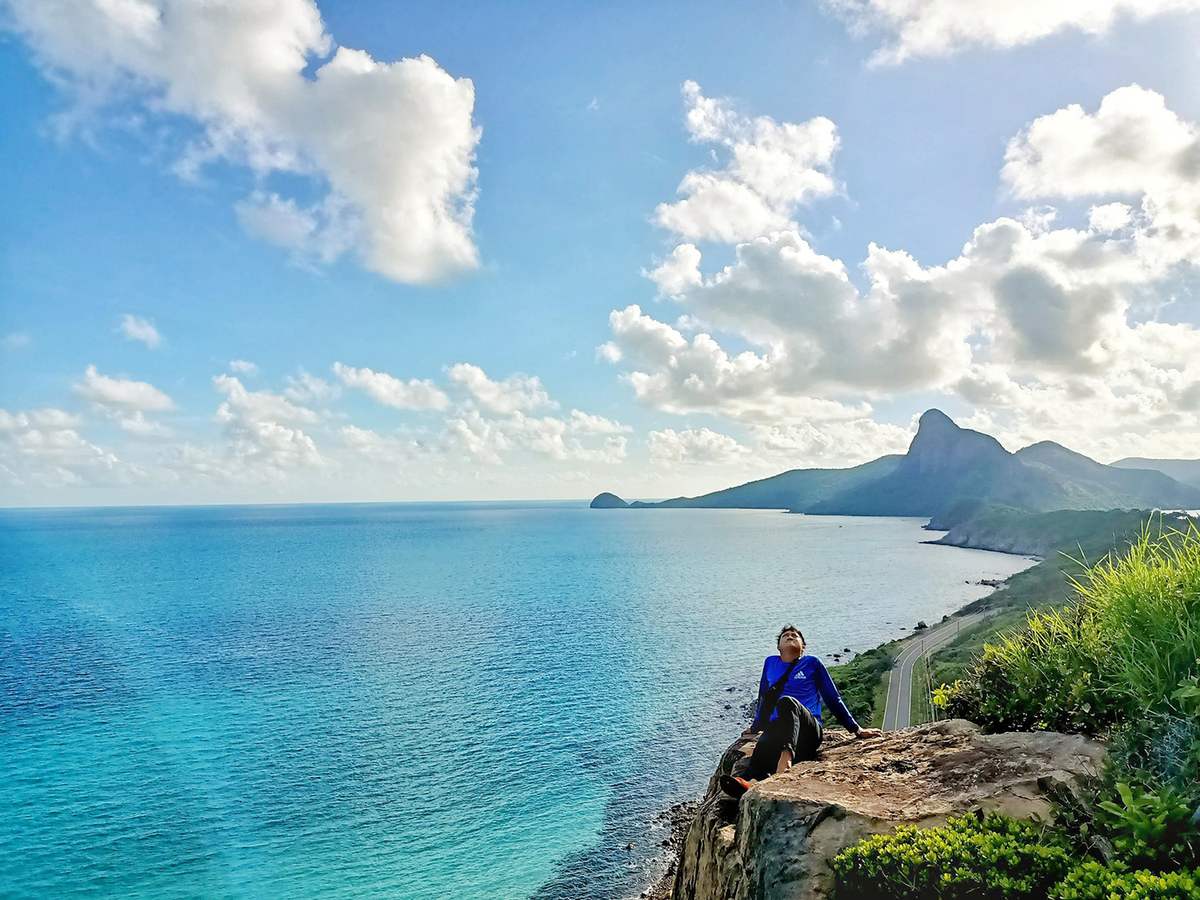
There is a point during the propeller flight from the mainland when the South China Sea ceases to look like a body of water and transforms into a massive sapphire sheet. Then, out of the deep blue, a jagged formation of forested granite peaks breaks the surface, shrouded in an eerie, low-hanging maritime fog. When you step off the small aircraft onto the tarmac at Côn Đảo, your senses are instantly recalibrated. The air does not carry the hot, heavy exhaust of Vietnam’s metropolitan centers; it is wonderfully cool, smelling of crushed wild almonds, raw sea salt, and the damp, earth-bound perfume of an undisturbed tropical canopy.
While crowded beach strips and commercial mega-resorts dominate the mainland’s tourist itineraries, sophisticated travelers from Europe and North America are turning their attention to islands with a raw, slow-motion pulse. Recent international travel data shows a significant increase in high-intent searches from the West looking for remote, deeply historic island sanctuaries. This movement has placed Côn Đảo—an archipelago of 16 mountainous islands floating 110 miles off Vietnam's southeastern coast—at the very top of the luxury eco-travel wish list.
Côn Đảo is a dramatic psychological paradox. Known for over a century to locals as "The Devil’s Island of Indochina," it has evolved from a notorious colonial penal colony into a pristine national park and sanctuary of unparalleled ecological isolation. It is a destination that doesn't just offer an escape; it demands a deep emotional journey.
The Island Custodians: Ghostly Filaments and Fierce Serenity
To explore the quiet coastal ring road of Côn Sơn, the main island, is to experience a landscape defined by an almost sacred tranquility. Massive century-old tropical almond trees (Cây Bàng) line the empty French colonial seafront promenade, their gnarly roots breaking through the brick paths like ancient, weathered hands.
The human presence on the island is inextricably tied to this heavy historical silence. The permanent residents are a quiet, fiercely proud, and incredibly gentle people. They possess a stoic calm that reflects the island's isolation; their hospitality is understated, deeply personal, and completely free of the aggressive transactions of typical tourist hubs.
This character is beautifully illustrated in the island's unique evening ritual at Hàng Dương Cemetery. Unlike any other destination in Southeast Asia, the emotional heart of Côn Đảo awakens after midnight. Under the canopy of stars, thousands of locals and mindful travelers silently converge on the graves of those who perished during the island's dark history, lighting sticks of sandalwood incense and placing fresh white chrysanthemums. The air turns thick with fragrant smoke and the soft hum of prayers blending with the distant crash of ocean waves. It is a profound, communal experience of remembrance that turns the entire island into a sanctuary of human dignity.
The Altar of Fire and the Wild Treasures of the Shallows
The gastronomy of Côn Đảo is deeply connected to the cold, nutrient-rich marine currents that encircle the archipelago. It is a cuisine that relies on absolute freshness, sharp aromatics, and unique forest forage.
The Sweet Crunch of Roasted Almond Seeds
The absolute signature flavor of the island is Mứt Hạt Bàng (Sugared or Salted Almond Seeds). Every summer, locals harvest the fallen fruits of the massive colonial almond trees, cracking open the tough husks by hand to extract the tiny, rich kernels inside. These seeds are slow-roasted over charcoal with either a delicate coat of sea salt or a thin glaze of sugar and ginger. The flavor is a beautiful revelation—deeply buttery, woody, and intensely nutty, offering a tangible bite of the island’s botanical history.
The Briny Heat of Sautéed Moon Crabs
For a true coastal luxury dish, travelers seek out Cua Mặt Trăng (Moon Crab), a deep-water crustacean prized for the distinctive, glowing red spots on its shell. Prepared simply by steaming over wild lemongrass and flash-searing with black Phu Quoc pepper, lime juice, and sea salt, the meat is exceptionally dense, sweet, and redolent of the clean offshore currents.
The Secret Grid: Unlocking Hidden Bays and Unbroken Canopies
While the historic French prison complexes offer a chilling glimpse into the past, the true raw energy of Côn Đảo belongs to the pristine natural corridors that frame the island's boundaries.
The Primeval Sanctuary of Đầm Tre Lagoon
For an experience of absolute geological isolation, embark on a challenging three-mile trek through the primary rainforest toward Đầm Tre Lagoon (Bamboo Lagoon). This deep, circular bay is hidden behind sheer vertical cliffs at the northern tip of Côn Sơn. As you descend through the thick canopy of ancient hardwoods and wild lianas, the forest suddenly opens to reveal a completely enclosed mangrove lagoon. The water here is a stunning, crystal-clear turquoise, protected from the open ocean winds. It is a vital nesting ground for rare hawksbill sea turtles and giant clams. Snorkeling into the calm center completely alone, surrounded by towering walls of green jungle, feels like slipping into the earth’s original, unmapped blueprint.
The Sunken Solitude of Bãi Nhát
Located at the base of the majestic Love Peak (Đỉnh Tình Yêu), Bãi Nhát is a stretch of coast that plays a beautiful game of hide-and-seek with the tides. For most of the day, the beach doesn't exist; it is completely submerged beneath the crashing waves of the sea. But for a few hours in the late afternoon, as the tide recedes, a vast plain of smooth, snow-white sand and rounded black boulders emerges from the surf. Standing on this temporary beach as the setting sun paints the granite cliffs in shades of crimson and violet is an unforgettable experience of wild, fleeting beauty.
The Archipelago Manual: Operational Intelligence for the Discriminating Mind
The Marine Windows
Côn Đảo behaves strictly according to the whims of the seasonal monsoons. The premier window for Western travelers seeking calm, mirror-like seas, maximum underwater visibility, and low humidity is from March to September. This golden period is perfect for scuba diving and witnessing the legendary sea turtle nesting season on neighboring Bay Canh island. From October to February, the northeast winds arrive, creating spectacular, dramatic waves along the eastern coast that appeal to windsurfers and hikers who enjoy cooler, windy mountain temperatures.
The Air Bridge
Bypass the long, grueling ferry options completely. The most elegant and seamless connection for international travelers is to book a premium domestic flight from Ho Chi Minh City or Hanoi directly into Co Ong Airport (VCS). Operated by modern turboprop aircraft, the brief 45-minute flight from Saigon traces the path of the Mekong Delta before dropping smoothly over the dramatic mountain ridges of the island, turning your arrival into a spectacular aerial introduction to the frontier.
The Economics of Isolation
Because over 80% of the archipelago is strictly protected within a pristine National Park boundary, mass tourism infrastructure is forbidden, maintaining a premium baseline of privacy and exclusivity:
A bag of hand-roasted salted almond seeds bought from a local family: $4.00 to $6.00.
A fresh, multi-course moon crab dinner for two at a seaside eatery: $35.00 to $50.00.
A private, full-day guided boat charter and snorkeling excursion to remote islets: $120 to $180.
An ultra-luxury, eco-conscious beachfront villa with a private pool: $450 to $900 per night.
Environmental Stewardship and Island Customs
Côn Đảo is an exceptionally eco-conscious territory. Plastic bags and single-use water containers are actively discouraged at the airport and ports—bring high-quality reusable flasks. When exploring the historic prison monuments or Hàng Dương Cemetery, conservative attire covering shoulders and knees is strictly mandatory out of deep respect for the lives lost there. Speak softly when walking through the towns and sites; the island's unique stillness is its greatest treasure, and matching your energy to this calm rhythm will transform you from a standard tourist into a welcome guest.
The Ultimate Insider Secret: If you explore the southern tip of the island, ride your scooter down to the edge of the Cá Mập Cape (Shark Cape) at precisely 5:15 AM. Stand on the edge of the sheer granite cliff as the dawn light begins to break. Below you, the vast ocean stretches infinitely toward the horizon, completely untouched by human shipping lanes. As the sun clears the water, it illuminates the jagged silhouettes of the surrounding seven uninhabited islands, casting long, dramatic gold shadows across the sapphire water. In that immense, quiet morning air, with the wild wind whipping off the sea, you will realize you have reached the absolute edge of the modern calendar. You aren't just looking at an island; you are witnessing the world exactly as it was on the very first day.


0 nhận xét:
Post a Comment