There is a precise moment dusk falls over the Thu Bon River when the modern world completely evaporates. As the sun dips below the horizon, the yellow-washed colonial facades of Hoi An do not fade into darkness. Instead, they catch the first amber glow of thousands of hand-woven silk lanterns flickering to life. The air fills with the faint, sweet scent of burning incense and roasted star anise. This is not just a destination; it is an sensory time capsule, and it is exactly why travelers from New York, London, and Paris are quietly abandoning traditional beach resorts to lose themselves in this ancient sanctuary.
For decades, Western wanderlust focused heavily on the high-octane energy of Vietnam's mega-cities. But current global movement patterns show a profound shift toward heritage travel, architectural preservation, and slow-paced sensory immersion. Hoi An—a remarkably preserved 15th-century trading port tucked into central Vietnam—has become the epicentre of this movement.
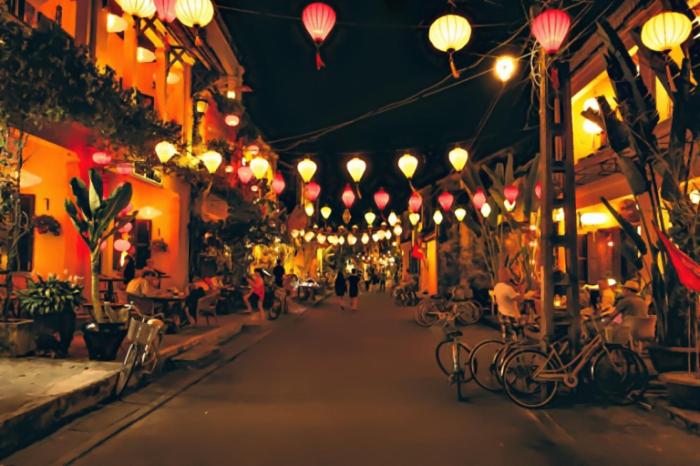
The Sensory Architecture of a Living Museum
To walk through the Old Town is to navigate a physical manifestation of historical fusion. Because Hoi An was once a bustling maritime crossroads, its architecture is a beautifully complex dialogue between Japanese geometric precision, Chinese ornamental poetry, and French colonial scale.
The buildings themselves feel organic, built from dark, seasoned ironwood and roofed with yin-yang tiles that have gathered moss over centuries. Unlike Western cities designed to project outward, Hoi An's historic houses are built inward. Long, narrow tubular homes stretch from busy market streets all the way back to the riverbanks, punctuated by open-air inner courtyards. When the tropical afternoon rain falls, it cascades into these central light wells, creating a private, meditative soundtrack of water striking stone while the family inside sips local lotus tea.
The true heartbeat of this town, however, rests in the remarkable character of its people. The local residents (Người Hội An) possess a distinct, soft-spoken elegance. Shaped by centuries of welcoming foreign merchants, their hospitality is neither transactional nor intrusive; it is deeply protective and warm. An elderly shopkeeper will smoothly transition from negotiating a silk sale to sharing a deeply personal story about how her family survived the great historic floods, treating you not as a passing consumer, but as an invited guest in her ancestral home.
Culinary Artistry Forged by the Monsoons
You cannot understand Hoi An without tasting the soil and water that sustains it. The local cuisine is a hyper-regional poetry that cannot be accurately recreated anywhere else in Vietnam, dictated by a strict geographical law.
The Sacred Mystery of Cao Lau
The ultimate expression of this local exclusivity is Cao Lầu. This dish features thick, springy rice noodles topped with tender slices of five-spice barbecued pork (char siu), crisp bean sprouts, and fresh herbs. But here is the catch: true Cao Lau noodles can only be made using water drawn from the secret, thousand-year-old Ba Le Well hidden in a back alley of the town. This water is then mixed with a specific ash made from burning wood harvested from the pristine Cham Islands offshore. The resulting alkaline reaction gives the noodles their signature smoky flavor and uniquely chewy, al dente texture. To eat a bowl of Cao Lau inside a dark timber tavern is to consume the literal geology of the region.
The Delicate Poetry of White Rose Dumplings
Equally mesmerizing are Bánh Vạc (White Rose Dumplings). Translucent, delicate pockets of rice dough are hand-pleated to resemble blooming roses, encasing a savory core of spiced shrimp or pork, topped with crispy toasted shallots. For generations, a single local family has supplied these exquisite dumplings to the entire town, guarding the secret recipe like a royal treasure.
Uncharted Footsteps: Beyond the Postcard
While the iconic Japanese Covered Bridge draws the daytime crowds, the real soul of Hoi An reveals itself to those willing to slip away into the shadows.
The Forgotten Corridors of Cam Kim Island
Just a brief wooden boat ride across the river lies Cam Kim Island, a rural sanctuary entirely untouched by the tourism boom. Here, the cobblestones give way to dirt pathways shaded by towering banana palms. As you cycle through the fields, the air changes, smelling of freshly cut timber. This is the home of Kim Bong Carpentry Village, where artisans have spent the last 500 years hand-carving the intricate woodwork found in Hoi An’s finest temples and imperial palaces. Watching a master craftsman work in total silence, using tools passed down through five generations, is a masterclass in human dedication.
The Haunting Beauty of the Assembly Halls at Dawn
To experience the spiritual weight of Hoi An, wake up at 5:30 AM and walk to the Fujian Assembly Hall. Before the streets fill with bicycles and tailored suit shoppers, the air inside this 17th-century sanctuary is thick with heavy coils of spiral incense hanging from the ceiling. The morning light cuts through the smoke in dramatic, cinematic beams, illuminating stone dragons and altars dedicated to Thien Hau, the goddess of the sea. Standing there alone, listening to the distant broom-sweeps of locals cleaning the temple courtyard, is a moment of pure, uninterrupted transcendence.
The Traveler’s Ledger: Practical Wisdom for the Discerning Explorer
The Golden Window
Hoi An is spectacular when the weather permits slow, open-air exploration. The absolute best time to visit is from February to April, when the dry season brings clear blue skies, brilliant sunshine, and comfortable temperatures ranging from 72°F to 82°F (22°C to 28°C). Avoid the heavy monsoon season from October to November, when the Thu Bon River regularly breaches its banks, turning the lower streets of the Old Town into temporary, watery canals.
The Journey Inbound
Most international travelers fly directly into Da Nang International Airport (DAD), which connects seamlessly to major global hubs. From Da Nang, Hoi An is a smooth, highly scenic 45-minute drive southward along the coast. Arranging a private car through your eco-resort or hailing a registered vehicle via regional smartphone transit apps is effortless and incredibly safe.
The Economy of Grace
While Hoi An offers world-class luxury boutique resorts and fine dining, the local cost of living remains remarkably accessible for Western visitors:
A legendary bowl of Cao Lau at a street-side stall: $2 to $3.
A custom, hand-tailored silk dress or suit (completed in 24 hours): $80 to $200.
A private, hand-rowed lantern boat ride at night: $6 to $10.
A luxury heritage homestay overlooking the rice fields: $60 to $120 per night.
Cultural Navigation & Etiquette
The Old Town is a pedestrian-only zone during prime afternoon and evening hours, making it highly walkable. When entering ancient family homes or active communal temples, remember to wear clothing that covers your shoulders and knees. While the street vendors are incredibly polite, a gentle but firm shake of the head and a soft "Không, cảm ơn" (No, thank you) is universally respected if you are not looking to browse.
The Ultimate Insider Secret: The famous Full Moon Lantern Festival draws massive crowds on the 14th day of every lunar month. If you want the magic without the chaotic foot traffic, visit the town the night before the official festival. The locals still dim the electricity, the silk lanterns still glow beautifully, and the river is filled with floating paper wishes—but you will have the atmospheric, moonlit streets almost entirely to yourself. It feels less like a performance and more like a secret you've been permitted to keep.


0 nhận xét:
Post a Comment