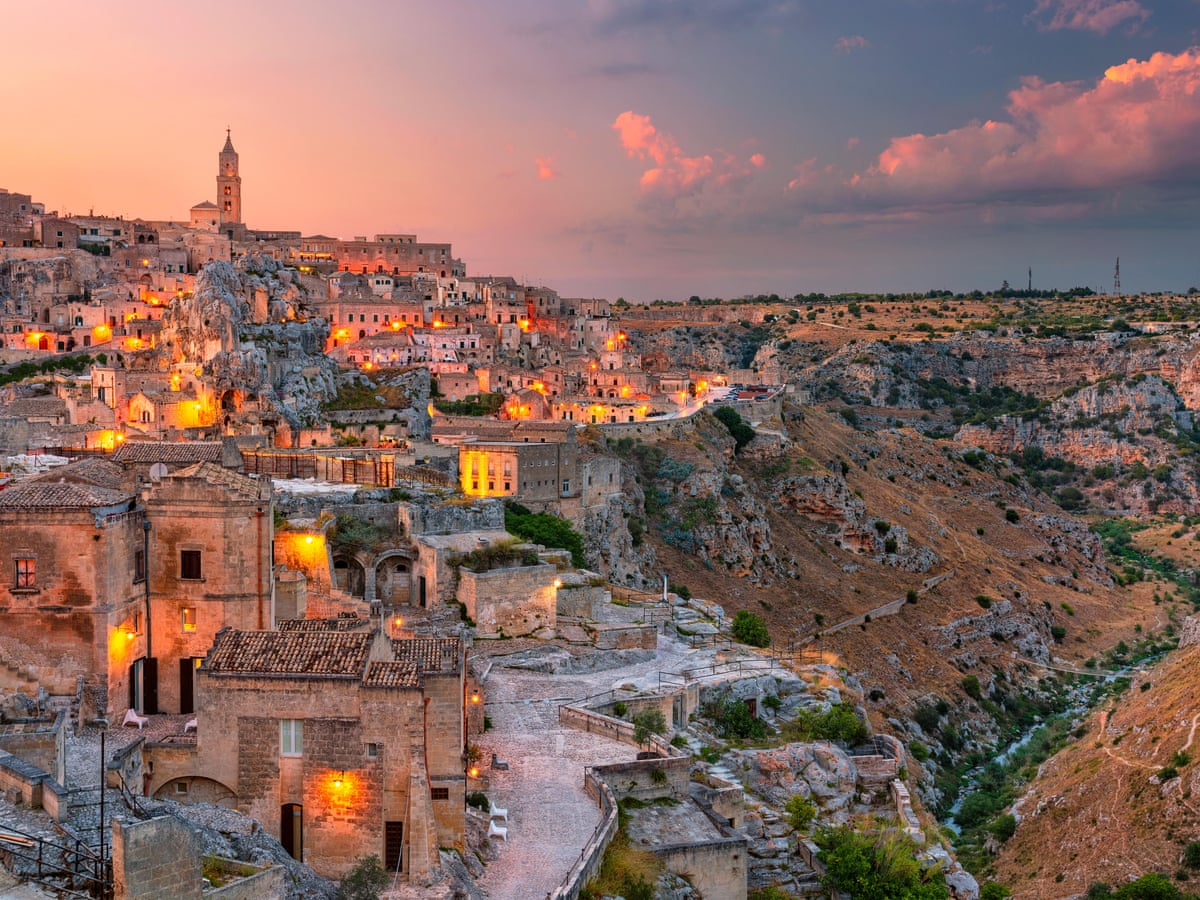
If you stand perfectly still at the edge of the Murgia timpa cliff at exactly twilight on an early summer evening, you will witness a southern Italian city transforming into a living constellation. Across the deep, limestone chasm of the Gravina gorge, the ancient, stacked cavern-dwellings of Matera begin to flicker with pale amber lights, casting long, geometric shadows against the pale tufa stone. The air down here carries the scent of wild rosemary growing from the cracks of the rock, damp earth, and the warm, yeasty smell of wood-fired bread drifting from communal bakeries that have baked the same loaves for half a millennium. This is the Basilicata region, a territory carved directly into the rugged topography of southern Italy, where time bends backward, and the human story is etched into the subterranean cliffs.
For generations, this troglodytic stone maze was forgotten by the world, a hidden relic of rural isolation. Today, a profound shift is occurring in global travel aspirations. The modern international wanderer is bypassing the crowded, manicured coastal resorts of Capri or the packed renaissance avenues of Florence to immerse themselves in an environment where history is lived from the inside out. Matera is seeing an unprecedented rise in global search trends from travelers seeking raw architectural authenticity, sustainable luxury, and a deep connection to an ancient community lifestyle that remains tied to the pulse of the subterranean earth.
The Architecture of Light and Subterranean Water
To understand Matera is to realize that this is not a city built upon the land, but rather one carved directly out of it. For over nine thousand years, consecutive waves of humanity excavated thousands of pale limestone caves, creating the twin districts known as the Sassi Barisano and Sassi Caveoso. The urban layout operates as a beautiful architectural puzzle; the roof of one man’s cave house frequently serves as the cobblestone pathway or foundation for the courtyard of the neighbor dwelling above him.
Walking through these narrow, winding alleys, or vicinati, the sense of place is deeply physical. Run your palm along the smooth, cool interior walls of a rock-cut sanctuary like the Church of Santa Lucia alle Malve, and your fingertips will encounter centuries of chisel marks left by Byzantine monks. The interior atmosphere is still and dark, protecting 12th-century frescoes whose warm ochres and deep blues have been preserved from the relentless Mediterranean sun by the insulating qualities of the limestone rock.
The engineering heritage here is brilliant in its simplicity. Beneath your feet lies a hidden network of ancient cisterns and water channels carved out to catch every drop of rainfall, a historical subterranean circulatory system that allowed an entire civilization to flourish inside an arid canyon.
Secret Escapes and the Scent of Living Clay
While the panoramic view from the Piazza Pascoli captures the initial imagination of every traveler, the true soul of Matera reveals itself if you venture into the quiet labyrinth of the Sassi Caveoso, where fewer visitors tread. Leave the main stone stairways and follow a dusty trail leading out toward the rock-cut monasteries of the Murgia National Park. Here, wild fennel and ancient olive orchards carpet the limestone plateaus, and hidden caves dot the canyon walls like empty eye sockets looking toward the sky.
A short journey out of the central Sassi leads to the nearby artisan pottery enclave of Grottaglie, tucked into the surrounding ravines. Step into a family-run bottega hidden inside a cave, where the air smells faintly of wet earth and mineral glaze. Watch an old master potter kick his heavy wheel into action with a rhythmic thud, his hands wet with gray clay as he coaxes a traditional, wide-bellied pumo vase into existence. This local ceramic symbol, resembling a blooming rosebud, is believed to ward off evil and bring prosperity. The craftsmanship here is passed down like a dialect, a tactile heritage that connects the modern artisan directly to the ancient Greek potters who worked the exact same clay veins thousands of years ago.
The Alchemy of the Hard-Wheat Loaf and the Clay Pot
The culinary traditions of Basilicata are an elegant exercise in cucina povera—the honest, resourceful cooking of the land that relies heavily on premium raw ingredients, patience, and wood smoke. The defining crown jewel of this gastronomic landscape is the iconic Pane di Matera, a magnificent, dark-crusted bread shaped by hand to resemble the rugged limestone mountains of the surrounding Murgia.
Made exclusively from locally milled durum wheat semolina and a natural sourdough culture fermented with local grapes and figs, the dough is baked inside massive tufa-stone ovens heated by oak twigs. When a server breaks a warm loaf before you, the sensory experience is unforgettable. The dark, thick crust cracks audibly like dry tufa rock, releasing a warm cloud of nutty, fruit-tinged steam. The interior crumb is a deep straw yellow, incredibly airy, and carries a pleasant, lactic tang that pairs beautifully with a drizzle of robust, green olive oil harvested from the surrounding hills.
For dinner, settle into a candlelit cave restaurant to sample Crapiata, an ancient, slow-cooked legume soup dating back to Roman times. Plump chickpeas, fava beans, lentils, and hulled wheat are simmered for hours inside unglazed earthenware pots alongside wild chicory and a generous handful of Peperoni Cruschi—sweet, horn-shaped red peppers from Senise that are sun-dried on balconies before being flash-fried in olive oil for a matter of seconds.
The pepper shatters in your mouth like a delicate potato chip, releasing a sweet, smoky, and intensely concentrated paprika flavor that elevates the humble bean stew into a spectacular, multi-layered culinary masterpiece. Pair this with a bold glass of Aglianico del Vulture, a full-bodied red wine cultivated on the volcanic slopes of nearby Mount Vulture, which carries an intense minerality and notes of dark cherry that slice through the rustic richness of the dish.
An Experiential Blueprint for the Stone Sanctuary
Navigating this high-altitude stone maze requires a deliberate slow travel strategy, rejecting packed itineraries to allow the city’s unique rhythm to take hold of your schedule.
Optimal Timing and Climate
The master window for discovering Matera spans from April to June, or September through October. During these shoulder months, the daytime temperatures hover around a comfortable 22°C, offering perfect conditions for climbing the steep stone stairways of the Sassi without the searing glare of the mid-summer southern sun. The evening air brings a crisp, refreshing breeze that makes sitting on an outdoor terrace under the stars an absolute pleasure.
Movement and Access
Most international voyagers touch down at Bari Karol Wojtyła Airport, located roughly forty miles north on the Adriatic coast. From Bari, avoid the rigid schedules of major train networks and opt for a private vehicle transfer or a rental car. The drive southwest takes you through rolling fields of golden wheat and ancient olive groves before arriving at the dramatic edge of the Basilicata canyon.
Once inside Matera, vehicles are restricted within the historic Sassi zones to preserve the delicate limestone foundations. Exploration is entirely pedestrian; ensure you pack high-traction leather walking shoes or boots with textured soles, as the centuries-old tufa steps have been worn smooth by millions of footsteps and can become remarkably slick, even under dry weather conditions.
Financial Coordinates and Accommodations
Cave Hotel Suites: A premium suite inside an eco-luxury cave hotel carved directly into the ancient limestone walls, featuring independent stone plunge pools and private sunset terraces, ranges from $180 to $320 per night.
Regional Gastronomy: A comprehensive multi-course dinner celebrating regional specialties, accompanied by a bottle of premium Aglianico wine at an upscale grotto osteria, costs between $35 and $55 per person.
Private Archeological Walks: A private, half-day expedition led by a local historian or architectural guide through the secret cave churches and cisterns of the Sassi costs roughly $85 to $130.
Critical Cultural Codes and Pitfalls to Avoid
The people of Basilicata possess a quiet, deeply rooted dignity that reflects their history of resilience and self-reliance. They are exceptionally warm hosts, but their hospitality thrives on mutual respect and a quiet demeanor.
When entering a small neighborhood bakery or an artisan’s workshop, always open with a gentle "Buongiorno" (Good morning) or "Buonasera" (Good evening). This simple acknowledgment demonstrates that you view their hometown not as an open-air museum backdrop, but as a living, breathing community.
Navigating the Sassi Etiquette
The Sanctity of Private Homes: Many cave dwellings in the Sassi are still private residences or active artist studios. Never peer indiscriminately into low windows or wander into unmarked stone courtyards. If a doorway is draped with a heavy linen curtain, it is a sign that a local family is living within; respect their domestic boundaries.
The Pitfall of the Short Stay: Do not treat Matera as a quick day-trip stopover on your way to Puglia. The city requires the transition of night to truly reveal its cinematic beauty. When the day-trippers depart and the yellow street lamps illuminate the limestone cliffs, the true, quiet spirit of the Sassi emerges. Plan for at least two full nights to appreciate this atmospheric shift.
Cistern Exploration Safety: When exploring independent, non-fenced cave ruins or remote rock churches in the national park, always carry a small flashlight or headlamp. Many of these ancient structures contain hidden floor openings or deep vertical drop-offs originally designed as water catchment holes.
A One-Day Immersive Itinerary: The High-Velocity Pilgrimage
For the traveler seeking to experience the absolute distillation of Matera’s stone architecture, ancestral flavor, and dramatic topography within a single, continuous journey, this strategic twenty-four-hour blueprint maximizes every sensory shift.
07:30 AM – The Golden Awakening: Wake up just before dawn. Wrap yourself in a warm jacket and step out onto your private cave terrace to watch the morning sun strike the Sassi Caveoso, turning the pale limestone rock from a ghostly gray into a warm shade of pale gold.
09:00 AM – The Daily Crust: Walk to a traditional panificio tucked into the Barisano district. Indulge in a simple breakfast of freshly baked Matera bread drizzled with local olive oil and accompanied by a rich, dark espresso.
11:00 AM – The Deep Descent: Descend into the Palombaro Lungo, a cathedral-like underground water cistern situated beneath the main city square. Walk along the elevated iron walkways, marveling at the towering brick arches and deep, water-carved chambers that once held millions of gallons of water.
01:00 PM – The Valley Feast: Secure a wooden table inside an osteria built deep within a cavern. Order a hot plate of handmade Orecchiette pasta tossed with bitter turnip greens, anchovy paste, and toasted breadcrumbs, paired with a glass of crisp local white wine.
03:30 PM – The Monastery Walk: Hike the stone path down into the Gravina canyon and across the pedestrian suspension bridge, climbing up toward the remote rock churches of the Murgia plateau to view the Sassi from a wild, natural perspective.
06:30 PM – The Twilight Transition: Return to the city and find a high stone ledge near the Cathedral of Matera. Watch the twilight settle over the twin stone bowls as the amber streetlights begin to glow, creating a breathtaking wall of liquid light.
09:00 PM – The Night of the Cavern: Conclude your ultimate journey inside a sophisticated lounge bar carved directly into a massive stone vault. Toast your journey with a premium glass of Aglianico del Vulture wine while listening to the low hum of jazz music echoing off the smooth stone arches.
The Three-Day Travel Itinerary: The Deep Cultural Immersion
This comprehensive three-day progression allows you to move far beyond the standard viewing decks and fully submerge yourself in the history, geography, and living culture of the Basilicata frontier.
Day 1: The Labyrinth of Stone and the Byzantine Frescoes
Begin your exploration by basing yourself in a boutique cave hotel in the heart of the Sassi Barisano. Spend your morning completing a guided architectural walk through the maze of interconnected alleys, learning how the ancient inhabitants managed light, heat, and space inside the limestone rock. For lunch, step inside a rustic grotto to sample local ricotta cheese topped with wild honey and crushed walnuts.
In the afternoon, focus your attention on the Sassi Caveoso, visiting the beautifully preserved cave house museum of Casa Noha to understand the complex history of the region. As night falls, enjoy an authentic dinner of slow-simmered Crapiata bean soup topped with crunchy cruschi peppers, cooked over an open fire beneath the stone vaults of an upscale osteria.
Day 2: The Deep Water and the Artisan’s Flame
Rise early to witness the morning mist lifting off the Gravina gorge. Dedicate your morning to exploring the massive underground water infrastructure of the Palombaro Lungo, tracking the historic water supply lines that kept the city alive for centuries. For lunch, grab a warm slice of local focaccia topped with cherry tomatoes and oregano from a family bakery.
In the afternoon, secure a private vehicle and drive east toward the ceramic ravine town of Grottaglie. Spend hours wandering through the historic pottery quarter, visiting subterranean workshops to watch master artisans shape clay using ancestral techniques. Return to Matera in the late evening, spending your night inside a candlelit cave lounge, sipping local amaro liqueurs infused with wild mountain herbs under the stars.
Day 3: The Wild Gorge and the Mount Vulture Vintage
Spend your final day embracing the wild, untamed landscape of the Murgia National Park. Cross the suspension bridge over the Gravina river early in the morning, hiking along the ancient trails to discover remote, rock-cut chapels hidden within the limestone cliffs. Enjoy an informal picnic lunch of sharp pecorino cheese, Matera bread, and sun-dried tomatoes on a high ridge overlooking the entire ancient cityscape.
In the afternoon, travel north toward the rolling volcanic slopes of Mount Vulture, visiting a historic wine estate to tour their deep, volcanic tuff-stone aging cellars. Conclude your ultimate southern Italian journey with an elite dining experience at a Michelin-starred restaurant built inside a historic Matera cave complex, savoring a contemporary tasting menu centered around Basilicata wild game, hand-forged wild greens, and premium reserve red wines as the valley lights illuminate the ancient stone horizon.
The Final Verdict
To travel to Matera is to realize that the most profound journeys are those that take us deep into the heart of the earth, where the human story refuses to be erased by the march of modern standardization. This is not a passive holiday destination designed for effortless, generic relaxation; it is a landscape of immense physical presence that demands your attention, slows your breath, and rewards you with a clarity of sight and spirit that is impossible to find in the crowded capitals of the world. It is a place where you can sleep inside a room that has been sheltered by stone for three thousand years, walk along roofs that serve as streets, taste bread that carries the flavor of ancient oak smoke, and share a quiet moment of connection with a community that has guarded its rocky home with unyielding pride.
The pale spires and silent caverns of Basilicata remind us of what travel felt like before the world became fully commercialized—an authentic, deeply emotional encounter with the raw, beautiful mystery of a planet that still knows how to preserve its most extraordinary secrets. Do not spend another year planning trips to destinations that have traded their identity for convenience. The warm stone, deep valleys, and echoing history of this southern Italian frontier are waiting for you, and you need to experience this place for yourself.


0 nhận xét:
Post a Comment